- Animals
- ›Arthropods
- ›Hexapods
- ›Insects
- ›Winged and Once-winged Insects
- ›Butterflies and Moths
- ›Owlet Moths and Allies
- ›Underwing, Tiger, Tussock, and Allied Moths
- ›Tussock Moths
- ›Orgyiini
- ›Orgyia
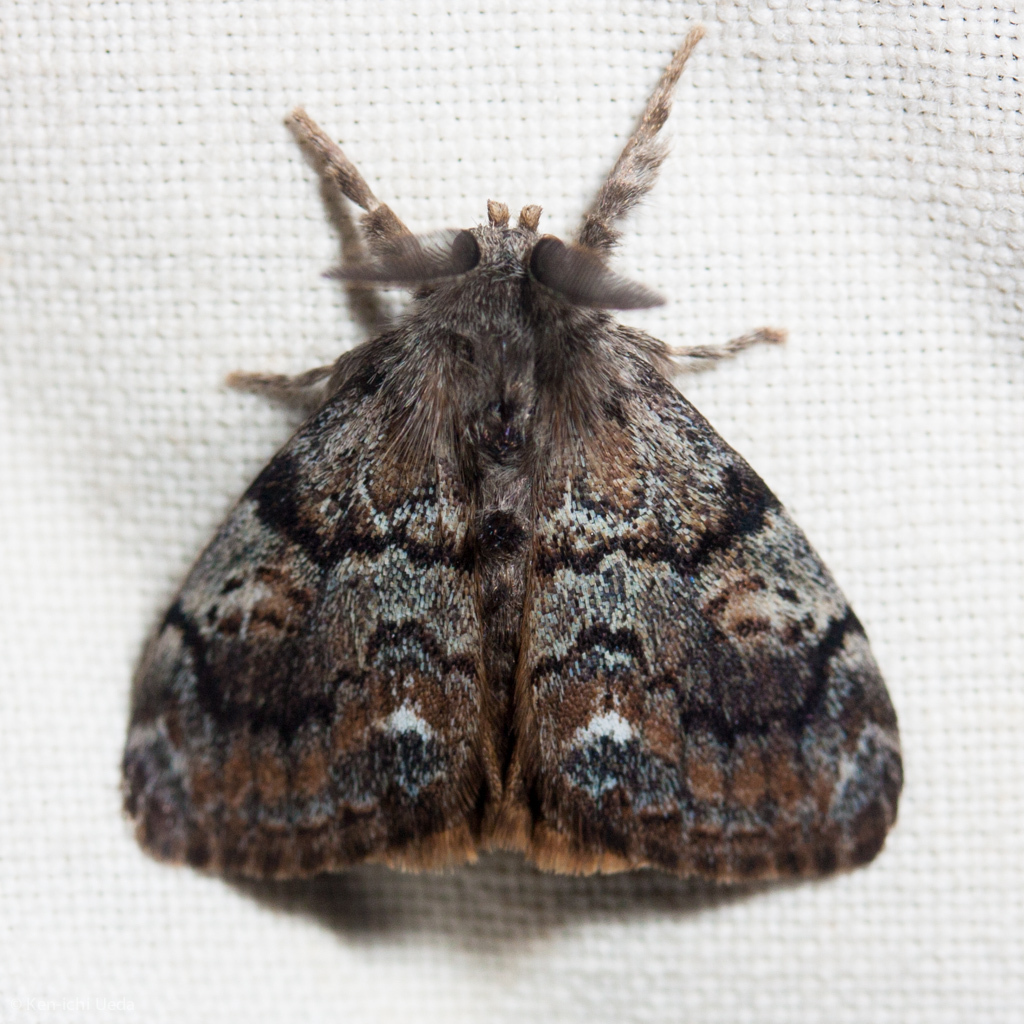
Western Tussock Moth
Orgyia vetusta
Orgyia vetusta, also known as the western tussock moth, formerly Hemerocampa vetusta, is a moth found in the Pacific States and British Columbia. The species is dimorphic; the females are flightless.
The Western tussock moth is reported on virtually all California oak species as well as various fruit and nut trees, ceanothus, hawthorn, manzanita, pyracantha, toyon, walnut, and willow. There is an isolated population in Boise County, Idaho. This species has also been seen in U.S. gulf coast states such as Louisiana..
From the article Western tussock moth on Wikipedia (CC BY-SA), quoted section by section
In human culture
Tussock moth eggs are white and are laid in a mass, which overwinters. The female covers the eggs with setae. The caterpillars emerge in early spring (February-May) and exhibit minimal disperse via ballooning, a process by while caterpillars hang from silk threads and are spread by wind. This is also observed in other species within the family Erebidae, such as Lymantria dispar dispar. Larvae have hairs that may cause minor skin irritation or allergic reactions in humans. Adults emerge from cocoons between June and August.
Wikipedia: “Life history”
Listen
Looking for field recordings…
Where it lives
Recorded sightings
—
geo-referenced records in GBIF, from museums, herbaria and field observers.
Drag the globe to turn it. Dots are where records exist, not a range map; darker means more records.
In the stacks
Searching the stacks…
Every page naming Orgyia vetusta in the Biodiversity Heritage Library →
This page is assembled live from iNaturalist, GBIF, Wikipedia, the Source Library and the Internet Archive. It is not yet part of the hand-edited codex. iNaturalist taxon 61908.