- Animals
- ›Arthropods
- ›Hexapods
- ›Insects
- ›Winged and Once-winged Insects
- ›Butterflies and Moths
- ›Owlet Moths and Allies
- ›Underwing, Tiger, Tussock, and Allied Moths
- ›Tiger Moths and Allies
- ›Tiger Moths
- ›Spilosomina
- ›Spilosoma
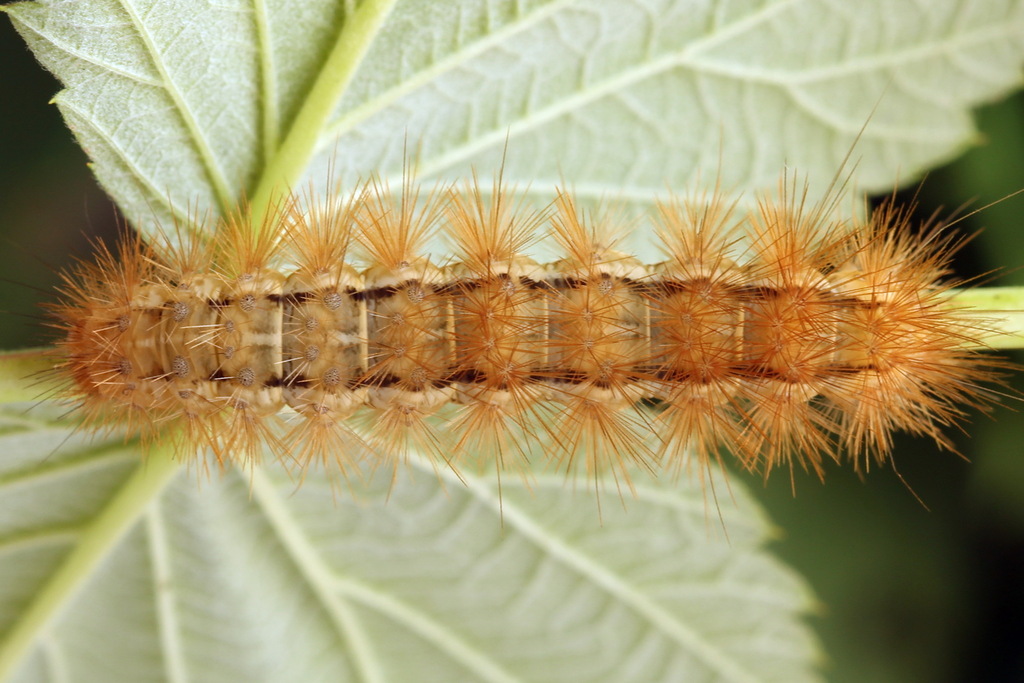
Buff Ermine
Spilosoma lutea
The buff ermine (Spilarctia luteum) is a moth of the family Erebidae. It is sometimes placed in the genus Spilosoma. The species was first described by Johann Siegfried Hufnagel in 1766. It is found throughout the temperate belt of the Palearctic region south to northern Turkey, Georgia, Kazakhstan, southern Siberia (excluding Buryatia), eastern Mongolia, Amur Region, China, Korea and Japan.
The wings of this species are buffish yellow (the males tend to be more yellow than the females) and are typically marked with a diagonal row of dark spots on the forewing and a few other scattered spots on both forewings and hindwings. The extent of black markings varies considerably, however, from almost spotless examples to largely black melanic forms. The wingspan is 34–42 mm. The species flies from May to July in the British Isles. This may vary in other parts of the range. It is attracted to light.
Listen
Looking for field recordings…
Where it lives
Recorded sightings
—
geo-referenced records in GBIF, from museums, herbaria and field observers.
Drag the globe to turn it. Dots are where records exist, not a range map; darker means more records.
In the stacks
Searching the stacks…
Every page naming Spilosoma lutea in the Biodiversity Heritage Library →
This page is assembled live from iNaturalist, GBIF, Wikipedia, the Source Library and the Internet Archive. It is not yet part of the hand-edited codex. iNaturalist taxon 61855.