- Animals
- ›Chordates
- ›Vertebrates
- ›Ray-finned Fishes
- ›Carps, Characins, Catfishes and Allies
- ›Catfishes
- ›Loricarioidei
- ›Armored Catfishes
- ›Suckermouth Catfishes
- ›Ancistrus
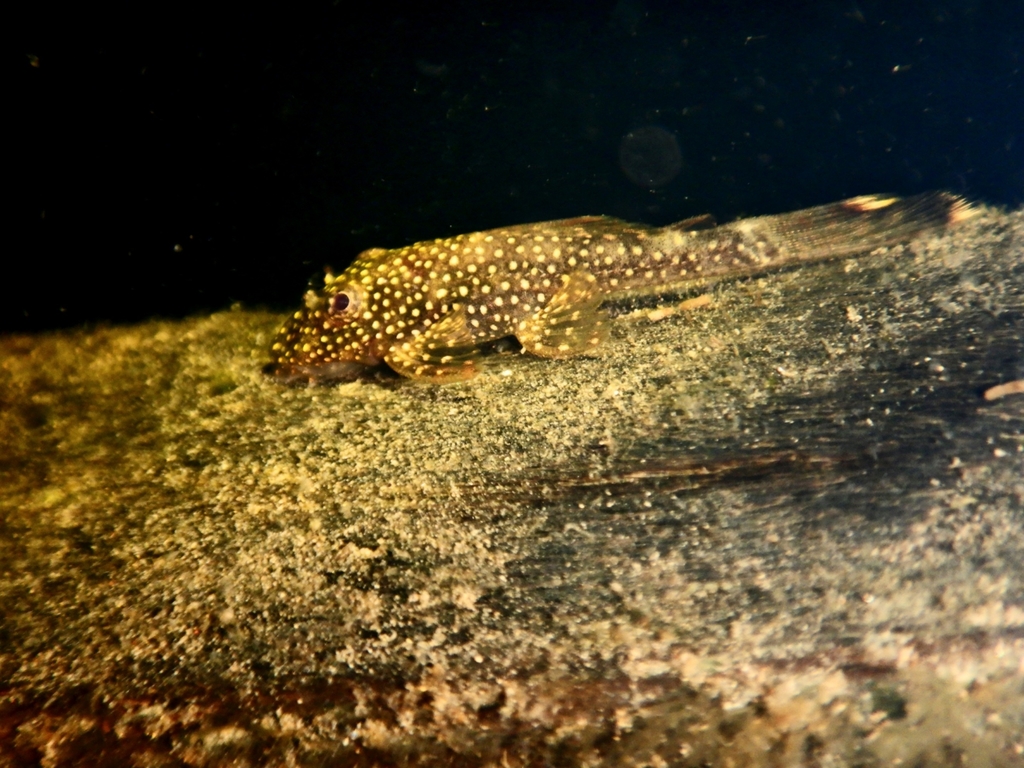
Ancistrus malacops
Ancistrus malacops is a species of catfish in the family Loricariidae. It is a freshwater fish native to South America, where it occurs in the Ampiyacu River basin in Peru. FishBase states that the species reaches 7.7 cm (3 inches) SL, although larger specimens, including one of 11.78 cm (4.6 inches) SL from the Gustavo Orcés V. Natural History Museum in Quito, Ecuador, are known.
From the article Ancistrus malacops on Wikipedia (CC BY-SA), quoted section by section
Description
Ancistrus malacops reaches a standard length of 7.7 cm (3.0 in). Ancistrus species develop soft, bushy tentacles on the snout when sexually mature, these are better developed in the males than they are in females.
Range & habitat
Ancistrus malacops is found in the Amazon basin in Peru. This species is found in rivers with mixed, black and white waters, with a lot of woody debris and other organic matter, in shady waters within primary forest, where it is typically found in submerged logs.
== References ==
Wikipedia: “Distribution and habitat”
In human culture
Ancistrus malacops is classified in the genus Ancistrus, a name coined by Rudolf Kner, but when he proposed the genus he did not explain the etymology of the name. It is thought to be from the Greek ágkistron, meaning a "fish hook" or the "hook of a spindle", a reference to the hooked odontodes on the interopercular bone. The specific name, malacops, is a combination of malakos, which means "soft", and ops, meaning "eye" or "face", an allusion Cope did not explain but it may refer to the cheeks being naked, without plates.
Wikipedia: “Etymology”
Where it lives
Recorded sightings
—
geo-referenced records in GBIF, from museums, herbaria and field observers.
Drag the globe to turn it. Dots are where records exist, not a range map; darker means more records.
In the stacks
Searching the stacks…
Every page naming Ancistrus malacops in the Biodiversity Heritage Library →
This page is assembled live from iNaturalist, GBIF, Wikipedia, the Source Library and the Internet Archive. It is not yet part of the hand-edited codex. iNaturalist taxon 616138.