- Plants
- ›Vascular Plants
- ›flowering plants
- ›Dicots
- ›Sunflowers, Bellflowers, Fanflowers, and Allies
- ›Sunflowers, Daisies, Asters, and Allies
- ›Thistles and Allies
- ›Cardueae
- ›Thistles and Burdocks
- ›Cirsium
- ›Altissima
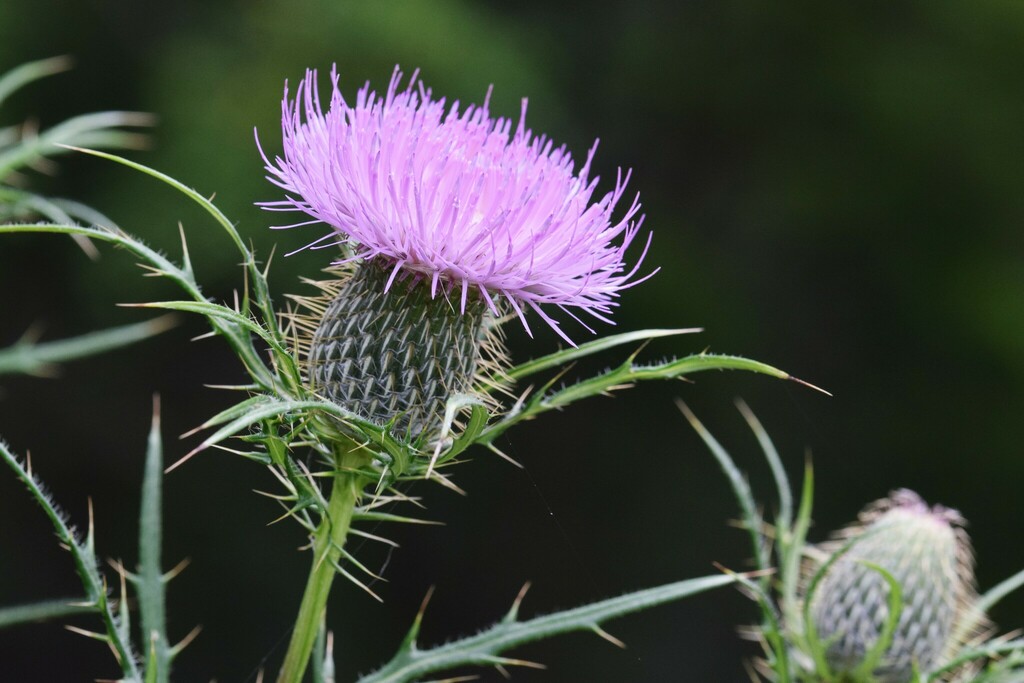
field thistle
Cirsium discolor
Cirsium discolor, the field thistle, is a North American species of plants in the tribe Cardueae within the family Asteraceae. It is native to thirty-three states in the United States as well four Canadian provinces. It occurs across much of eastern and central Canada as well as eastern and central United States. It has been found from New Brunswick west to Saskatchewan and south as far as Texas and Georgia.
Field thistle is a biennial or perennial herb up to 200 cm (78.5 in) tall, producing a large taproot. There is usually only one stem with numerous spiny leaves that are green on the upper side but white and woolly underneath. The plant's flower heads are large and showy and have the pale to medium value purplish magenta coloration (lilac, lavender, pinkish purple, purplish pink) that is especially attractive to butterflies. The same color can be seen in the flowers of the genus Liatris, among many others. Heads have many disc florets but no ray florets. The species grows primarily in damp areas in forest openings, prairies, and disturbed sites.
From the article Cirsium discolor on Wikipedia (CC BY-SA), quoted section by section
At the table
The flower heads, when mashed, have been reported to release a substance that acts similarly to rennin and can curdle milk to aid in the production of cheese.
Wikipedia: “Uses”
Where it lives
Recorded sightings
—
geo-referenced records in GBIF, from museums, herbaria and field observers.
Drag the globe to turn it. Dots are where records exist, not a range map; darker means more records.
In the stacks
Searching the stacks…
Every page naming Cirsium discolor in the Biodiversity Heritage Library →
This page is assembled live from iNaturalist, GBIF, Wikipedia, the Source Library and the Internet Archive. It is not yet part of the hand-edited codex. iNaturalist taxon 61340.