- Plants
- ›Vascular Plants
- ›flowering plants
- ›Dicots
- ›Sunflowers, Bellflowers, Fanflowers, and Allies
- ›Sunflowers, Daisies, Asters, and Allies
- ›Asteroideae
- ›tarweeds, silverswords, and allies
- ›Layia
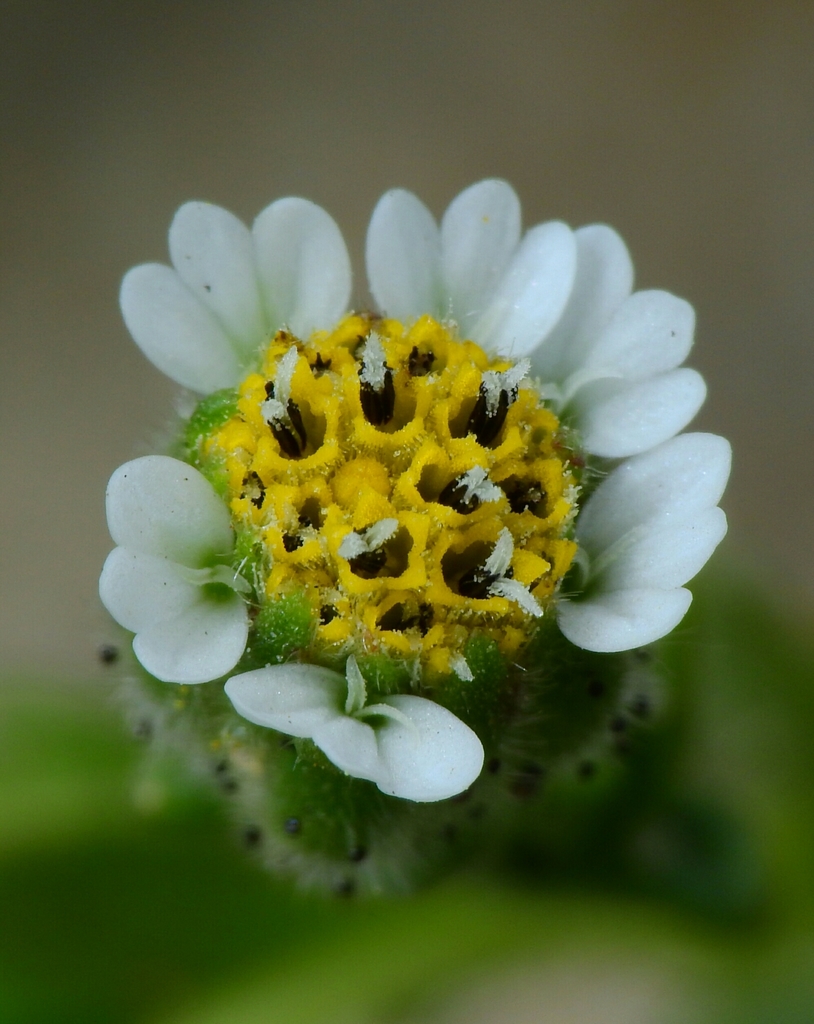
beach tidytips
Layia carnosa
Layia carnosa is a species of flowering plant in the family Asteraceae known by the common name beach tidytips, or beach layia. It is endemic to California, where it lives in coastal habitat. It is known from several areas of mostly fragmented or relict sand dune habitat, and it was listed as an endangered species in California. On March 31, 2022, the category was changed from endangered species to threatened species by the US Department of the Interior Fish and Wildlife Service.
From the article Layia carnosa on Wikipedia (CC BY-SA), quoted section by section
Description
This is a petite annual herb producing a short, glandular stem along the ground or somewhat upright to a maximum length of about 18 centimeters. The fleshy green leaves are oval in shape, with the larger ones roughly lobed and up to 4 or 5 centimeters in length. The inflorescence is borne on a short peduncle. The flower head has a base of overlapping green phyllaries which form a cup to hold several small white ray florets. The center is filled with yellow disc florets with purple anthers. The fruits are small achenes of two types. The ray florets yield hairy, curved fruits with no pappus, while the disc florets yield fruits with a long, hairlike pappus.
Range & habitat
Beach layia germinates during the rainy season between fall and midwinter, blooms in spring (March to July), and completes its life cycle before the dry season (July to September). Populations tend to be patchy and subject to large annual fluctuations in size and dynamic changes in local distribution associated with the shifts in dune blowouts, remobilization, and natural dune stabilization that occur in the coastal dune ecosystem. Beach layia plants often occur where sparse vegetation traps wind-dispersed seeds, but causes minimal shading. Seeds are dispersed by wind mostly during late spring and summer months. Additionally, beach layia is self-compatible (i.e., able to be fertilized by its own pollen), is capable of self-pollination, and is visited by a variety of insects that may assist in cross-pollination . Although the role of pollinators is currently unclear, sexual reproduction does add to genetic diversity. Beach layia occurs in open spaces of sandy soil between the low-growing perennial plants in the Abronia latifolia—Ambrosia chamissonis herbaceous alliance (dune mat) and Leymus mollis herbaceous alliance (sea lyme grass patches). Typically, the total vegetation cover in both communities is relatively sparse, and many annual species, including beach layia, colonize the space between established, tufted perennials. …
Wikipedia: “Ecology, habitat, and resource needs”
Where it lives
Recorded sightings
—
geo-referenced records in GBIF, from museums, herbaria and field observers.
Drag the globe to turn it. Dots are where records exist, not a range map; darker means more records.
In the stacks
Searching the stacks…
Every page naming Layia carnosa in the Biodiversity Heritage Library →
This page is assembled live from iNaturalist, GBIF, Wikipedia, the Source Library and the Internet Archive. It is not yet part of the hand-edited codex. iNaturalist taxon 60971.