- Animals
- ›Arthropods
- ›Hexapods
- ›Insects
- ›Winged and Once-winged Insects
- ›Butterflies and Moths
- ›Butterflies
- ›Skippers
- ›Grass Skippers
- ›Hesperiini
- ›Apaustina
- ›Ancyloxypha
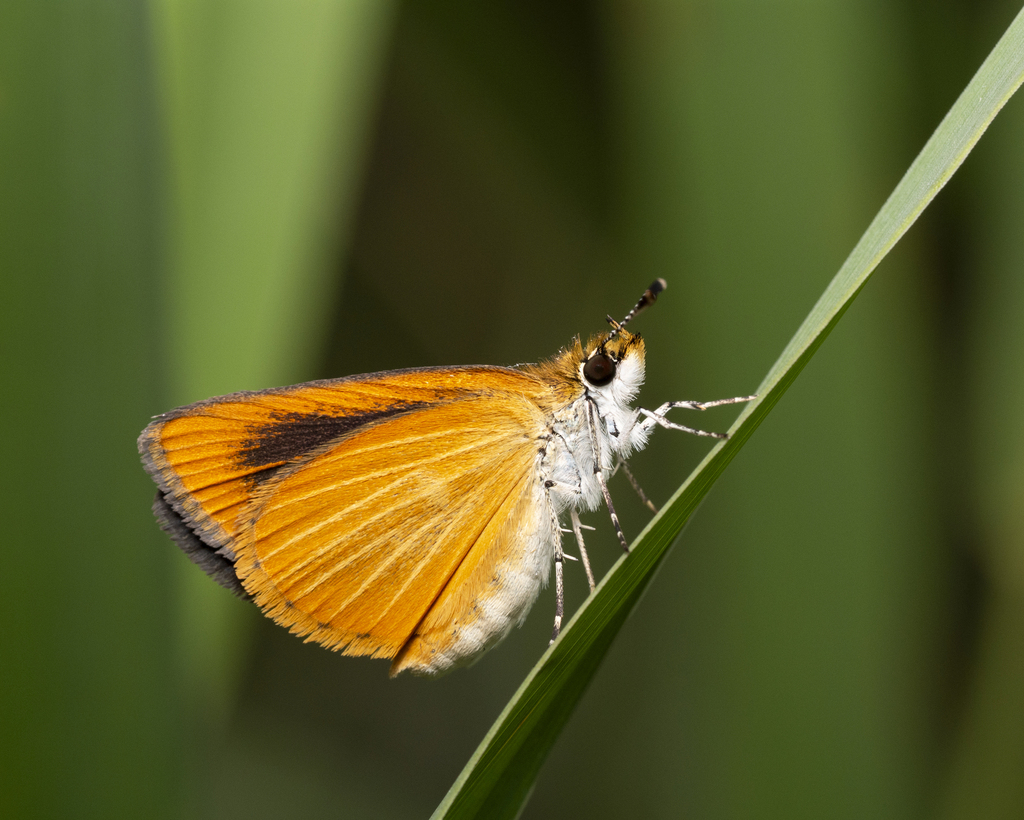
Least Skipper
Ancyloxypha numitor
Ancyloxypha numitor, the least skipper, is a North American butterfly in the family Hesperiidae. They have a weak, Satyrinae-like flight.
From the article Ancyloxypha numitor on Wikipedia (CC BY-SA), quoted section by section
Description
The least skipper's rounded wings and slender body are distinctive. Their checkered antennae have no hooks. Males lack stigmata. The upper sides of the forewings are dark brownish black sometimes having a patch of orange. The hindwing is orange with a broad dark brownish-black band surrounding the orange area completely. The underside of the wings is orange with the hindwing discal area being a little bit darker. The hindwing veins are whitish. Its wingspan ranges from 17 to 26 mm.
What it does
To find females, males will patrol through stands of grass. Females lay their eggs singly on the host plant. The pale yellow eggs will soon form an orange-red ring round the middle. The larvae make a nest by rolling up a single blade of grass or by using silk to tie together multiple leaves. The variable larva is grass green with four white pairs of distinct wax glands along the subventral area of the abdomen. The head is either brown or tan and is usually darker in the center. The collar has a white stripe and a black stripe. The cream pupa has brownish colored markings. It overwinters as a larva in the third or fourth instar. It has two to four broods per year.
Wikipedia: “Life cycle”
Listen
Looking for field recordings…
Where it lives
Recorded sightings
—
geo-referenced records in GBIF, from museums, herbaria and field observers.
Drag the globe to turn it. Dots are where records exist, not a range map; darker means more records.
In the stacks
Searching the stacks…
Every page naming Ancyloxypha numitor in the Biodiversity Heritage Library →
This page is assembled live from iNaturalist, GBIF, Wikipedia, the Source Library and the Internet Archive. It is not yet part of the hand-edited codex. iNaturalist taxon 58481.