- Plants
- ›Vascular Plants
- ›flowering plants
- ›monocots
- ›grasses, sedges, cattails, and allies
- ›grasses
- ›Pooideae
- ›Wheats, ryes, barleys and relatives
- ›Wheats, goatgrasses, and relatives

Wheats
Triticum
Wheat is a group of wild and domesticated grasses of the genus Triticum (). As cereals, they are cultivated for their grains, which are staple foods around the world. Well-known wheat species and hybrids include the most widely grown common wheat (T. aestivum), spelt, durum, emmer, einkorn, and Khorasan or Kamut. The archaeological record suggests that wheat was first cultivated in the regions of the Fertile Crescent around 9600 BC.
Wheat is grown on a larger area of land than any other food crop (219.5 million hectares or 542 million acres in 2024). World trade in wheat is greater than that of all other crops combined. In 2024, world wheat production was 799 million tonnes (881 million short tons), making it the second most-produced cereal after maize (known as corn in North America and Australia). Since 1960, world production of wheat and other grain crops has tripled and is expected to grow further through the middle of the 21st century. Global demand for wheat is increasing because of the usefulness of gluten to the food industry.
8 branches of this genus, most-observed first
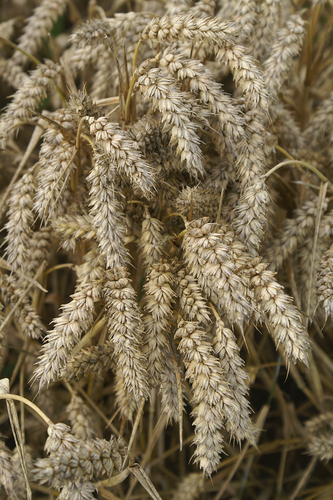
Bread Wheat
speciesTriticum aestivum
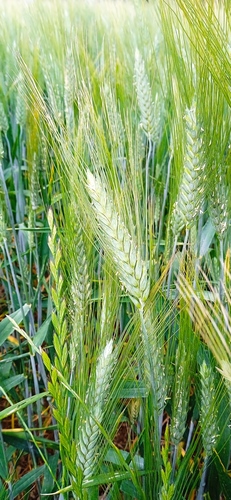
Rivet Wheat
speciesTriticum turgidum
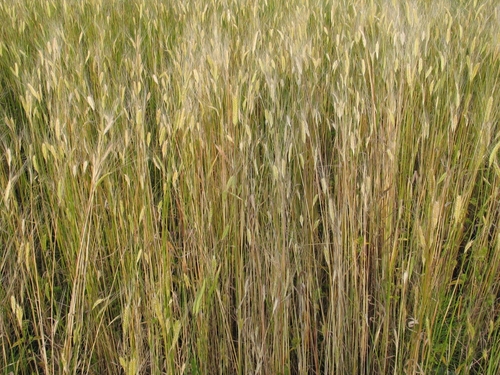
Einkorn Wheat
speciesTriticum monococcum
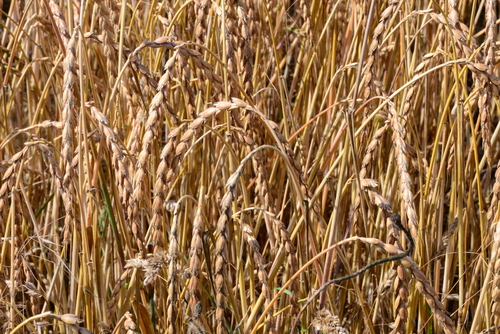
Spelt
speciesTriticum spelta

Wild Emmer
speciesTriticum dicoccoides

Club Wheat
speciesTriticum compactum

Timopheev's wheat
speciesTriticum timopheevii
red wild einkorn wheat
speciesTriticum urartu
Where it lives
Recorded sightings
—
geo-referenced records in GBIF, from museums, herbaria and field observers.
Drag the globe to turn it. Dots are where records exist, not a range map; darker means more records.
In the old herbals & bestiaries

Ortus sanitatis
1491 · p.458

Notable Commentaries on the History of Plants
Leonhart Fuchs · 1542 · p.682

Notable Commentaries on the History of Plants
Leonhart Fuchs · 1549 · p.680

Notable Commentaries on the History of Plants
Leonhart Fuchs · 1549 · p.315

Notable Commentaries on the History of Plants
Leonhart Fuchs · 1549 · p.316

On Medical Materials in Six Books
Dioscorides · 1550 · p.241

On the Names of Plants
Hieronymus Bock (Tragus) · 1552 · p.735

De medicinali materia libri sex
Dioscorides · 1552 · p.249

On the Names of Plants
Hieronymus Bock (Tragus) · 1552 · p.706

Commentaries on the Six Books of Dioscorides
Pietro Andrea Mattioli · 1560 · p.367

Commentaries on the Six Books of Dioscorides on Medical Matter
Pietro Andrea Mattioli · 1563 · p.352

Commentaries on the Six Books of Pedanius Dioscorides on Medical Matter
Pietro Andrea Mattioli · 1565 · p.561
In the stacks
Searching the stacks…
Every page naming Triticum in the Biodiversity Heritage Library →
This page is assembled live from iNaturalist, GBIF, Wikipedia, the Source Library and the Internet Archive. It is not yet part of the hand-edited codex. iNaturalist taxon 58390.