- Animals
- ›Arthropods
- ›Hexapods
- ›Insects
- ›Winged and Once-winged Insects
- ›Grasshoppers, Crickets, and Katydids
- ›Grasshoppers, Locusts, and Allies
- ›Grasshoppers
- ›Short-horned Grasshoppers and Locusts
- ›Short-horned Grasshoppers
- ›Spur-throated Grasshoppers
- ›Catantopini
- ›Russalpiina
- ›Russalpia
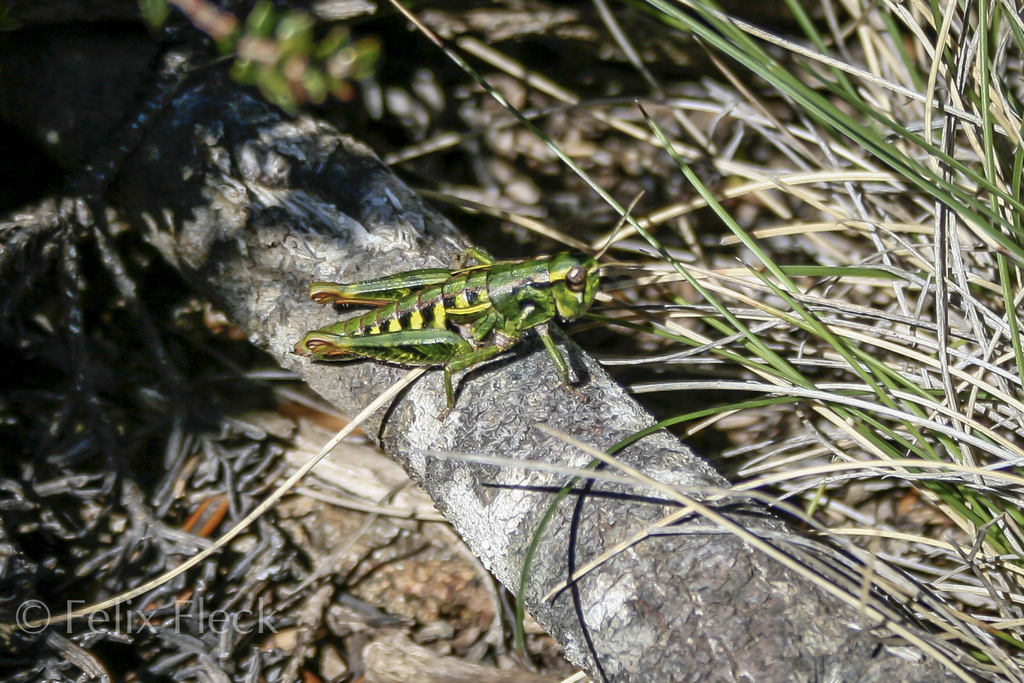
Tassie Hopper
Russalpia albertisi
Russalpia albertisi, the Tassie hopper, is a species of short-horned grasshopper in the family Acrididae. It is found in Tasmania, Australia.
From the article Russalpia albertisi on Wikipedia (CC BY-SA), quoted section by section
Description
Russalpia albertisi is distinguished from other species by its micropterous wings, with small, non-functional forewings and vestigial hind wings. Its pronotum features a smooth median carina and a well-defined caudal margin. Males typically have more inflated hind femora, while females tend to have slender femora and a slightly larger, more robust abdomen, as is common in many grasshopper species. The colouration of R. albertisi varies widely, with individuals appearing in shades of green, brown, or black, providing effective camouflage in Tasmanian grasslands.
Range & habitat
Endemic to Tasmania, Russalpia albertisi is found mainly in grassland and open woodland habitats, primarily in the Tasmanian Wilderness World Heritage Area. The species has been observed at a range of altitudes, however particularly thrives in buttongrass moorlands and montane regions.
Wikipedia: “Distribution and habitat”
What it does
Russalpia albertisi is a herbivorous species, feeding on native perennial grasses and small herbaceous plants, similar to other grasshoppers in its ecological niche. Sightings and specimen collections suggest that R. albertisi is most active during the warmer months of spring and early summer, when vegetation is abundant and conditions are favourable. Unlike many grasshopper species, R. albertisi does not produce stridulatory sounds for communication or mate attraction. Instead they rely on other behavioural cues for intraspecific interactions. R. albertisi follows a life cycle similar to other acrididae, laying eggs in soil or vegetation and nymphs developing through multiple molts before reaching adulthood.
Wikipedia: “Ecology and behaviour”
Listen
Looking for field recordings…
Where it lives
Recorded sightings
—
geo-referenced records in GBIF, from museums, herbaria and field observers.
Drag the globe to turn it. Dots are where records exist, not a range map; darker means more records.
In the stacks
Searching the stacks…
Every page naming Russalpia albertisi in the Biodiversity Heritage Library →
This page is assembled live from iNaturalist, GBIF, Wikipedia, the Source Library and the Internet Archive. It is not yet part of the hand-edited codex. iNaturalist taxon 568486.