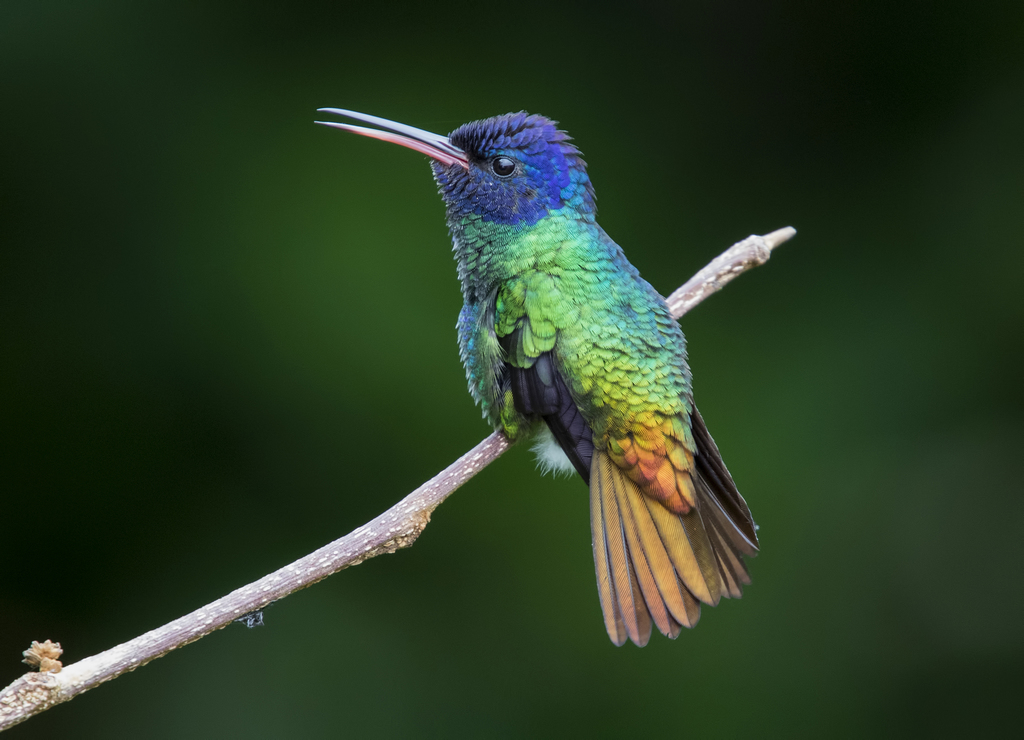
Hummingbirds
Trochilidae
Hummingbirds are birds native to the Americas and comprise the biological family Trochilidae. With approximately 375 species and 113 genera, they occur from Alaska to Tierra del Fuego, but most species are found in Central and South America. As of 2026, 21 hummingbird species are listed as endangered or critically endangered, with about 255 species declining in population.
Hummingbirds have varied specialized characteristics to enable rapid, maneuverable flight: exceptional metabolic capacity, adaptations to high altitude, sensitive visual and communication abilities, and long-distance migration in some species. Among all birds, male hummingbirds have the widest diversity of plumage color, particularly in blues, greens, and purples. Hummingbirds are the smallest mature birds, measuring 7.5–13 cm (3–5 in) in length. The smallest is the 5 cm (2.0 in) bee hummingbird, which weighs less than 2.0 g (0.07 oz), and the largest is the 23 cm (9 in) giant hummingbird, weighing 17–31 grams (0.60–1.09 oz). Noted for long beaks, hummingbirds are specialized for feeding on flower nectar, but all species also consume small insects.
6 branches of this family, most-observed first · about 362 known species

Bee Hummingbirds, Emeralds, Mountain-gems, and Allies
subfamilyTrochilinae

Brilliants, Coquettes, and Allies
subfamilyLesbiinae

Mango Hummingbirds and Allies
subfamilyPolytminae
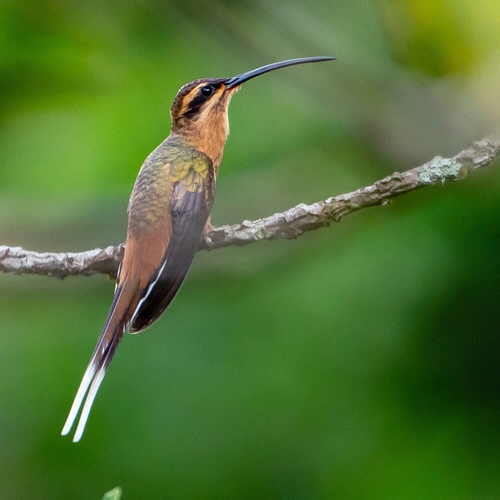
Hermits
subfamilyPhaethornithinae
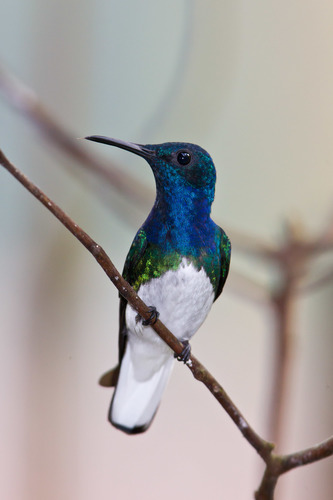
Jacobins and Topazes
subfamilyFlorisuginae
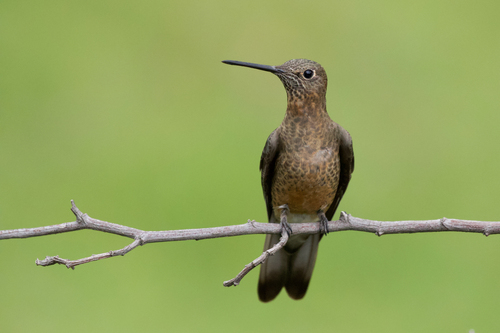
Giant Hummingbirds
subfamilyPatagoninae
Where it lives
Recorded sightings
—
geo-referenced records in GBIF, from museums, herbaria and field observers.
Drag the globe to turn it. Dots are where records exist, not a range map; darker means more records.
In the stacks
Searching the stacks…
Every page naming Trochilidae in the Biodiversity Heritage Library →
This page is assembled live from iNaturalist, GBIF, Wikipedia, the Source Library and the Internet Archive. It is not yet part of the hand-edited codex. iNaturalist taxon 5562.