- Animals
- ›Arthropods
- ›Hexapods
- ›Insects
- ›Winged and Once-winged Insects
- ›Butterflies and Moths
- ›Owlet Moths and Allies
- ›Cutworm Moths and Allies
- ›Cutworms and Dart Moths
- ›Noctuini
- ›Noctuina
- ›Xestia
- ›Xestia
- ›Xestia ochreago
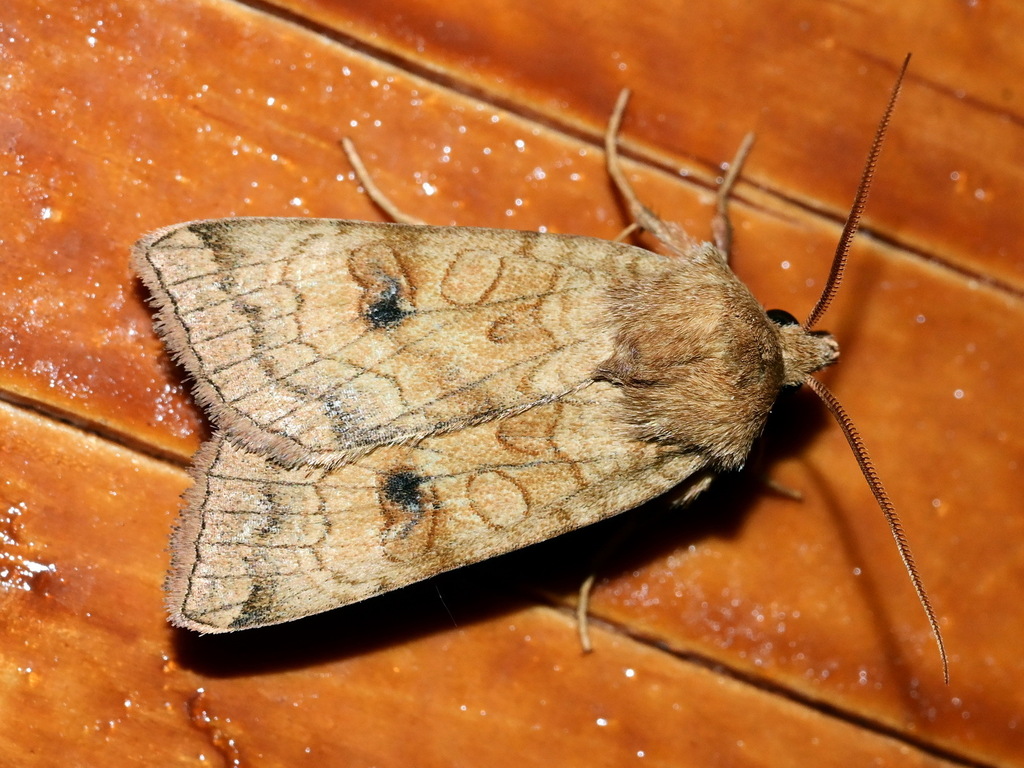
Xestia ochreago
The Phalaena (Noctua) ochreago invalidly described by Esper in 1791 is Tiliacea citrago.
Xestia ochreago is a moth of the family Noctuidae.
From the article Xestia ochreago on Wikipedia (CC BY-SA), quoted section by section
Description
Xestia ochreago has a wingspan of 37–39 mm. The forewings are basically yellowish or pale brown, with transversal wavy dark brown lines and with yellowish rings surrounded by darker fine lines. At the lower rim of the kidney shaped ring there is a characteristic brownish stain. The hind wings are greyish or pale brown.
Range & habitat
This species is found in the Mediterranean and Asia. In Europe it is found in the mountains of Spain, the mountains in the eastern Balkan and the Alps. It is found up to heights of 2,500 meters.
Wikipedia: “Distribution and habitat”
Listen
Looking for field recordings…
Where it lives
Recorded sightings
—
geo-referenced records in GBIF, from museums, herbaria and field observers.
Drag the globe to turn it. Dots are where records exist, not a range map; darker means more records.
In the stacks
Searching the stacks…
Every page naming Xestia ochreago in the Biodiversity Heritage Library →
This page is assembled live from iNaturalist, GBIF, Wikipedia, the Source Library and the Internet Archive. It is not yet part of the hand-edited codex. iNaturalist taxon 552116.