
Hornbills
Bucerotidae
Hornbills are birds found in tropical and subtropical Africa, Asia and Melanesia of the family Bucerotidae. They are characterized by a long, down-curved bill which is frequently brightly coloured and sometimes has a horny casque on the upper mandible. Hornbills have a two-lobed kidney. They are the only birds in which the first and second neck vertebrae (the atlas and axis respectively) are fused together; this probably provides a more stable platform for carrying the bill. The family is omnivorous, feeding on fruit and small animals. They are monogamous breeders nesting in natural cavities in trees and sometimes cliffs. A number of mainly insular species of hornbill with small ranges are threatened with extinction, mainly in Southeast Asia.
In the Neotropical realm, toucans occupy the hornbills' ecological niche, an example of convergent evolution. Despite their close appearances, the two groups are not very closely related, with toucans being related to several families of barbet, while hornbills (and their close relatives, the ground hornbills) are allied with the hoopoes and wood-hoopoes.
16 branches of this family, most-observed first · about 64 known species
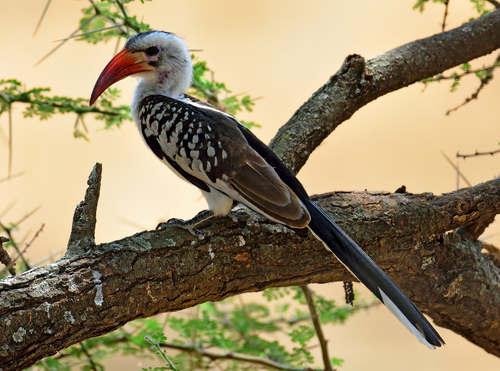
Red-billed and Yellow-billed Hornbills
genusTockus
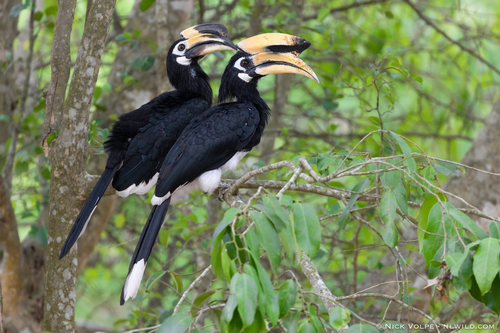
Asian Pied Hornbills and Allies
genusAnthracoceros
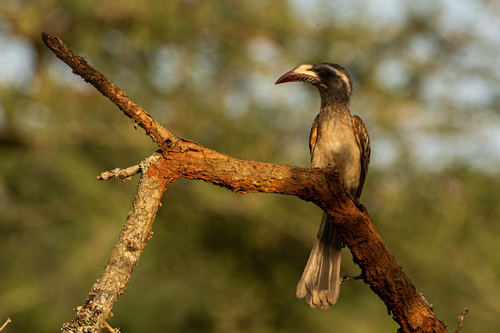
Whistling Hornbills
genusLophoceros
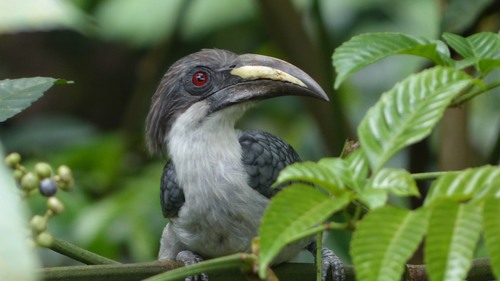
Asian Grey Hornbills
genusOcyceros

Ground Hornbills
genusBucorvus
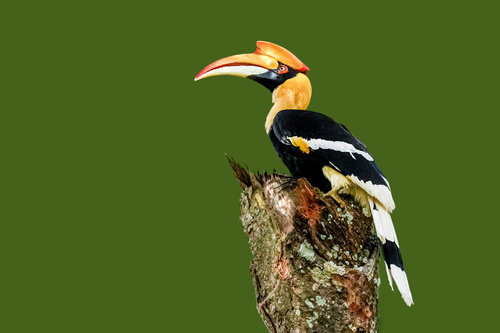
Large Asian Hornbills
genusBuceros
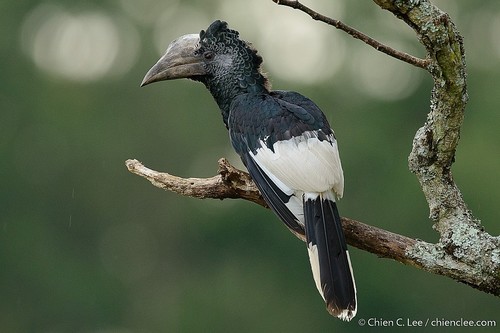
Bycanistes Hornbills
genusBycanistes
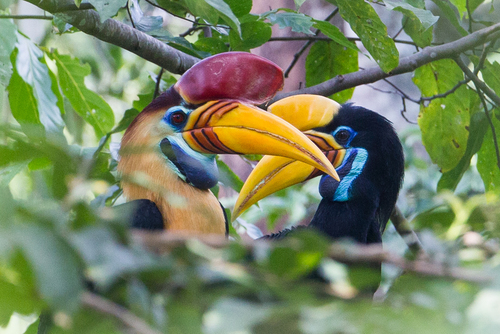
Rhyticeros
genusRhyticeros
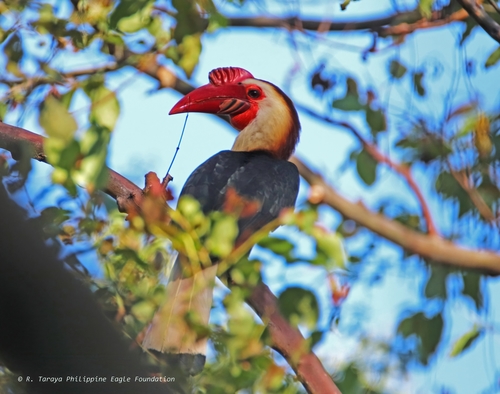
Rhabdotorrhinus
genusRhabdotorrhinus

Brown and Bushy-crested Hornbills
genusAnorrhinus
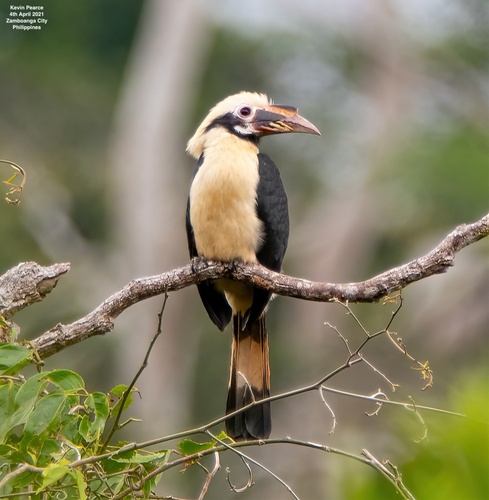
Tarictic Hornbills
genusPenelopides
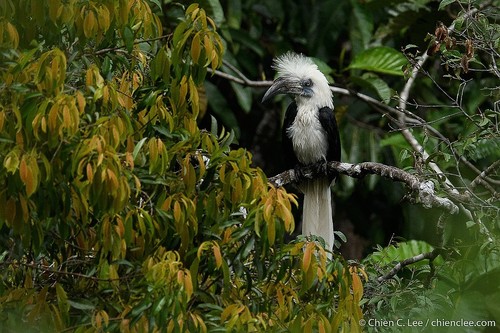
Berenicornis
genusBerenicornis
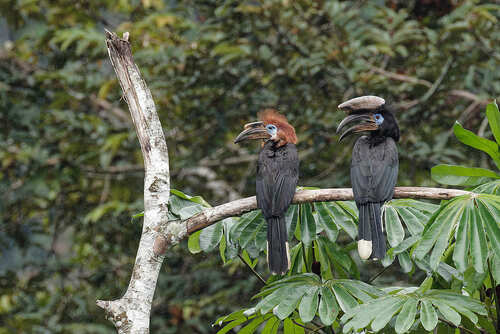
Wattled Hornbills
genusCeratogymna
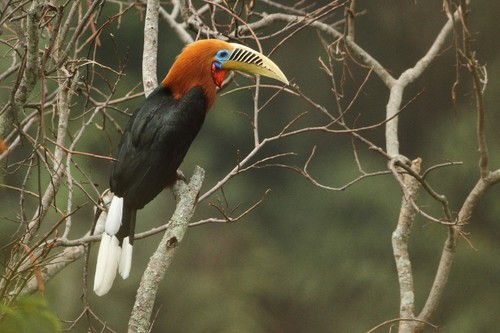
Aceros
genusAceros
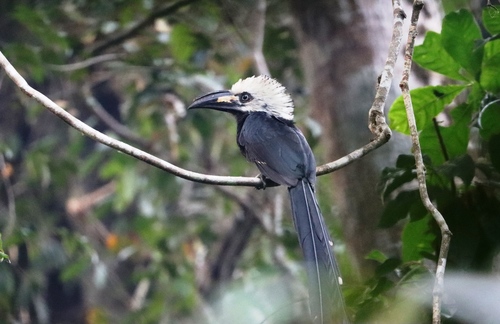
Little and Long-tailed Hornbills
genusHorizocerus
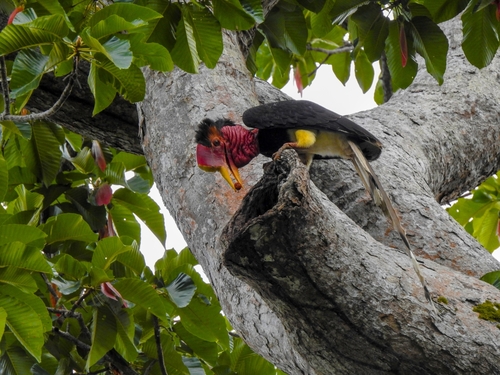
Rhinoplax
genusRhinoplax
Where it lives
Recorded sightings
—
geo-referenced records in GBIF, from museums, herbaria and field observers.
Drag the globe to turn it. Dots are where records exist, not a range map; darker means more records.
In the stacks
Searching the stacks…
Every page naming Bucerotidae in the Biodiversity Heritage Library →
This page is assembled live from iNaturalist, GBIF, Wikipedia, the Source Library and the Internet Archive. It is not yet part of the hand-edited codex. iNaturalist taxon 5438.