- Animals
- ›Arthropods
- ›Hexapods
- ›Insects
- ›Winged and Once-winged Insects
- ›Butterflies and Moths
- ›Butterflies
- ›Whites, Yellows, and Sulphurs
- ›Yellows and Sulphurs
- ›Coliadini
- ›Gonepterygina
- ›Gonepteryx
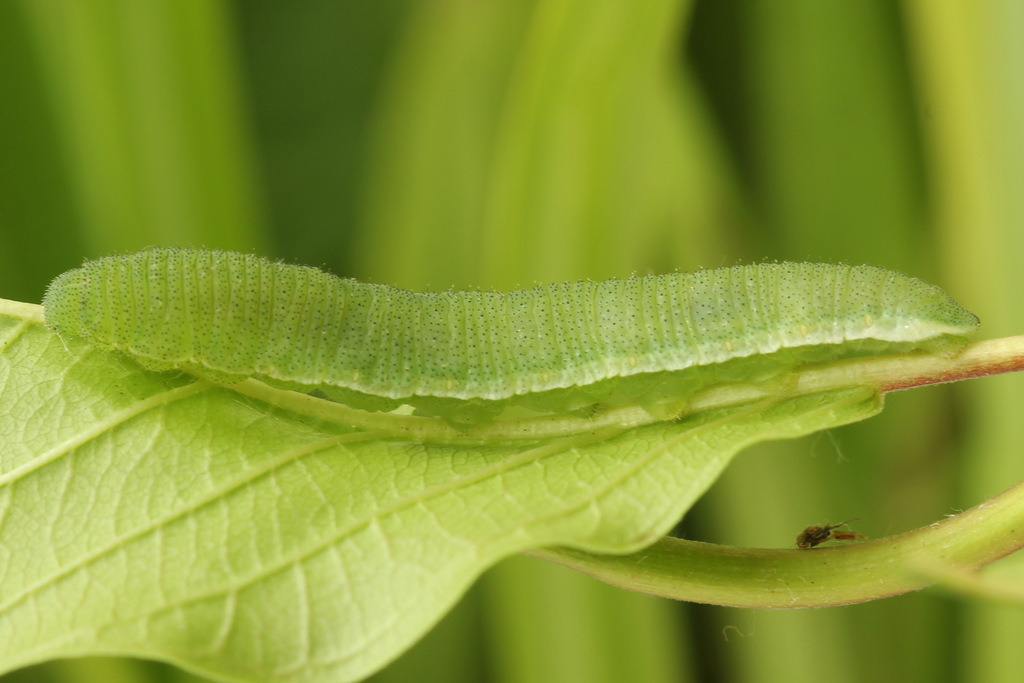
Common Brimstone
Gonepteryx rhamni
Gonepteryx rhamni, commonly named the Common Brimstone, is a butterfly of the family Pieridae. It lives throughout the Palearctic zone and is commonly found across Europe, Asia, and North Africa. Across much of its range, it is the only species of its genus, and is therefore simply known locally as the Brimstone. Its wing span size is 60–74 mm (2.4–2.9 in). It should not be confused with the Brimstone moth Opisthograptis luteolata.
The brimstone relies on two species of buckthorn plants as host plants for its larvae; this influences its geographic range and distribution, as these plants are commonly found in wetlands. The adult brimstone travels to woodland areas to spend seven months overwintering. In spring when their host plants have developed, they return to the wetlands to breed and lay eggs. Both the larval and adult forms of the common brimstone have protective coloration and behaviour that decreases their chances of being recognised and subsequently preyed upon.
From the article Gonepteryx rhamni on Wikipedia (CC BY-SA), quoted section by section
Range & habitat
The Common Brimstone can be commonly found throughout the Palearctic. Individuals have been seen from western Europe to east Asia. The high mobility of this butterfly allows it to search widely for new host plant locations and expand its range. While the geographic distribution of the adult is larger than that of its host plant, its range is nevertheless limited by the presence of host plants due to the needs of its larval stage. The Common Brimstone uses various environments for different stages of its life cycle. The butterfly inhabits wetlands during mating and breeding season, as they provide ideal areas for oviposition due to an abundance of host plants like the alder buckthorn. The Common Brimstone prefers laying eggs on younger host plants with late bud-bursts that are isolated from other plants in the area and exposed to both open space and sun. During the winter, adult brimstones travel to woodlands to hibernate, as they provide ideal overwintering sites with shelters such as evergreen foliage and holly. The Common Brimstone has an appearance that is highly similar to the leaves of these plants, so during hibernation it can remain hidden. In other seasons, habitat selection is also affected by the abundance of nectar as a food source for adult brimstones.
Wikipedia: “Distribution and habitat”
What it does
The common brimstone is one of the longest-living butterflies, with a life expectancy ranging from 10 months to a year. Due to its hibernation and life cycle, it has one generation per year. Development from the laid egg to the emergence of the imago is approximately 50 days. However, the adult brimstone spends a large portion of its life in an overwintering state. The brimstone is highly mobile, feeding and travelling to regions ideal for hibernation during the late summer and fall, and returning to regions ideal for mating and egg-laying during the spring.
Egg. Adult Common Brimstones lay eggs singly on the underside of buckthorn leaves. The eggs are around 1.3 mm tall, and are spindle-shaped in appearance. The eggs change colour over time, initially having a greenish-white colouration, then progressively darker shades of yellow, and finally brown before hatching.
Caterpillar. The larvae of the common brimstone undergo five instars, initially having a length of 1.7 mm in the first instar and reaching up to 34.9 mm in length when fully grown. The caterpillars have a green colouration with white hairs and dark tubercules across its length. When they first hatch, they move to the top side of the leaves and eat them, leaving characteristic hole patterns in their host plants. …
Wikipedia: “Life cycle”
Listen
Looking for field recordings…
Where it lives
Recorded sightings
—
geo-referenced records in GBIF, from museums, herbaria and field observers.
Drag the globe to turn it. Dots are where records exist, not a range map; darker means more records.
In the stacks
Searching the stacks…
Every page naming Gonepteryx rhamni in the Biodiversity Heritage Library →
This page is assembled live from iNaturalist, GBIF, Wikipedia, the Source Library and the Internet Archive. It is not yet part of the hand-edited codex. iNaturalist taxon 52771.