- Plants
- ›Vascular Plants
- ›flowering plants
- ›Dicots
- ›Legumes, Milkworts, and Allies
- ›Legumes
- ›Acacias, Mimosas, Mesquites, and Allies
- ›Ingeae
- ›Enterolobium
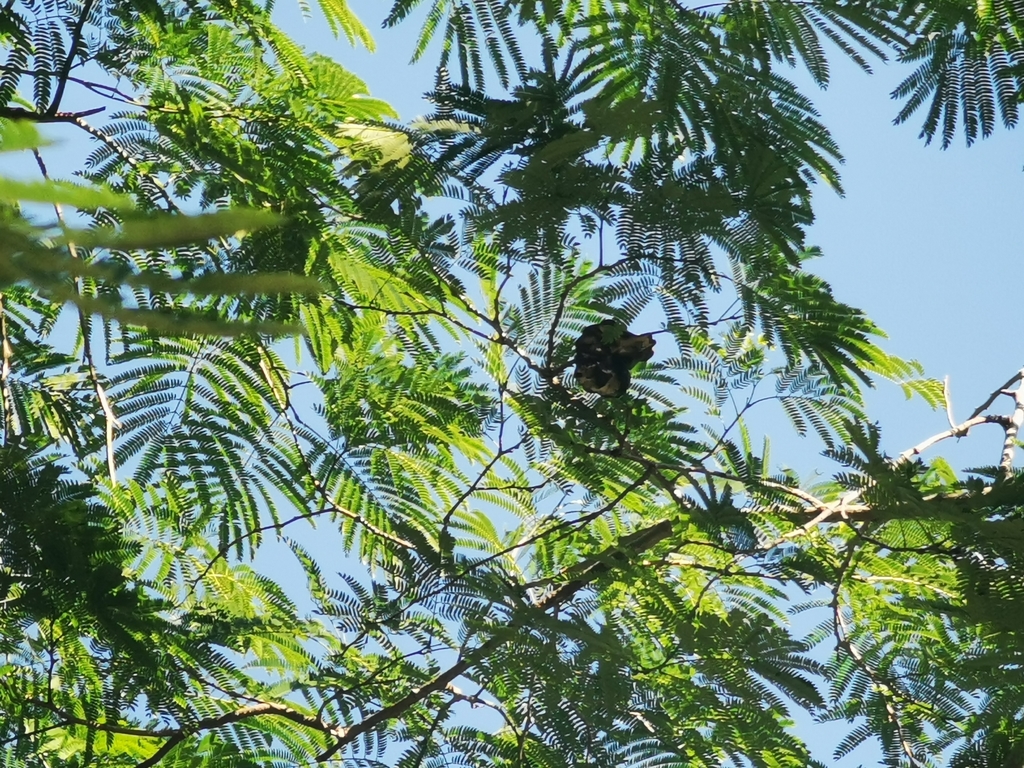
elephant ear tree
Enterolobium cyclocarpum
Enterolobium cyclocarpum, commonly known as conacaste, guanacaste, caro caro, devil's ear tree, monkey-ear tree, or elephant-ear tree, is a species of flowering tree in the family Fabaceae, that is native to tropical regions of the Americas, from central Mexico south to northern Brazil (Roraima) and Venezuela. It is known for its large proportions, expansive, often spherical crown, and curiously shaped seedpods. The abundance of this tree, especially in Guanacaste Province, Costa Rica, where it is prized for the shady relief it provides from the intense sun, coupled with its immensity, have made it a widely recognized species. It is the national tree of Costa Rica.
In North America, it is often called elephant-ear tree, due to the shape of the seedpods. Other common names include devil's ear and earpod tree, parota, and orejón (Spanish) or huanacaxtle (Nahuatl). In El Salvador, it is known as conacaste. In the Yucatán Peninsula, it is known by the Mayan name, pich. In Panama, it is known as a corotú.
From the article Enterolobium cyclocarpum on Wikipedia (CC BY-SA), quoted section by section
Description
Source: The guanacaste is a medium-sized to large tree, growing to 25–35 m (82–115 ft) tall, with a trunk up to 3.5 m (11 ft) in diameter. Unusual in a tree of these proportions, buttresses are completely lacking. The bark is light gray, with prominent dark reddish-brown, vertical fissures. In young trees, these fissures are closer together and their confluence lends a characteristic reddish hue to the bark of guanacaste saplings. Older specimens often present broken, chipped, or scarred bark. The crown is broad and widely spreading. The height at which branches first occur along the trunk – as well as the overall tree shape – vary considerably among individuals and are habitat-dependent characteristics. Frequently, guanacaste trees grow as single specimens in a sunny pasture. Under these conditions, massive, extended, horizontal limbs emerge low on the boles, forming giant, hemispherical, widely spreading crowns. In the forest (where competition for light is intense), trees tend to become taller, and branching occurs at a higher level. …
What it does
Guanacaste trees appear to delay the onset of fruit development—some 9 months—so that seed maturation coincides with the start of the rainy season. This adaptive behavior presumably is an adaptation to give germinating seedlings as much time as possible to establish root systems before the start of the next dry season. Both the jatobá (Hymenaea courbaril) and the cenizaro (Albizia saman) exhibit similar reproductive strategies. Of course, guanacaste trees—like all deciduous and semideciduous species in this part of the world—share in the water-conserving benefits of dry-season leaflessness. Guanacaste flowers are heavily visited by bees—insects that probably are responsible for pollination, as well. Guanacaste seed pods, however, are completely ignored by native fauna and they accumulate on the forest floor underneath parent trees. The seeds are not eaten by any animals currently native where the tree occurs, rendering the plant an evolutionary anachronism: it has been suggested that guanacaste pods were among the foods exploited by certain species of Pleistocene megafauna that became extinct some 10,000 years ago (e.g. giant ground sloths, giant bison). …
Wikipedia: “Ecology”
At the table
Tolerant of a wide range of rainfall levels, temperatures, and soil conditions, they can thrive in most low-elevation, tropical habitats. Guanacaste trees are highly valued as ornamentals, and the shade they provide creates many an oasis on the searing and sun-baked plains in its Pacific slope habitat. It is widely grown as a shade tree to shelter coffee plantations and for shade and forage for cattle; it also improves soil fertility by nitrogen fixation. The guanacaste is found in USDA Growth Zones 10–12. The wood is reddish-brown, lightweight (density 0.34–0.6 g/cm3 (0.20–0.35 oz/cu in)) and water-resistant; it is used to make items such as doors, windows, furniture, and cabinets, and for shipbuilding. The timber provides high chatoyance, with an average value above 20 PZC. It is considered a relatively sustainable resource for wooden furniture and design projects, largely due to the tree's ability to quickly reach large sizes, which also makes it easier to find large natural cuts up to several meters, which is rare for slower-growing woods, such as oak or cedar. The town of La Cruz de Huanacaxtle in Nayarit (Mexico) derives its name from the fact that a cross used to stand there made of guanacaste wood. While the seed pods are still green, they are harvested and the seeds eaten boiled in Mexico. Healthy guanacaste trees generate massive, nearly annual crops of seeds. …
Wikipedia: “Cultivation and uses”
Where it lives
Recorded sightings
—
geo-referenced records in GBIF, from museums, herbaria and field observers.
Drag the globe to turn it. Dots are where records exist, not a range map; darker means more records.
In the stacks
Searching the stacks…
Every page naming Enterolobium cyclocarpum in the Biodiversity Heritage Library →
This page is assembled live from iNaturalist, GBIF, Wikipedia, the Source Library and the Internet Archive. It is not yet part of the hand-edited codex. iNaturalist taxon 52440.