- Animals
- ›Arthropods
- ›Hexapods
- ›Insects
- ›Winged and Once-winged Insects
- ›Butterflies and Moths
- ›Bagworms, Clothes Moths, and Allies
- ›Bagworm Moths
- ›Psychinae
- ›Psychini
- ›Luffia
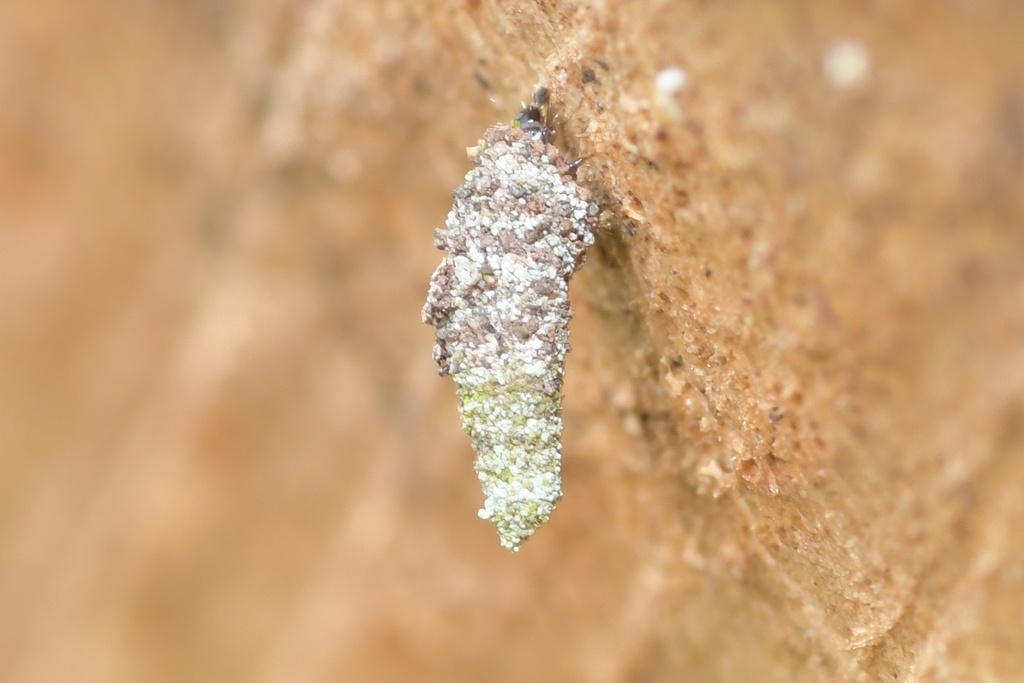
Grey Smoke
Luffia lapidella
Luffia lapidella is a moth of the Psychidae family found in Europe. It was first described by the German zoologist,
Johann August Ephraim Goeze in 1783. The larvae live in cases and feed on lichens and the female moths are wingless.
From the article Luffia lapidella on Wikipedia (CC BY-SA), quoted section by section
Range & habitat
Luffia lapidella is found in Europe including Belgium, the Channel Islands (where it is common), France, Italy, The Netherlands, Spain, southern Switzerland and the United Kingdom. In the spring of 1981, males were found on the wall of a house in Marazion, Cornwall. More males were bred from larvae found within 0.5 miles (0.80 km) of the house. Similar cases have been found elsewhere in Cornwall, but the identification is uncertain without breeding the larvae.
Wikipedia: “Distribution”
What it does
Imago The moth flies from June to July depending on the location. Females are wingless and unable to fly. the males have wings although not all males can fly. L. lapidella has partial parthenogenesis.
Ovum Eggs are laid in the case and hatch in four to five weeks.
Larva The larvae live in cases and feed on algae and lichen. The cases are covered in lichen and sand, are conical, round in cross-section with a width of 2–3 mm (0.079–0.118 in)) and up to 5–7 mm (0.20–0.28 in)) long. They are found on tree trunks, rocks, walls and frames and have a preference for warm dry places. The caterpillar overwinters in the case and can be found from August to May. The case is at 90° to the substrate.
Pupa Pupa can be found from May to June and are attached to the tree or rock where the larva was feeding.
Wikipedia: “Life cycle”
Listen
Looking for field recordings…
Where it lives
Recorded sightings
—
geo-referenced records in GBIF, from museums, herbaria and field observers.
Drag the globe to turn it. Dots are where records exist, not a range map; darker means more records.
In the stacks
Searching the stacks…
Every page naming Luffia lapidella in the Biodiversity Heritage Library →
This page is assembled live from iNaturalist, GBIF, Wikipedia, the Source Library and the Internet Archive. It is not yet part of the hand-edited codex. iNaturalist taxon 522525.