- Animals
- ›Chordates
- ›Vertebrates
- ›Birds
- ›Hawks, Eagles, Kites, and Allies
- ›Hawks, Eagles, and Kites
- ›Buteonine Hawks, Kites, and allies
- ›Buteo
On eBird ↗
Madagascar Buzzard
Live sightings near you, the range map, bar charts of when it is seen, and Macaulay Library photos and recordings.
Madagascar Buzzard
Buteo brachypterus
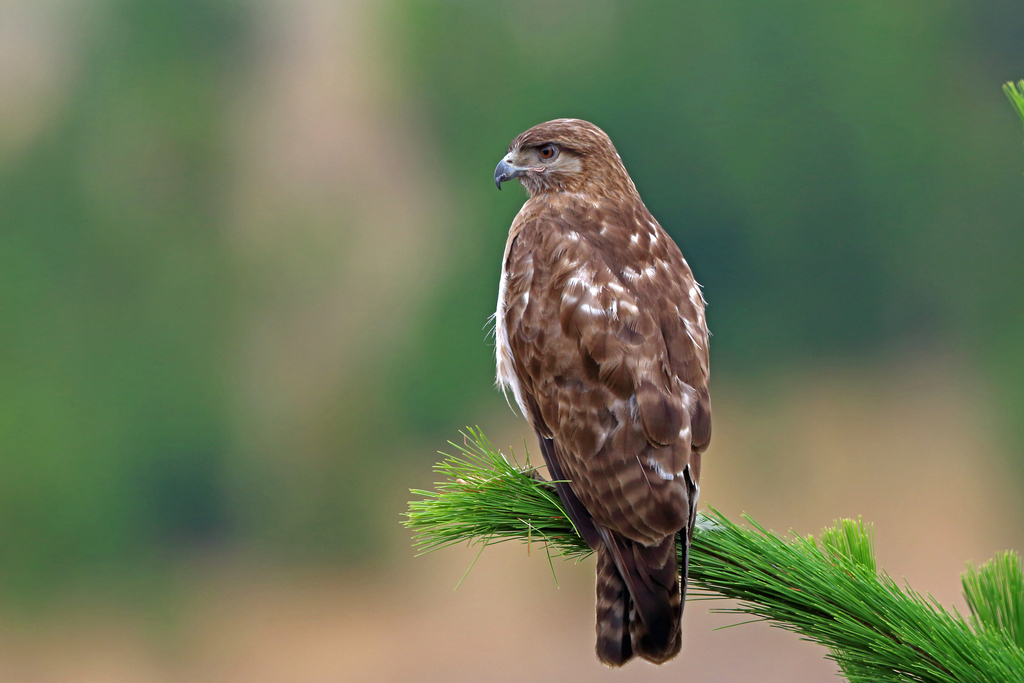
The Madagascar buzzard (Buteo brachypterus) is a bird of prey which is endemic to Madagascar. It is a species from the widespread genus Buteo in the family Accipitridae.
From the article Madagascar buzzard on Wikipedia (CC BY-SA), quoted section by section
Description
The Madagascar buzzard is a typical old-world buzzard showing quite a lot of variability in plumage and which is similar to the forest buzzard of Africa and the palearctic common buzzard. They have a dark grey head, a white patch on the breast, the brownish -white vent and thighs are spotted with brown. The tail is marked with broad brownish-black bars. The bill is black with a greyish blue cere, the eyes are yellow and the legs and feet are pale yellow.
Range & habitat
Endemic to Madagascar where it is common, except for the deforested central plateau where it is less common, there is some indication that its population is increasing as the forest is fragmented. The Madagascar buzzard is adaptable as to its habitat and is found in a wide variety of habitats including forest, open woodland and regenerating, secondary forest. It can also be found on rocky hillsides up to 2300 metres above sea level. Although it is so adaptable it is still less common on the deforested central plateau.
Wikipedia: “Distribution and habitat”
Listen
Looking for field recordings…
Where it lives
Recorded sightings
—
geo-referenced records in GBIF, from museums, herbaria and field observers.
Drag the globe to turn it. Dots are where records exist, not a range map; darker means more records.
In the stacks
Searching the stacks…
Every page naming Buteo brachypterus in the Biodiversity Heritage Library →
This page is assembled live from iNaturalist, GBIF, Wikipedia, the Source Library and the Internet Archive. It is not yet part of the hand-edited codex. iNaturalist taxon 5222.