- Animals
- ›Chordates
- ›Vertebrates
- ›Reptiles
- ›Snakes and Lizards
- ›Lizards
- ›Geckos
- ›Typical Geckos
- ›Hemidactylus
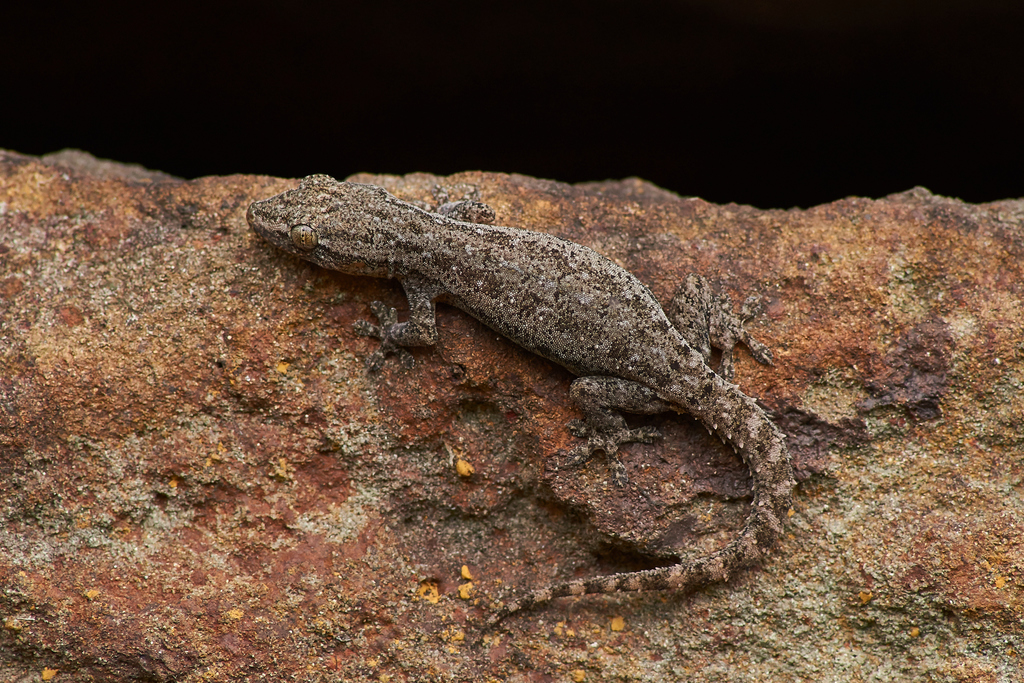
Asian House Gecko
Hemidactylus frenatus
The Common house gecko (Hemidactylus frenatus) is a gecko native to South and Southeast Asia and Near Oceania. It is also known as the Asian house gecko, Pacific house gecko, wall gecko, House lizard, Tiktiki, chipkali and moon lizard.
The common house gecko is nocturnal, hiding during the day and foraging for insects at night. They can be seen climbing walls of houses and other buildings in search of insects attracted to porch lights, and are immediately recognisable by their characteristic chirping.
From the article Common house gecko on Wikipedia (CC BY-SA), quoted section by section
Range & habitat
The common house gecko is by no means a misnomer, displaying a clear preference for urban environments. The synanthropic gecko displays a tendency to hunt for insects in close proximity to urban lights. They have been found in bushland, but the current evidence seems to suggest they have a preference for urban environments, with their distribution being mostly defined by areas within or in close proximity to city bounds. The common house gecko appears to prefer areas in the light which are proximal to cracks, or places to escape. Geckos without an immediate opportunity to escape potential danger display behavioural modifications to compensate for this fact, emerging later in the night and retreating earlier in the morning. Without access to the urban landscape, they appear to prefer habitat which is composed of comparatively dense forest or eucalypt woodland which is proximal to closed forest. The selection of primarily urban habitats makes available the preferred foods of the common house gecko. The bulk of the diet of the gecko is made up of invertebrates, primarily hunted around urban structures. Primary invertebrate food sources include cockroaches, termites, some bees and wasps, butterflies, moths, flies, spiders, and several beetle groupings. It also feeds on molluscs and smaller geckos. …
Wikipedia: “Habitat and diet”
In human culture
The Latin word frenatus means "harnessed" or "bridled". This refers to the dark streaks on the sides of the head between the eyes and the nostrils.
Wikipedia: “Etymology”
Where it lives
Recorded sightings
—
geo-referenced records in GBIF, from museums, herbaria and field observers.
Drag the globe to turn it. Dots are where records exist, not a range map; darker means more records.
In the stacks
Searching the stacks…
Every page naming Hemidactylus frenatus in the Biodiversity Heritage Library →
This page is assembled live from iNaturalist, GBIF, Wikipedia, the Source Library and the Internet Archive. It is not yet part of the hand-edited codex. iNaturalist taxon 51940.