- Animals
- ›Chordates
- ›Vertebrates
- ›Ray-finned Fishes
- ›Spiny-rayed fishes
- ›Perches, Scorpionfishes, Sticklebacks, and Allies
- ›Perches, groupers and allies
- ›Perches, Darters, and allies
- ›Darters
- ›Etheostoma
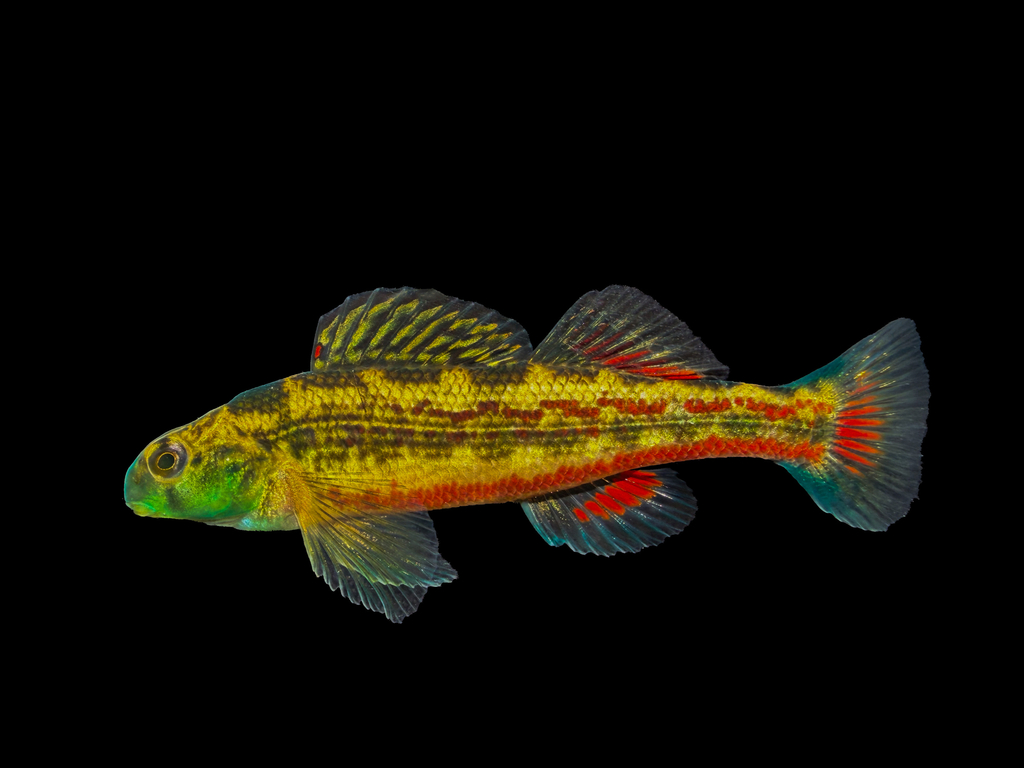
Cherry Darter
Etheostoma etnieri
The cherry darter (Etheostoma etnieri) is a species of freshwater ray-finned fish, a darter from the subfamily Etheostomatinae, part of the family Percidae, which also contains the perches, ruffes and pikeperches. It is endemic to the upper Caney Fork system of the Cumberland River drainage in the U.S. state of Tennessee.
From the article Cherry darter on Wikipedia (CC BY-SA), quoted section by section
Description
The largest males have a standard length of 64 mm (2.5 in) and the largest females 55 mm (2.2 in).
Wikipedia: “Appearance and anatomy”
Range & habitat
The cherry darter is endemic to the upper Caney Fork system of the Cumberland River drainage, central Tennessee. The species is limited to streams flowing over limestones of the Mississippian Eastern Highland Rim. They do not occur in cool, slightly acidic headwaters or in the lower portion of Caney Fork River system. The range includes White, Putnam, Warren, Van Buren, and Grundy Counties.
Wikipedia: “Distribution”
What it does
Cherry darters feed primarily on aquatic invertebrates and insects, and are known to inhabit a wide range of habitats from springs and small creeks to large rivers. This species has a preference for small- to medium-sized creeks or streams and is usually collected in riffles and runs of moderate to low turbulence, especially over a gravel substrate. In larger streams and rivers, the species is typically found along the margins.
Wikipedia: “Ecology”
In human culture
Cherry darter spawning peaks in April and early May, and they reach sexual maturity at the age of two. The cherry darter has not been studied extensively, so little else is known of its life history.
Wikipedia: “Life history”
Where it lives
Recorded sightings
—
geo-referenced records in GBIF, from museums, herbaria and field observers.
Drag the globe to turn it. Dots are where records exist, not a range map; darker means more records.
In the stacks
Searching the stacks…
Every page naming Etheostoma etnieri in the Biodiversity Heritage Library →
This page is assembled live from iNaturalist, GBIF, Wikipedia, the Source Library and the Internet Archive. It is not yet part of the hand-edited codex. iNaturalist taxon 50958.