Melampittas
Melampittidae
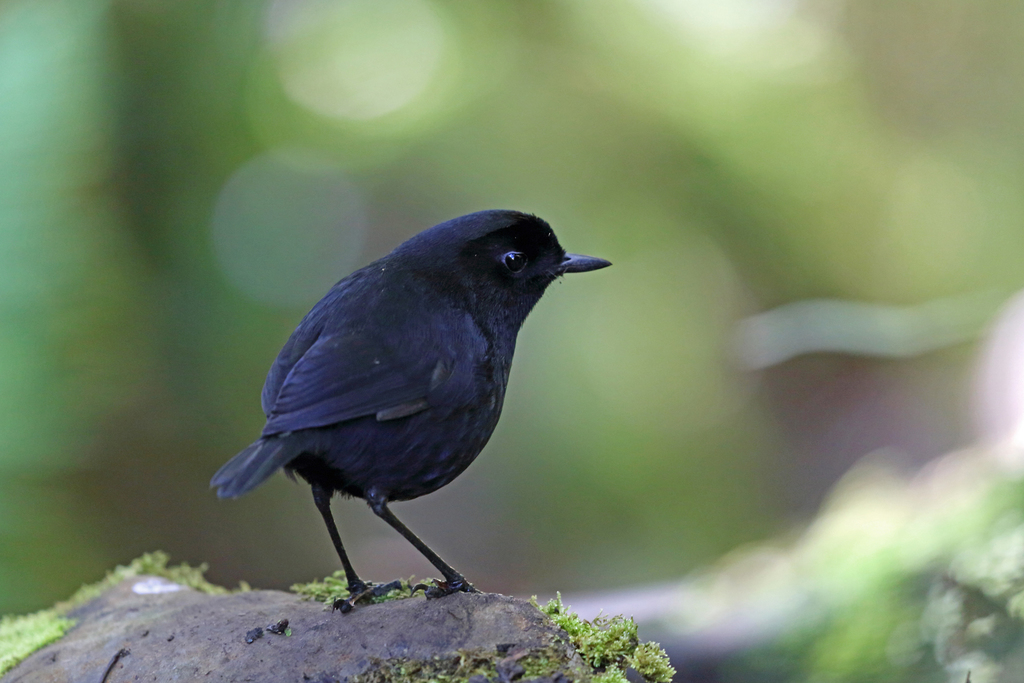
The melampittas are a family, Melampittidae, of New Guinean passerine birds containing two enigmatic species. The two species are found in two genera, the greater melampitta in the genus Megalampitta and the lesser melampitta in the genus Melampitta. They are little studied and before being established as a family in 2014 their taxonomic relationships with other birds were uncertain, being considered at one time related variously to the pittas, Old World babblers and birds-of-paradise.
These are small to medium-sized birds with black plumage, strong legs and short, rounded wings. Mostly terrestrial, they live in montane forest. The greater melampitta has more specific habitat needs, needing limestone karst where it is thought to roost and nest in limestone sinkholes. Insects and small vertebrates are taken from the forest leaf litter. Little is known about their breeding behaviour, with only the nests of the lesser melampitta having been seen by scientists. While the greater melampitta is not generally common, neither species is thought to be declining due to human activities, and both species are considered to be safe from extinction by the International Union for Conservation of Nature.
2 branches of this family, most-observed first · about 2 known species
See this branch on the Wheel of Life →

Where it lives
Recorded sightings
—
geo-referenced records in GBIF, from museums, herbaria and field observers.
Drag the globe to turn it. Dots are where records exist, not a range map; darker means more records.
In the stacks
Searching the stacks…
Every page naming Melampittidae in the Biodiversity Heritage Library →
This page is assembled live from iNaturalist, GBIF, Wikipedia, the Source Library and the Internet Archive. It is not yet part of the hand-edited codex. iNaturalist taxon 509332.