- Animals
- ›Arthropods
- ›Hexapods
- ›Insects
- ›Winged and Once-winged Insects
- ›Butterflies and Moths
- ›Butterflies
- ›Whites, Yellows, and Sulphurs
- ›Yellows and Sulphurs
- ›Coliadini
- ›Callidryina
- ›Phoebis
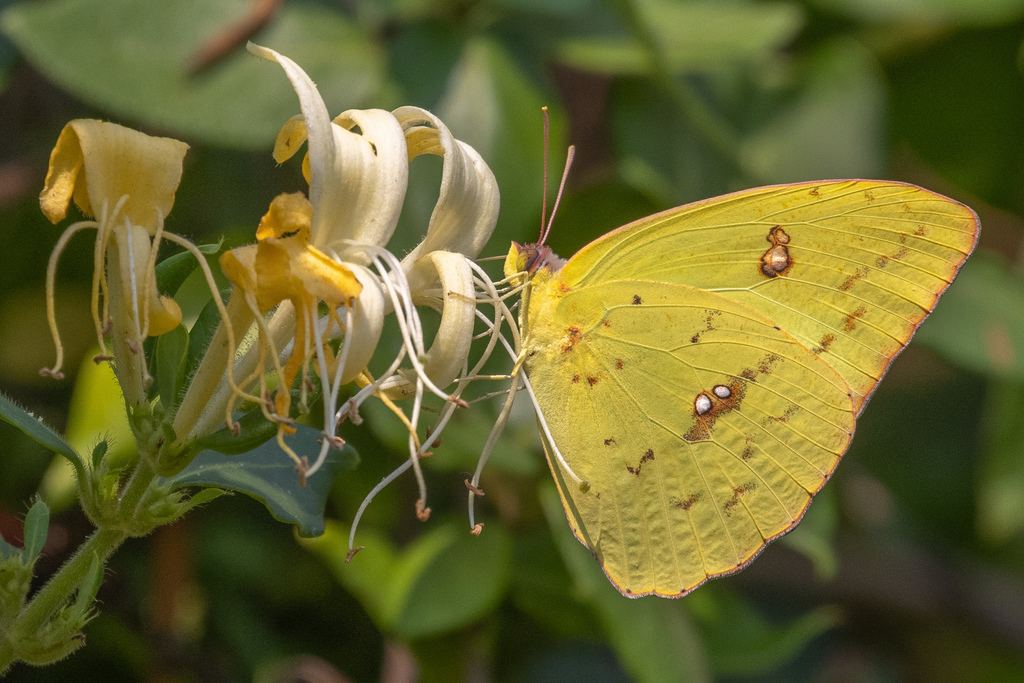
Cloudless Sulphur
Phoebis sennae
Phoebis sennae, the cloudless sulphur, is a mid-sized butterfly in the family Pieridae found in the Americas. There are several similar species such as the clouded sulphur (Colias philodice), the yellow angled-sulphur (Anteos maerula), which has angled wings, the statira sulphur (Aphrissa statira), and other sulphurs, which are much smaller. The species name comes from the genus Senna to which many of the larval host plants belong.
From the article Phoebis sennae on Wikipedia (CC BY-SA), quoted section by section
Range & habitat
Their range is wide, from South America to southern Canada, in particular southwestern Ontario. They are most common from Argentina to southern Texas, Georgia, and Florida, but are often visitors outside this range becoming more rare further north.
Wikipedia: “Distribution”
What it does
The adult butterfly feeds on nectar from many different flowers with long tubes including cordia, bougainvillea, cardinal flower, hibiscus, lantana, and wild morning glory. The larvae also feed on sennas and partridge peas. Senna hebecarpa (American senna) is a larval host and nectar source for the cloudless sulphur butterfly in the Eastern United States.
Wikipedia: “Diet”
Listen
Looking for field recordings…
Where it lives
Recorded sightings
—
geo-referenced records in GBIF, from museums, herbaria and field observers.
Drag the globe to turn it. Dots are where records exist, not a range map; darker means more records.
In the stacks
Searching the stacks…
Every page naming Phoebis sennae in the Biodiversity Heritage Library →
This page is assembled live from iNaturalist, GBIF, Wikipedia, the Source Library and the Internet Archive. It is not yet part of the hand-edited codex. iNaturalist taxon 48550.