- Animals
- ›Arthropods
- ›Hexapods
- ›Insects
- ›Winged and Once-winged Insects
- ›Ants, Bees, Wasps, and Sawflies
- ›Narrow-waisted Wasps, Ants, and Bees
- ›Ants, Bees, and Stinging Wasps
- ›Bees and Apoid Wasps
- ›Bees
- ›Mason, Leafcutter, Carder, and Resin Bees
- ›Megachilinae
- ›Osmiini
- ›Osmia
- ›Melanosmia
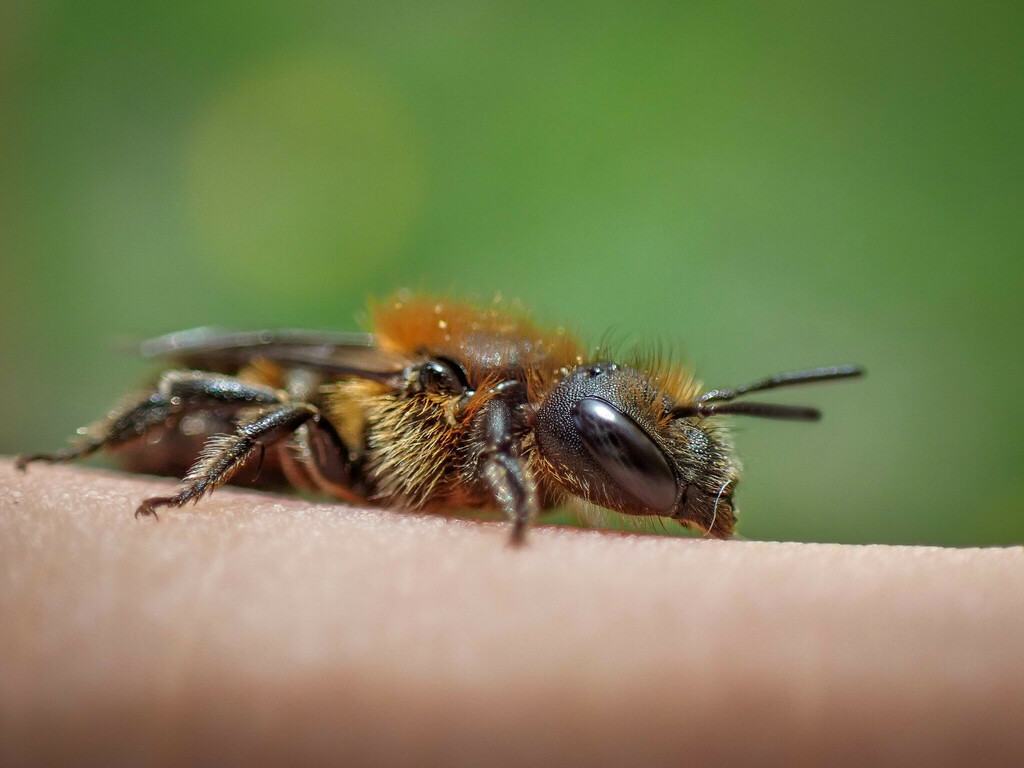
Wall Mason Bee
Osmia parietina
Osmia parietina, also known as the Western mason bee or wall mason bee, is a species of solitary bee within the family Megachilidae.
From the article Osmia parietina on Wikipedia (CC BY-SA), quoted section by section
Description
Osmia parietina is mostly black in colour, however possesses ginger pubescence on top of the abdomen. They are a medium sized bee, which can be found in flight between the months of May and July.
Range & habitat
Osmia parietina can be found across Europe, however is mostly restricted to upland, hilly and mountainous areas. It has been recorded throughout much of Northern Eurasia including the United Kingdom, Spain, Greece and Russia. Osmia parietina is associated with areas of unimproved grassland, where their primary nectar source bird's foot trefoil (Lotus corniculatus) grows. They also have a preference for upland herb rich pastures and woodland glades. Females build their nests inside the crevices of drystone walls, rock faces and standing deadwood.
Wikipedia: “Distribution and habitat”
What it does
Although L. corniculatus is the primary nectar source for Osmia parietina, it has been recorded visiting flowers of other plant species such as: Ajuga reptans, Hippocrepis comosa, Rubus fruticosus, Sedum reflexum, Trifolium pratense and Veronica chamaedrys. The Western mason bee is also one of several host species for the parasitic Northern Osmia ruby-tailed wasp (Chrysura hirsuta).
Wikipedia: “Ecology”
Listen
Looking for field recordings…
Where it lives
Recorded sightings
—
geo-referenced records in GBIF, from museums, herbaria and field observers.
Drag the globe to turn it. Dots are where records exist, not a range map; darker means more records.
In the stacks
Searching the stacks…
Every page naming Osmia parietina in the Biodiversity Heritage Library →
This page is assembled live from iNaturalist, GBIF, Wikipedia, the Source Library and the Internet Archive. It is not yet part of the hand-edited codex. iNaturalist taxon 484590.