- Animals
- ›Arthropods
- ›Hexapods
- ›Insects
- ›Winged and Once-winged Insects
- ›Ants, Bees, Wasps, and Sawflies
- ›Narrow-waisted Wasps, Ants, and Bees
- ›Ants, Bees, and Stinging Wasps
- ›Bees and Apoid Wasps
- ›Bees
- ›Plasterer Bees
- ›Colletinae
- ›Colletes
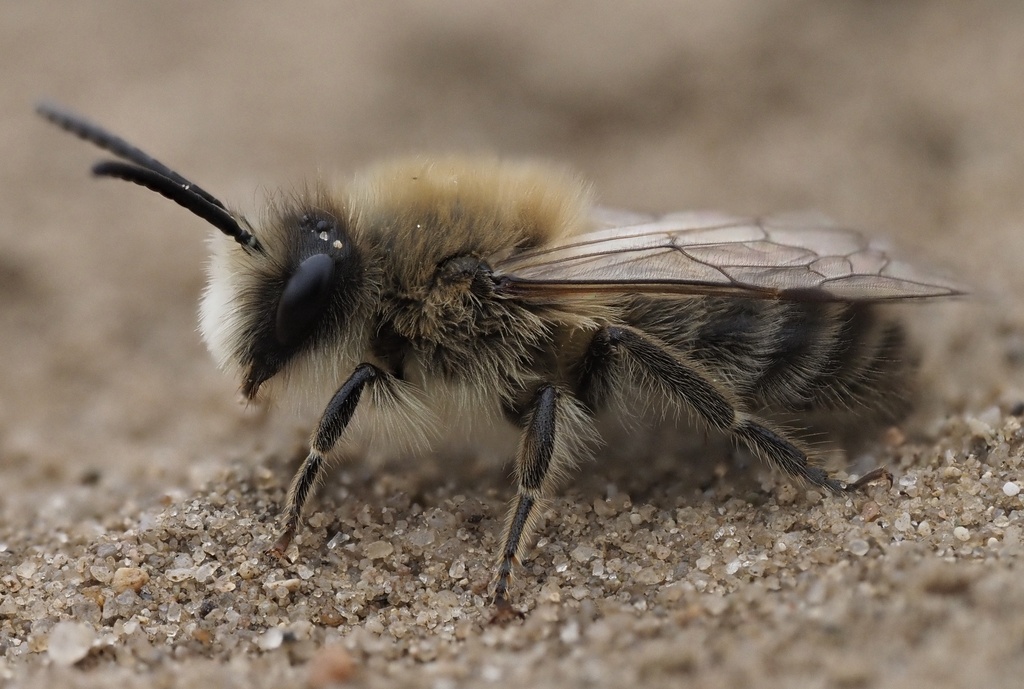
Early Cellophane Bee
Colletes cunicularius
Colletes cunicularius, the vernal colletes or spring mining bee, is a species of solitary bee from the family Colletidae which is widespread in the Palearctic from Britain to the Pacific Ocean which nests in areas of open, sandy soil.
From the article Colletes cunicularius on Wikipedia (CC BY-SA), quoted section by section
Description
Colletes cinicularius is a large species of Colletes which has an unbanded, hairy, black abdomen which contrasts with the thorax which is covered with brown hair. The most likely confusion species in Britain is Andrena scotica as this also has an early flight period but C. cunicularius is larger than A.scotica with longer antennae and does not have a fovea on the face. The males are smaller and paler than the females.
Range & habitat
Colletes cunicularius is widespread in the Palearactic from Great Britain in the west to the Pacific coasts of Siberia and China in the east. In Great Britain it was restricted to the western coastal areas between south Wales and Cumbria but it has been expanding its range inland. As of 2015 it had recently colonised Jersey from the nearby continent and this may also be the source of Colletes cunicularius which have begun to breed in southern England.
Wikipedia: “Distribution”
What it does
Colletes cunicularius is a species associated with sparsely vegetated sandy areas, in Britain it was associated with large, mature coastal sand dunes which were near to areas where creeping willow (Salix repens) grows. Bees from Europe tended to be associated with alluvial area where rivers in flood has removed most of the vegetation and in both Britain and Europe this species has colonised man-made habitats such as sand pits. The British population was restricted to areas of dunes where it nests in erosion hollows within old dunes. It is univoltine, i.e. there is one generation per year, and it has a flight period of March to May, sometimes into June, which is earlier than most other species of Colletes. C. cunicularius forages from a wide variety of flowers but in Great Britain, the most important is creeping willow with other species of Salix being used if creeping willow is not present. Elsewhere it is much more catholic in the plants it forages from, although in Finland it has also been reported as mainly specialising on willows while in Italy at was recorded as specialising in pollinating species in the family Fabaceae. The male C. …
Wikipedia: “Habitat and ecology”
Listen
Looking for field recordings…
Where it lives
Recorded sightings
—
geo-referenced records in GBIF, from museums, herbaria and field observers.
Drag the globe to turn it. Dots are where records exist, not a range map; darker means more records.
In the stacks
Searching the stacks…
Every page naming Colletes cunicularius in the Biodiversity Heritage Library →
This page is assembled live from iNaturalist, GBIF, Wikipedia, the Source Library and the Internet Archive. It is not yet part of the hand-edited codex. iNaturalist taxon 484487.