- Animals
- ›Chordates
- ›Vertebrates
- ›Mammals
- ›Therians
- ›Placental Mammals
- ›Armadillos, Sloths, and Anteaters
- ›Sloths and Anteaters
- ›Sloths
- ›Two-toed Sloths
- ›Choloepus
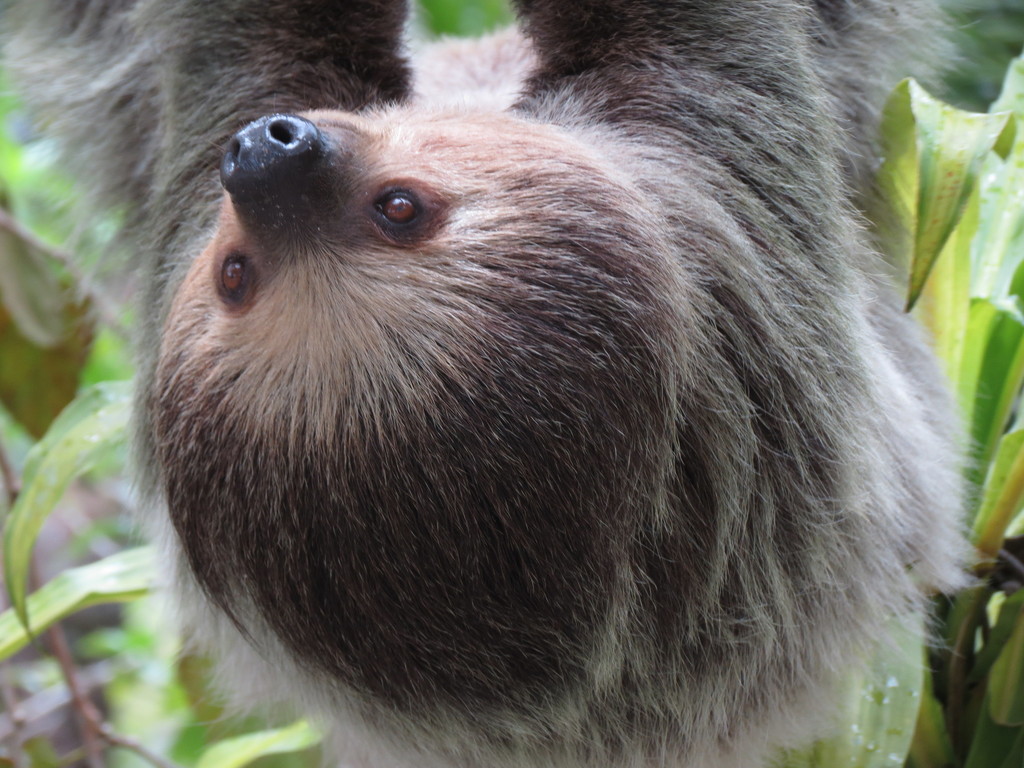
Linnaeus's Two-toed Sloth
Choloepus didactylus
Linnaeus's two-toed sloth (Choloepus didactylus), also known as the southern two-toed sloth, unau, or Linne's two-toed sloth is a species of sloth from South America, found in Venezuela, Suriname, Guyana, French Guiana, Colombia, Ecuador, Peru, and Brazil north of the Amazon River. There is now evidence suggesting the species' range expands into Bolivia. It's the largest extant sloth species.
From the article Linnaeus's two-toed sloth on Wikipedia (CC BY-SA), quoted section by section
Description
Males and females are the same size, growing to lengths of approximately 53 to 89 cm (21 to 35 in), not including the length of the tail, and weigh approximately 4 to 11 kg (9 to 24 lb). Their fur color ranges from a brownish yellow to a pale tone of brown, however, in the wild their fur sometimes has a green hue from algae that grows on their fur during the rainy season. Their belly fur is slightly lighter in color than the body and they have no undercoat. The belly hair is parted along the midline and flows towards the animals back (spine), the opposite direction that fur flows on most other mammals. Young sloths tend to have softer and darker fur than adults.
What it does
C. didactylus is a solitary, nocturnal and arboreal animal, found in rainforests. The two-toed sloth falls prey to South American coatis and wild cats such as the ocelot, margay and jaguar as well as harpy eagles. Predation mainly occurs when the sloth descends to the ground in order to defecate or change trees. Anacondas have also been known to hunt sloths. It is able to swim, making it possible to cross rivers and creeks, but maybe also making it more available to a predator like a green anaconda. Two-toed sloths live in ever-wet tropical rainforests that are hot and humid. They tend to live in areas where there is a lot of vine growth so they can easily travel from tree to tree in the canopies of the forests. They mainly eat leaves, but there is lacking data on the extent of their diet due to their nocturnal lifestyle and camouflage. C. didactylus, similar to other sloth species, have a low rate of metabolism, food intake, and defecation, despite their relatively large body mass and their high volumes of methane production. They retain their digested material for long periods of time, due to a combination of their low defecation rates and large digestive systems. This long digestion period appears to cause the sloths' high volumes of methane production, more than most other, similar herbivores. …
Wikipedia: “Ecology”
Listen
Looking for field recordings…
Where it lives
Recorded sightings
—
geo-referenced records in GBIF, from museums, herbaria and field observers.
Drag the globe to turn it. Dots are where records exist, not a range map; darker means more records.
In the stacks
Searching the stacks…
Every page naming Choloepus didactylus in the Biodiversity Heritage Library →
This page is assembled live from iNaturalist, GBIF, Wikipedia, the Source Library and the Internet Archive. It is not yet part of the hand-edited codex. iNaturalist taxon 47100.