- Animals
- ›Chordates
- ›Vertebrates
- ›Mammals
- ›Therians
- ›Placental Mammals
- ›Armadillos, Sloths, and Anteaters
- ›Armadillos
- ›Short-nosed Armadillos
- ›Euphractidae
- ›Hairy and Pygmy Armadillos
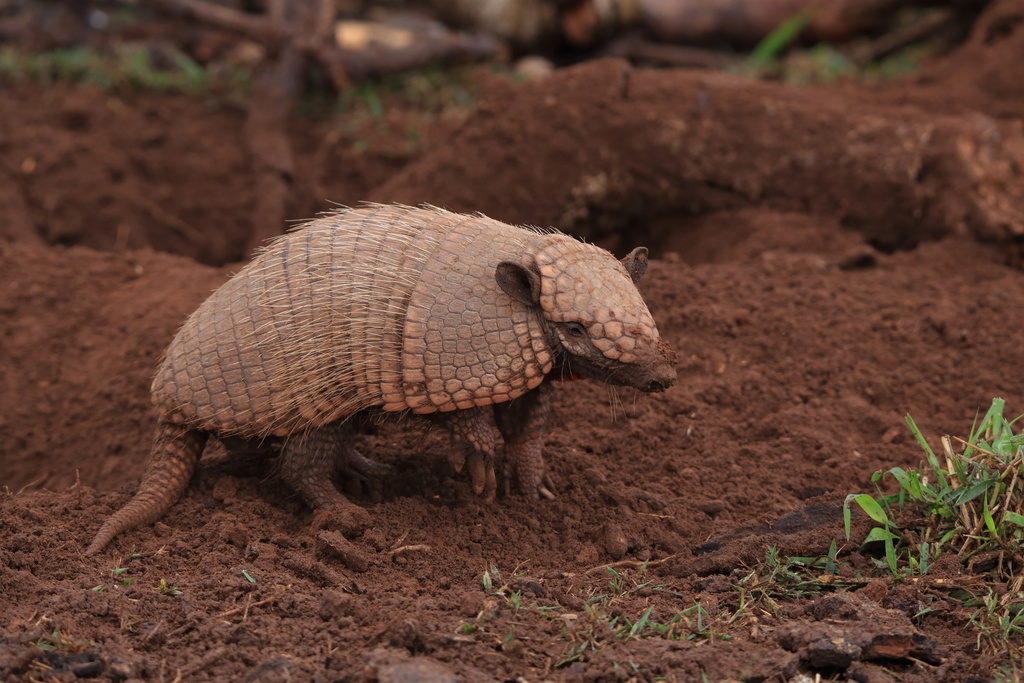
Euphractus
The six-banded armadillo (Euphractus sexcinctus), also known as the yellow armadillo, is an armadillo found in South America. The sole extant member of its genus, it was first described by Swedish zoologist Carl Linnaeus in 1758. The six-banded armadillo is typically between 40 and 50 centimeters (16 and 20 in) in head-and-body length, and weighs 3.2 to 6.5 kilograms (7.1 to 14.3 lb). The carapace (hard shell on the back) is pale yellow to reddish brown, marked by scales of equal length, and scantily covered by buff to white bristle-like hairs. The forefeet have five distinct toes, each with moderately developed claws.
Six-banded armadillos are efficient diggers and form burrows to live in and search for prey. The armadillo is alert and primarily solitary. An omnivore, it feeds on insects, ants, carrion, and plant material. Due to their poor eyesight, armadillos rely on their sense of smell to detect prey and predators. Births take place throughout the year; gestation is 60 to 64 days long, after which a litter of one to three is born. Weaning occurs at one month, and juveniles mature by nine months. The six-banded armadillo inhabits savannas, primary and secondary forests, cerrados, shrublands, and deciduous forests. Fairly common, its range spans from Brazil and southern Suriname in the northeast through Bolivia, Paraguay, and Uruguay into northern Argentina in the southeast. The International Union for the Conservation of Nature and Natural Resources (IUCN) classifies it as least concern, and there are no major threats to its survival.
1 branches of this genus, most-observed first · about 1 known species
See this branch on the Wheel of Life →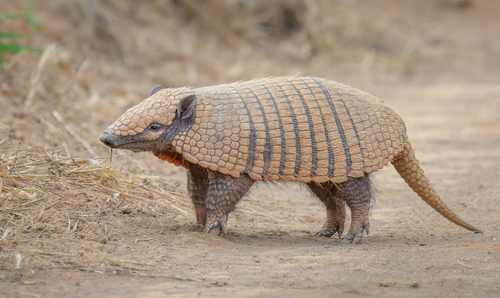
Where it lives
Recorded sightings
—
geo-referenced records in GBIF, from museums, herbaria and field observers.
Drag the globe to turn it. Dots are where records exist, not a range map; darker means more records.
In the stacks
Searching the stacks…
Every page naming Euphractus in the Biodiversity Heritage Library →
This page is assembled live from iNaturalist, GBIF, Wikipedia, the Source Library and the Internet Archive. It is not yet part of the hand-edited codex. iNaturalist taxon 47082.