
Armadillos
Cingulata
Cingulata, part of the superorder Xenarthra, is an order of armored New World placental mammals. The armadillos, whose species are split between the families Dasypodidae and Chlamyphoridae, are the only surviving members of the order. Two groups of cingulates much larger than extant armadillos (maximum body mass of 45 kg (100 lb) in the case of the giant armadillo) existed until recently: pampatheriids, which reached weights of up to 200 kg (440 lb) and chlamyphorid glyptodonts, which attained masses of 2,000 kg (4,400 lb) or more.
The cingulate order originated in South America during the Paleocene epoch about 66 to 56 million years ago, and due to the continent's former isolation remained confined to it during most of the Cenozoic. However, the formation of a land bridge allowed members of all three families to migrate to southern North America during the Pliocene or early Pleistocene as part of the Great American Interchange. After surviving for tens of millions of years, all of the pampatheriids and giant glyptodonts apparently died out during the Quaternary extinction event at the beginning of the Holocene, along with much of the rest of the regional megafauna, shortly after the colonization of the Americas by Paleo-Indians.
2 branches of this order, most-observed first · about 25 known species
See this branch on the Wheel of Life →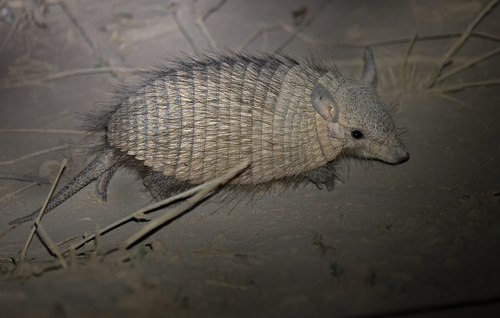
Where it lives
Recorded sightings
—
geo-referenced records in GBIF, from museums, herbaria and field observers.
Drag the globe to turn it. Dots are where records exist, not a range map; darker means more records.
In the stacks
Searching the stacks…
Every page naming Cingulata in the Biodiversity Heritage Library →
This page is assembled live from iNaturalist, GBIF, Wikipedia, the Source Library and the Internet Archive. It is not yet part of the hand-edited codex. iNaturalist taxon 67639.