- Animals
- ›Arthropods
- ›Hexapods
- ›Insects
- ›Winged and Once-winged Insects
- ›Cockroaches and Termites
- ›Giant and Wood Cockroaches
- ›Wood Cockroaches
- ›Ectobiinae
- ›Ectobius
- ›Ectobius
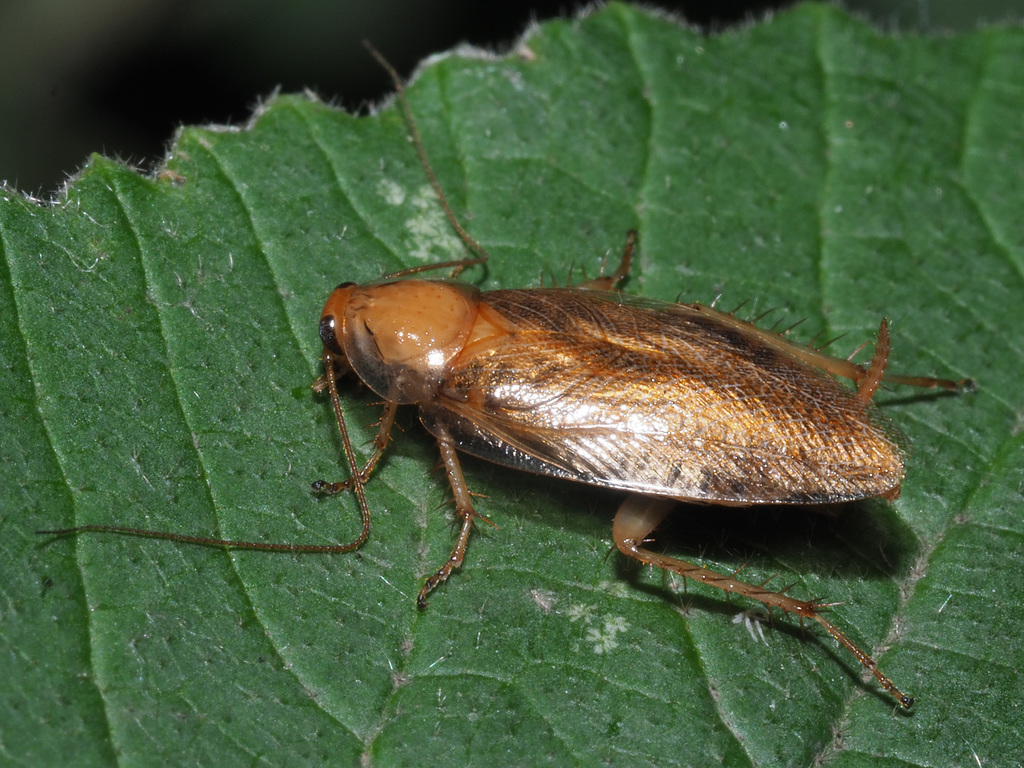
Amber Wood Cockroach
Ectobius vittiventris
Ectobius vittiventris, the amber wood cockroach, amber forest cockroach or garden cockroach, is a species belonging to the order Blattodea and is a type of wood cockroach originally from southern Europe. It is completely harmless to humans and is not a storage pest, as it only feeds on decomposing plant material and perishes within a few days in human dwellings due to a lack of food. Its original range was south of the Alps, but is now permanently established north of the Alps and in southern Germany.
Since the amber forest cockroach is capable of flight, it accidentally finds its way into human dwellings, especially in areas close to its natural habitat. It is attracted by artificial light sources.
From the article Ectobius vittiventris on Wikipedia (CC BY-SA), quoted section by section
Range & habitat
The natural habitat of the amber forest cockroach is outdoors in low bushes and gardens, often under pots. It feeds on decomposing plant material. Warm, dry summers can encourage mass reproduction. Then there is a good chance that some make their way into homes.
Wikipedia: “Habitat”
Listen
Looking for field recordings…
Where it lives
Recorded sightings
—
geo-referenced records in GBIF, from museums, herbaria and field observers.
Drag the globe to turn it. Dots are where records exist, not a range map; darker means more records.
In the stacks
Searching the stacks…
Every page naming Ectobius vittiventris in the Biodiversity Heritage Library →
This page is assembled live from iNaturalist, GBIF, Wikipedia, the Source Library and the Internet Archive. It is not yet part of the hand-edited codex. iNaturalist taxon 468973.