- Animals
- ›Arthropods
- ›Hexapods
- ›Insects
- ›Winged and Once-winged Insects
- ›Butterflies and Moths
- ›Plume Moths and Allies
- ›Plume Moths
- ›Pterophorinae
- ›Pterophorini
- ›Merrifieldia
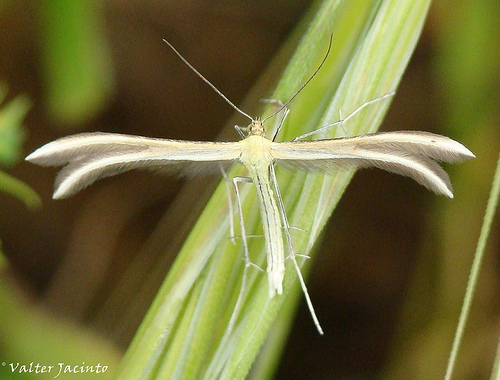
Western Thyme Plume Moth
Merrifieldia tridactyla
Merrifieldia tridactyla, also known as the western thyme plume, is a moth of the family Pterophoridae, first described by Carl Linnaeus in his 10th edition of Systema Naturae in 1758. It is known from most of Europe, as well as North Africa and Asia Minor.
From the article Merrifieldia tridactyla on Wikipedia (CC BY-SA), quoted section by section
Description
The wingspan is 18–23 millimetres (0.71–0.91 in). It is very similar to Merrifieldia leucodactyla Certain identification requires examination of the genitalia. Adults are on wing from June to July in western Europe. The larvae feed on Thymus species, including Breckland thyme (Thymus serpyllum) and common thyme (Thymus vulgaris), and mint (Mentha species) in Europe. In Saudi Arabia, larvae have been recorded feeding on the fruits of Cucurbita moschata.
Listen
Looking for field recordings…
Where it lives
Recorded sightings
—
geo-referenced records in GBIF, from museums, herbaria and field observers.
Drag the globe to turn it. Dots are where records exist, not a range map; darker means more records.
In the stacks
Searching the stacks…
Every page naming Merrifieldia tridactyla in the Biodiversity Heritage Library →
This page is assembled live from iNaturalist, GBIF, Wikipedia, the Source Library and the Internet Archive. It is not yet part of the hand-edited codex. iNaturalist taxon 468770.