 NL·0509
Herbarium of the Nature Library
- Name
- Rynchops albicollis
- Family
- Laridae
- Native to
- Rivers of India and Bangladesh (notably the Chambal and Ganges systems), with wintering on the Bangladesh coast; formerly the Indus in Pakistan and the Irrawaddy and Mekong
- Habitat
- River, Sandbank, Coastal
On eBird ↗
Indian Skimmer
Live sightings near you, the range map, bar charts of when it is seen, and Macaulay Library photos and recordings.
Indian skimmer
Rynchops albicollis
Also calledIndian scissors-bill
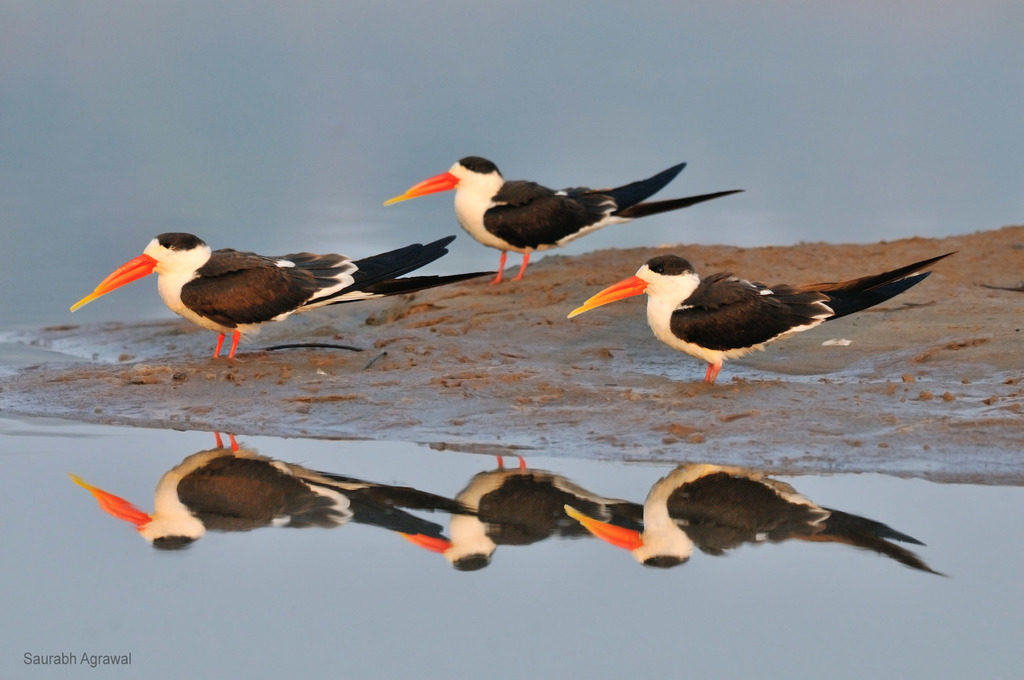
A tern-like bird with a bright orange bill whose lower half is longer than the upper, which it slices through the water surface in flight to snap up fish. It nests on sandbars of big South Asian rivers that are increasingly disturbed by people and dams.
The Indian skimmer or Indian scissors-bill, is one of the three species that belong to the skimmer genus Rynchops in the family Laridae. They are somewhat tern-like but like other skimmers, have a short upper mandible and the longer lower mandible that is ploughed along the surface of water as the bird flies over the water to pick aquatic prey. It is found in southern Asia, where it is patchily distributed and declining in numbers. They are mainly found in rivers or estuaries. They are very brightly marked in black, white and orange, making them difficult to miss. Wikipedia
What it can do
- iSkims with its long lower mandible cutting the water, snapping shut on contact with fish
- iiIts pupils are vertical slits, unusual among birds, which may reduce glare from water
- iiiFeeds at dusk and at night as well as by day
In the field
Field marks
- aBlack cap and upperparts with a white forehead, collar and underparts
- bDeep orange-red bill with a yellow tip, lower mandible much longer than upper
- cLong, pointed wings with a white trailing edge
- dShort, red legs
- Voice
- Nasal, yapping 'kap-kap' calls, especially at colonies
- Not to be confused with
- River tern has a yellow, evenly-sized bill and a grey back; Black-bellied tern is smaller with a black belly in breeding plumage.
- Where to see it
- National Chambal Sanctuary (Madhya Pradesh/Rajasthan/Uttar Pradesh); Padma and Meghna rivers and the Bangladesh coast in winter
- When
- Resident with local movements; breeds March–May on river sandbars
Listen
Looking for field recordings…
Life & habits
- Diet
- Small fish and crustaceans
- Habitat
- Large rivers with sandbars; estuaries and coasts in winter
- Size
- About 40–43 cm long
Flies low over calm water with the lower bill slicing the surface; nests in colonies in scrapes on exposed sandbars in spring.
Where it lives
Recorded sightings
—
geo-referenced records in GBIF, from museums, herbaria and field observers.
Native range
Rivers of India and Bangladesh (notably the Chambal and Ganges systems), with wintering on the Bangladesh coast; formerly the Indus in Pakistan and the Irrawaddy and Mekong
Drag the globe to turn it. Dots are where records exist, not a range map; darker means more records.
In the old herbals & bestiaries
No plate in the Source Library names this exact species, so these show its closest relatives as the old naturalists drew them: same genus, or the same kind of animal. Click a plate to read the page it came from, with translation.

In the stacks
Searching the stacks…
Every page naming Rynchops albicollis in the Biodiversity Heritage Library →
Marginalia
It was once recorded on the Indus in Pakistan and on Myanmar's rivers, but damming, sand-mining and disturbance of river islands have left it rare or absent there.
Curiosity
Skimmers are the only birds with a lower mandible longer than the upper.
Kinship
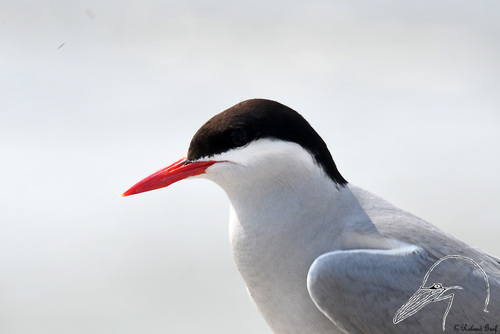



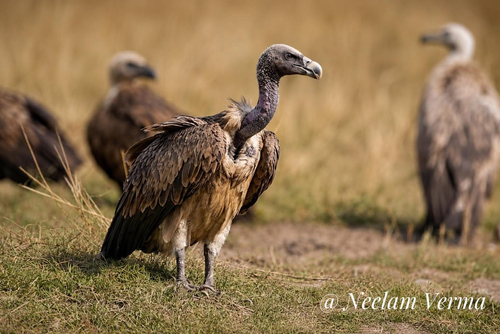

Photographs: iNaturalist contributors under the licences shown. Records: GBIF.org. Historical plates: Source Library (CC BY-SA 4.0; originals public domain). Summary text: Nature Library editors and Wikipedia (CC BY-SA). Medicinal and edibility notes are historical and educational, not advice. iNaturalist taxon 4498.