- Animals
- ›Chordates
- ›Vertebrates
- ›Mammals
- ›Therians
- ›Placental Mammals
- ›Primates, Rodents, and Allies
- ›Primates
- ›Monkeys, Apes, and Tarsiers
- ›Monkeys and Apes
- ›Apes and Old World Monkeys
- ›Apes
- ›Great Apes
- ›African Hominids
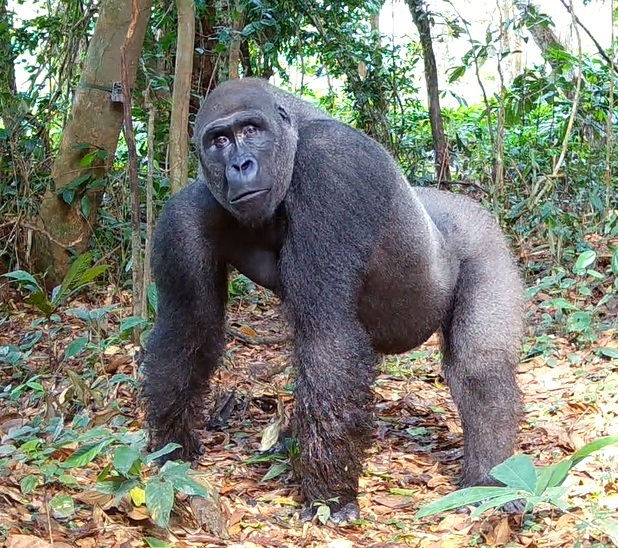
Gorillas
Gorilla
Gorillas are large, primarily herbivorous, great apes that live in the tropical forests of equatorial Africa. The genus Gorilla is divided into two species: the eastern gorilla and the western gorilla, and either four or five subspecies. The DNA of gorillas is highly similar to that of humans, from 96 to 99% depending on what is included, and they are the next closest living relatives to humans after the bonobos and chimpanzees.
Gorillas are the largest living primates, reaching heights between 1.25 and 1.8 m (4 ft 1 in and 5 ft 11 in), weights between 68 and 227 kg (150 and 500 lb), and arm spans up to 2.6 m (8 ft 6 in), depending on species and sex. They tend to live in troops, with the leader being called a silverback. The eastern gorilla is distinguished from the western by darker fur colour and some other minor morphological differences. Gorillas tend to live 35–40 years in the wild.
2 branches of this genus, most-observed first · about 2 known species
See this branch on the Wheel of Life →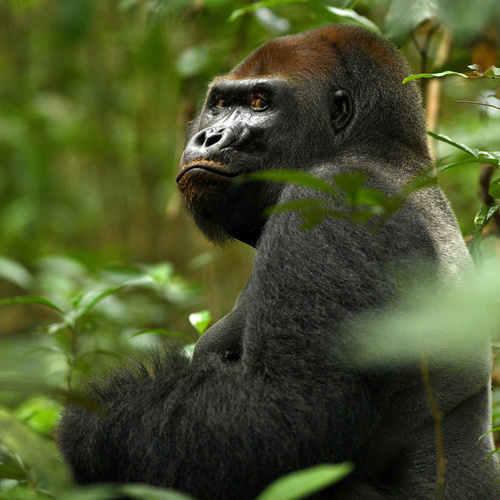
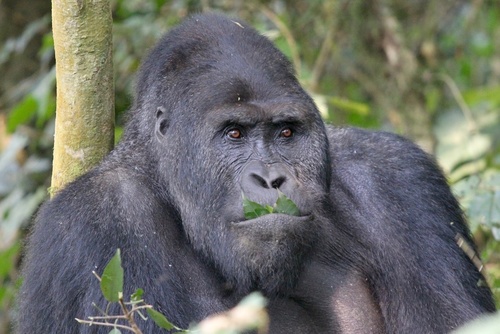
Where it lives
Recorded sightings
—
geo-referenced records in GBIF, from museums, herbaria and field observers.
Drag the globe to turn it. Dots are where records exist, not a range map; darker means more records.
In the old herbals & bestiaries

In the stacks
Searching the stacks…
Every page naming Gorilla in the Biodiversity Heritage Library →
This page is assembled live from iNaturalist, GBIF, Wikipedia, the Source Library and the Internet Archive. It is not yet part of the hand-edited codex. iNaturalist taxon 43579.