- Animals
- ›Chordates
- ›Vertebrates
- ›Birds
- ›Gannets, Cormorants, and Allies
- ›Cormorants and Shags
- ›Phalacrocorax
On eBird ↗
Pitt Island Shag
Live sightings near you, the range map, bar charts of when it is seen, and Macaulay Library photos and recordings.
Pitt Island Shag
Phalacrocorax featherstoni
The Pitt shag (Phalacrocorax featherstoni), also known as the Pitt Island shag or Featherstone's shag, is a species of bird in the family Phalacrocoracidae. It is endemic to Pitt Island where its natural habitats are open seas and rocky shores. The bird with the color of a dark body, gray chest, yellow eyes and feet can be found in small groups in their breeding habitat or alone within 18 km from their territory searching for food. The species was close to extinction in 1905 but actions of conservation have been done ever since. The Pitt shag is threatened by habitat loss due to predation and climate change causing a decline from 1997 to 2012, but there is a recovery plan by the Department of Conservation.
From the article Pitt shag on Wikipedia (CC BY-SA), quoted section by section
Description
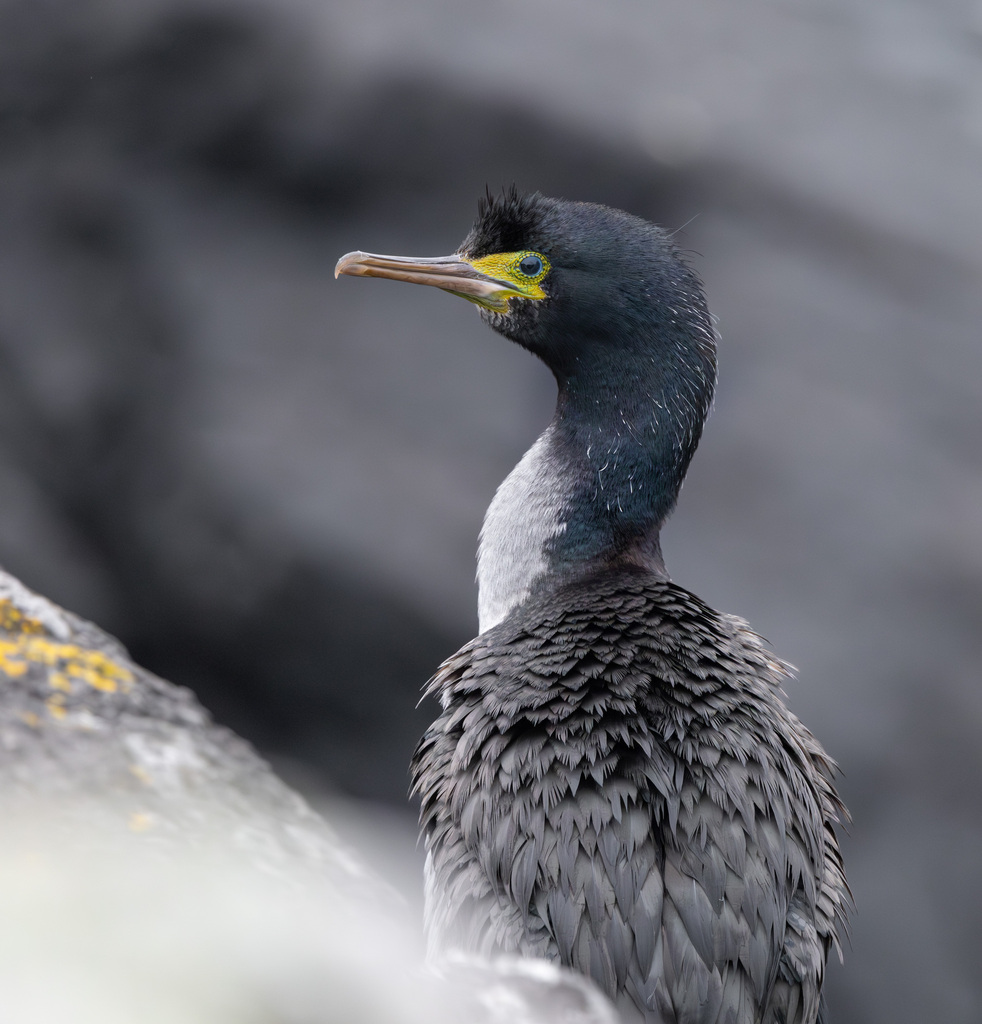
Members of the shag family belong to three groups, based on the color of their feet: black, yellow or pink. Outside New Zealand, the black-footed shags are better known as cormorants. The Pitt shag belongs to the yellow footed group. They are about 63 cm in length and weigh 650–1300 g, with a slim build. The Pitt shag has a yellow colored detail around the eyes, light gray at the neck and chest, and the rest of the head, back, wings and tail with shades of black and navy.
Range & habitat
The Pitt shag is native to the Chatham Islands in New Zealand, islands such as the Chatham, Pitt, Rangatira, Mangere, Little Mangere, Western Reef, Pyramid, Sisters, Murumuru, Castle, Rabbit, Forty Fours and Star Keys. On an island the bird is located along the coast, on rocky islets and over nearby waters where breeding and foraging takes place such as the Te Whanga Lagoon.
Wikipedia: “Habitat and distribution”
What it does
Vocalization When apart from the group the Pitt shag is quiet, but during mating season males make noises of grunting, gargling and ticking while females remain silent. Diet Shags find food on their own, traveling up to 18 km from their territory to feed on mostly small fish and when possible snails, worms and crustaceans found flying over waters and shores. Breeding From August to December, 2 to 3 year old Pitt shags gather in small crowds on the rocky shores and cliffs of the coast, protecting themselves against predators and weather. With up to 40 pairs of birds, nests are created out of small branches, plants and seaweed, and are eventually found with about 2 to 4 pale bluish-white colored eggs. Parents take turns incubating the eggs for about 30 days, once hatched a single parent will stay with the chicks for two weeks, then both parents will search and feed their chicks until they fledge at around 6 to 8 weeks.
Wikipedia: “Behavior”
Listen
Looking for field recordings…
Where it lives
Recorded sightings
—
geo-referenced records in GBIF, from museums, herbaria and field observers.
Drag the globe to turn it. Dots are where records exist, not a range map; darker means more records.
In the stacks
Searching the stacks…
Every page naming Phalacrocorax featherstoni in the Biodiversity Heritage Library →
This page is assembled live from iNaturalist, GBIF, Wikipedia, the Source Library and the Internet Archive. It is not yet part of the hand-edited codex. iNaturalist taxon 4294.