- Animals
- ›Arthropods
- ›Hexapods
- ›Insects
- ›Winged and Once-winged Insects
- ›Butterflies and Moths
- ›Lasiocampoidea
- ›Lappet Moths
- ›Diapalpus
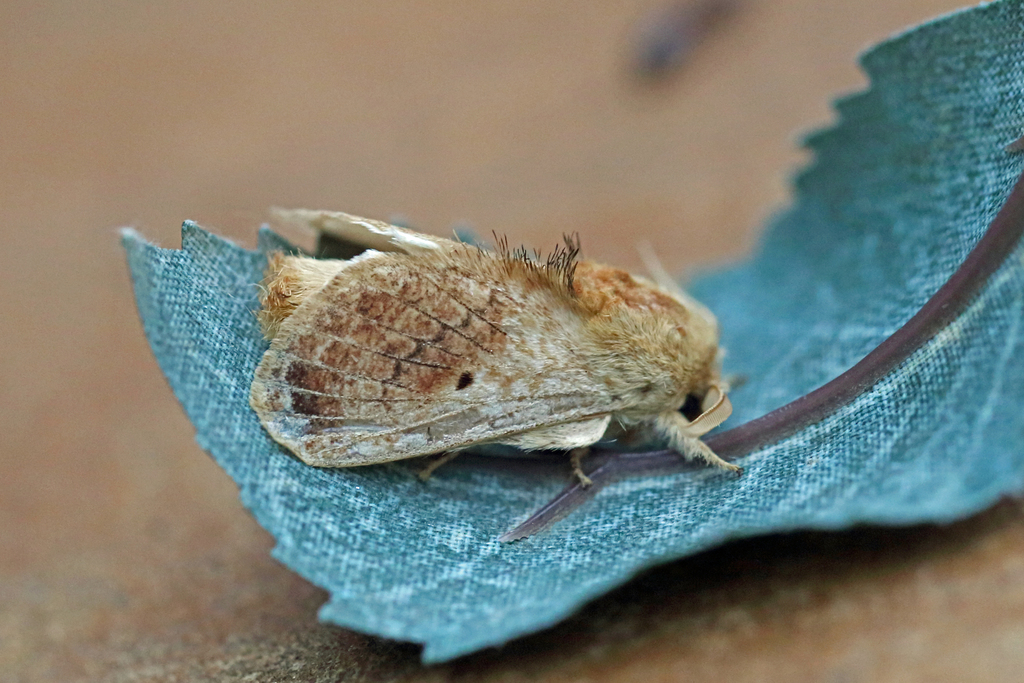
Diapalpus congregarius
Diapalpus congregarius is a moth species of the family Lasiocampidae. It was first described in 1913 by Embrik Strand and is the type species of genus Diapalpus. It is found in the Democratic Republic of the Congo and Tanzania.
From the article Diapalpus congregarius on Wikipedia (CC BY-SA), quoted section by section
What it does
Diapalpus congregarius occurs in a single yearly generation, with adults on wing from November to January. Larvae pupate in densely packed fibrous nests hanging from twigs on a large variety of trees. Such nests are most commonly 10–30 cm long, but may reach a length of up to 60 cm and a width of 20 cm depending on the number of cocoons contained. Trees may hold several such nests.
Host plants. Larvae are polyphagous, nocturnal feeders, and are known to occur on species of Fabaceae (Acacia sp.), Caesalpiniaceae (Brachystegia sp.), Euphorbiaceae (Bridelia micrantha), Moraceae (Ficus sp.), Malvaceae (Gossypium sp.) and Poaceae (Pennisetum purpureum).
== References ==
Wikipedia: “Behaviour”
Listen
Looking for field recordings…
Where it lives
Recorded sightings
—
geo-referenced records in GBIF, from museums, herbaria and field observers.
Drag the globe to turn it. Dots are where records exist, not a range map; darker means more records.
In the stacks
Searching the stacks…
Every page naming Diapalpus congregarius in the Biodiversity Heritage Library →
This page is assembled live from iNaturalist, GBIF, Wikipedia, the Source Library and the Internet Archive. It is not yet part of the hand-edited codex. iNaturalist taxon 428898.