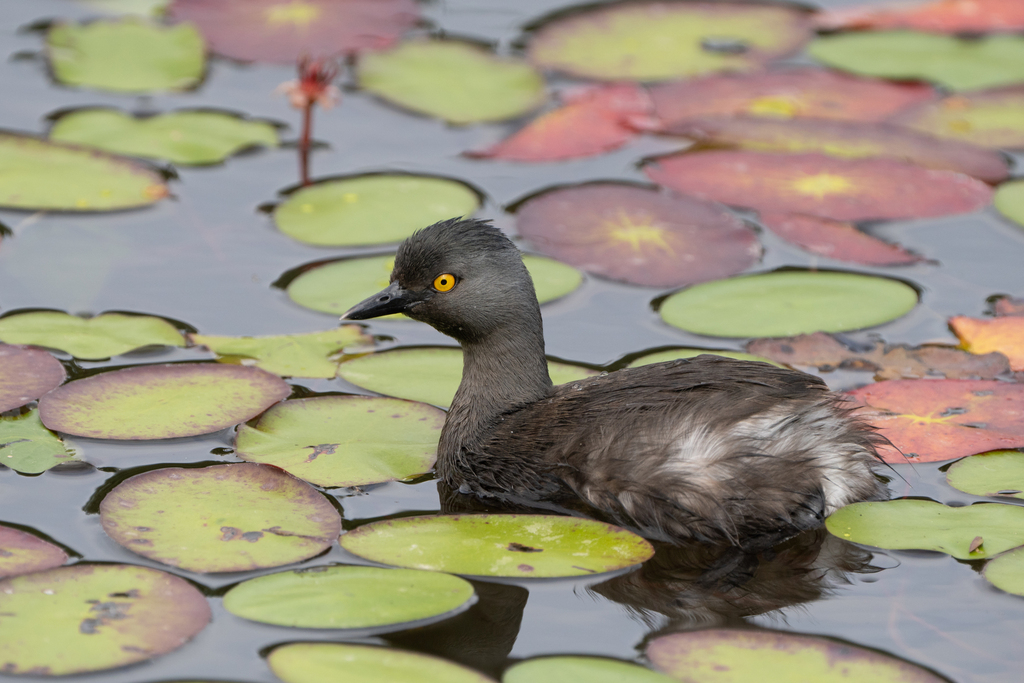
Grebes
Podicipedidae
Grebes () are aquatic diving birds in the order Podicipediformes (). Grebes are widely distributed freshwater birds, with some species also found in marine habitats during migration and winter. Most grebes fly, although some flightless species exist, most notably in stable lakes. The order contains a single family, the Podicipedidae, which includes 22 species in six extant genera.
Although, superficially, they resemble other diving birds such as loons and coots, they are most closely related to flamingos, as supported by morphological, molecular and paleontological data. Many species are monogamous and are known for their courtship discipline, with the pair performing synchronized dances across the water's surface. The birds build floating vegetative nests where they lay several eggs. About a third of the world's grebes are listed at various levels of conservation concerns—the biggest threats including habitat loss, the introduction of invasive predatory fish and human poaching. As such, three species have gone extinct.
6 branches of this family, most-observed first · about 19 known species

Typical Grebes
genusPodiceps
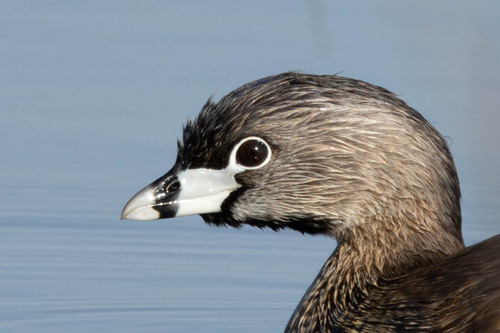
Pied-billed and Atitlán Grebes
genusPodilymbus
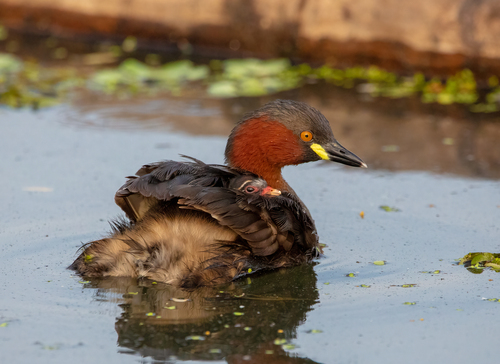
Small Grebes
genusTachybaptus

Western and Clark's Grebes
genusAechmophorus
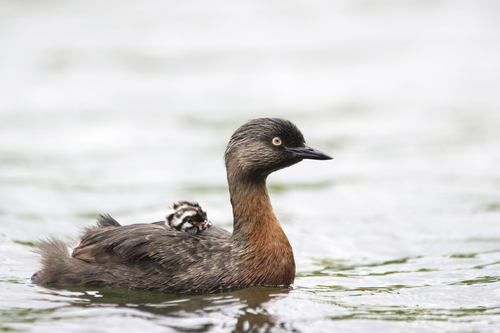
Hoary-headed and New Zealand Grebes
genusPoliocephalus
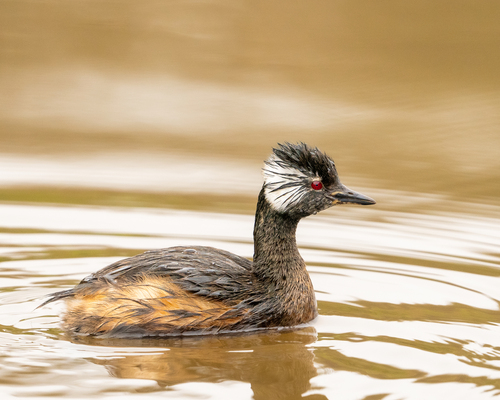
White-tufted and Titicaca Grebes
genusRollandia
Where it lives
Recorded sightings
—
geo-referenced records in GBIF, from museums, herbaria and field observers.
Drag the globe to turn it. Dots are where records exist, not a range map; darker means more records.
In the stacks
Searching the stacks…
Every page naming Podicipedidae in the Biodiversity Heritage Library →
This page is assembled live from iNaturalist, GBIF, Wikipedia, the Source Library and the Internet Archive. It is not yet part of the hand-edited codex. iNaturalist taxon 4203.