- Animals
- ›Chordates
- ›Vertebrates
- ›Mammals
- ›Therians
- ›Placental Mammals
- ›Ungulates, Carnivorans, and Allies
- ›Carnivorans
- ›Mustelids
- ›Otters

Giant Otters
Pteronura
The giant otter or giant river otter (Pteronura brasiliensis) is a South American carnivorous mammal. It is the longest member of the weasel family, Mustelidae, reaching up to 1.8 m (5 ft 11 in). Atypical of mustelids, the giant otter is a social species, with family groups typically supporting three to eight members. The groups are centered on a dominant breeding pair and are extremely cohesive and cooperative. Although generally peaceful, the species is territorial, and aggression has been observed between groups. The giant otter is diurnal, being active exclusively during daylight hours. It is the noisiest otter species, and distinct vocalizations have been documented that indicate alarm, aggression, and reassurance.
The giant otter ranges across north-central South America; it lives mostly in and along the Amazon River and in the Pantanal. Its distribution has been greatly reduced and is now discontinuous. Decades of poaching for its velvety pelt, peaking in the 1950s and 1960s, considerably diminished population numbers. The species was listed as endangered in 1999 and wild population estimates are typically below 5,000. The Guianas are one of the last real strongholds for the species, which also enjoys modest numbers – and significant protection – in the Peruvian Amazonian basin. It is one of the most endangered mammal species in the Neotropics. Habitat degradation and loss is the greatest current threat. They are also rare in captivity; in 2003, only 60 giant otters were being held.
1 branches of this genus, most-observed first · about 1 known species
See this branch on the Wheel of Life →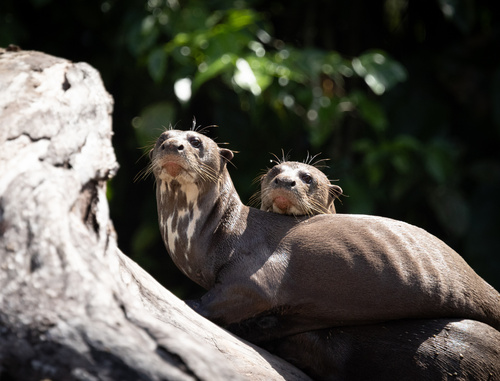
Where it lives
Recorded sightings
—
geo-referenced records in GBIF, from museums, herbaria and field observers.
Drag the globe to turn it. Dots are where records exist, not a range map; darker means more records.
In the stacks
Searching the stacks…
Every page naming Pteronura in the Biodiversity Heritage Library →
This page is assembled live from iNaturalist, GBIF, Wikipedia, the Source Library and the Internet Archive. It is not yet part of the hand-edited codex. iNaturalist taxon 41844.