- Plants
- ›Vascular Plants
- ›flowering plants
- ›Dicots
- ›geraniums, bridal wreaths, and allies
- ›Geranium family
- ›Pelargonium
- ›Pelargonium
- ›Pelargonium
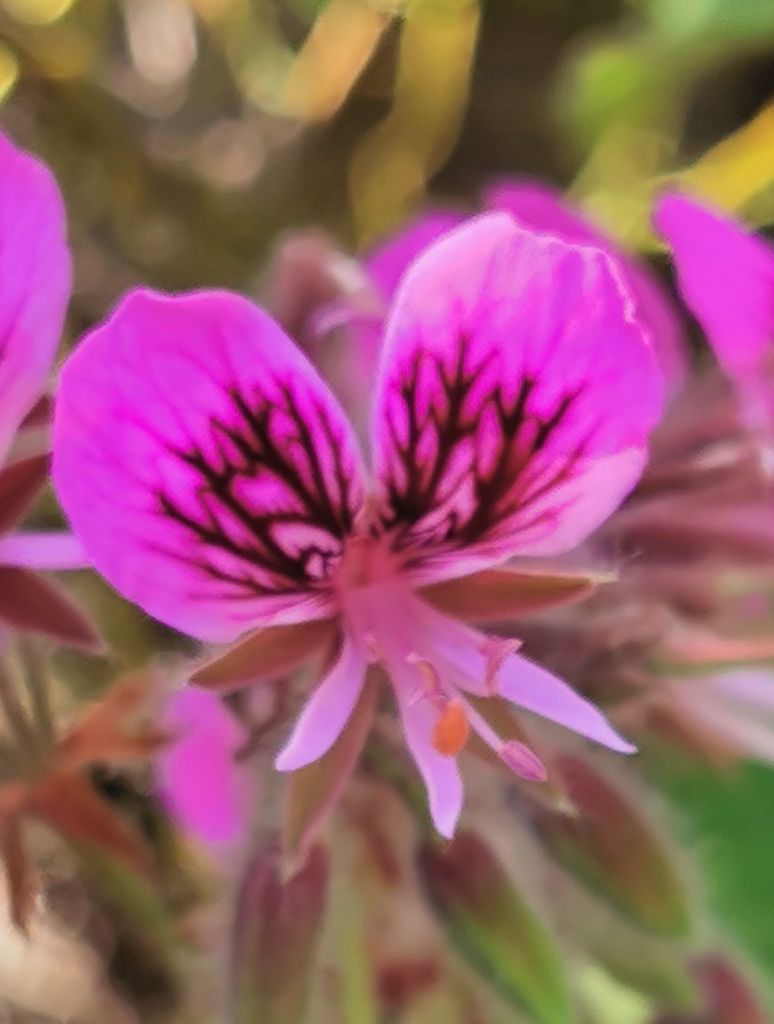
Heartleaf Storksbill
Pelargonium cordifolium
Pelargonium cordifolium Curtis is a plant endemic to the fynbos region of the Southern Cape of South Africa.
From the article Pelargonium cordifolium on Wikipedia (CC BY-SA), quoted section by section
Description
Pelargonium cordifolium is a large, spreading species, growing up to 1.5 metres tall. It is a hairy plant with a slight apple scent and pale pink flowers with dark veins appearing from March to July. Its flat or curled, heart-shaped leaves are finely to coarsely toothed, entire or shallowly lobed, dark green on the upper surface and white-matted below. It is valued as a houseplant or as an outdoor perennial, climate permitting. Its leaves may be used in potpourris.
In human culture
Pelargonium is from Ancient Greek πελαργός (pelargós = 'stork'). Another name for pelargonium is 'storksbill' after the shape of its fruit; 'cordifolium' refers to the heart-shaped leaves (cor/cordis being 'heart' in Latin).
Wikipedia: “Etymology”
Where it lives
Recorded sightings
—
geo-referenced records in GBIF, from museums, herbaria and field observers.
Drag the globe to turn it. Dots are where records exist, not a range map; darker means more records.
In the stacks
Searching the stacks…
Every page naming Pelargonium cordifolium in the Biodiversity Heritage Library →
This page is assembled live from iNaturalist, GBIF, Wikipedia, the Source Library and the Internet Archive. It is not yet part of the hand-edited codex. iNaturalist taxon 415895.