- Animals
- ›Arthropods
- ›Hexapods
- ›Insects
- ›Winged and Once-winged Insects
- ›Butterflies and Moths
- ›Tortricid Leafroller Moths and Allies
- ›Tortricid Leafroller Moths
- ›Tortricine Leafroller Moths
- ›Cnephasiini
- ›Cnephasia
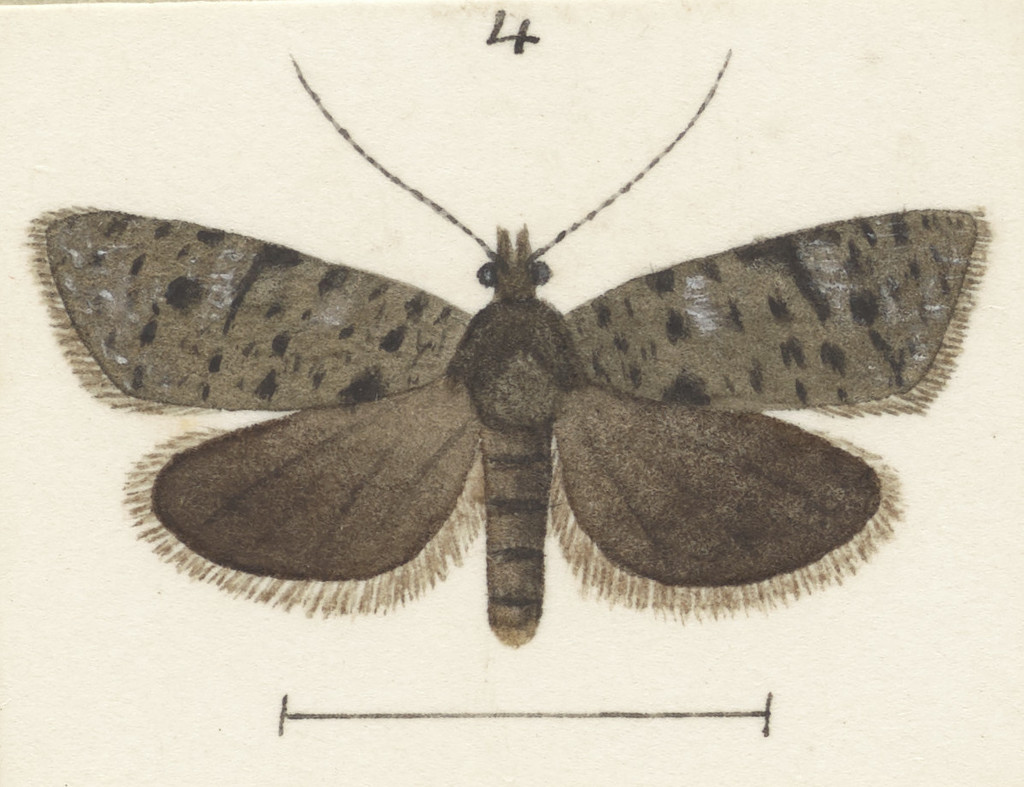
Cnephasia holorphna
Cnephasia holorphna is a species of moth of the family Tortricidae. It was first described by Edward Meyrick in 1911 and is endemic to New Zealand. This species is found in the Craigieburn Range in the South Island. It inhabits alpine vegetation and adults are on the wing in January. It is regarded as being extremely local in distribution.
From the article Cnephasia holorphna on Wikipedia (CC BY-SA), quoted section by section
Description
Meyrick described this species as follows:
♂. 18 mm. Head fuscous mixed with whitish-ochreous. Paipi 2 ½, clothed with very long rough projecting scales, whitish-ochreous sprinkled with fuscous. Antennal ciliations bifasciculate, 2 ½. Thorax fuscous, sprinkled and edged with whitish-ochreous. Abdomen fuscous, segmental margins and anal tuft whitish-ochreous. Forewings suboblong, costa gently arched, with moderate fold extending from base to ¼, apex obtuse termen slightly rounded, somewhat oblique; fuscous, with irregularly scattered whitish scales, especially on margins, and with scattered strigulae of dark fuscous and blackish scales, but no defined markings: cilia fuscous, towards tips whitish. Hindwings fuscous, darker towards termen; cilia whitish-fuscous, with a fuscous subbasal line, towards tips whitish. Undersurface of hindwings grey.
Range & habitat
This species is endemic to New Zealand. It is found in the Southern Alps in the South Island. Although Hudson stated it was comparatively common in the area he collected the holotype, he regarded the species as being extremely local in distribution. Hudson also stated in that 1928 publication that this species had not been collected since he collected the holotype in 1893.
Wikipedia: “Distribution”
Listen
Looking for field recordings…
Where it lives
Recorded sightings
—
geo-referenced records in GBIF, from museums, herbaria and field observers.
Drag the globe to turn it. Dots are where records exist, not a range map; darker means more records.
In the stacks
Searching the stacks…
Every page naming Cnephasia holorphna in the Biodiversity Heritage Library →
This page is assembled live from iNaturalist, GBIF, Wikipedia, the Source Library and the Internet Archive. It is not yet part of the hand-edited codex. iNaturalist taxon 409789.