- Animals
- ›Chordates
- ›Vertebrates
- ›Mammals
- ›Therians
- ›Placental Mammals
- ›Ungulates, Carnivorans, and Allies
- ›Bats
- ›Yinpterochiroptera
- ›Pteropodoidea
- ›Old World Fruit Bats
- ›Flying-foxes, Monkey-faced Bats and allies
- ›Flying-foxes and allies
- ›Pteropus
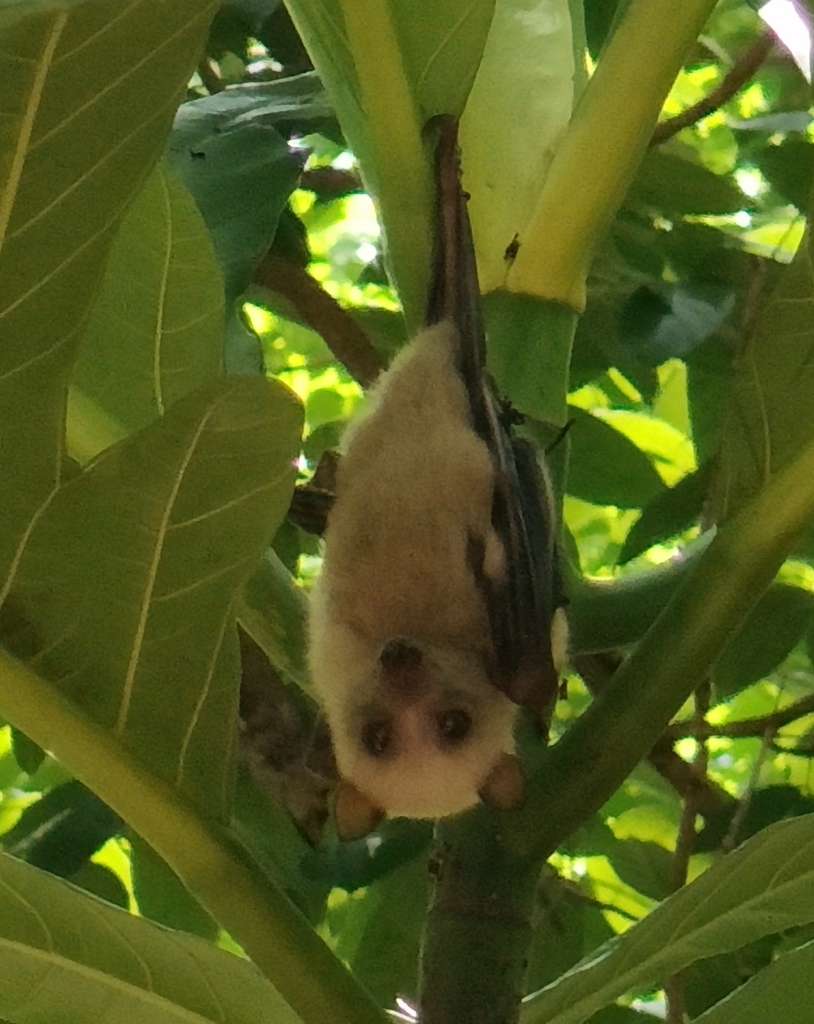
Little Golden-mantled Flying-fox
Pteropus pumilus
The little golden-mantled flying fox (Pteropus pumilus) is a species of bat in the family Pteropodidae. It is found in Indonesia and the Philippines. Its natural habitat is subtropical or tropical dry forests. It is threatened by hunting and habitat loss, as well as pollution.
From the article Little golden-mantled flying fox on Wikipedia (CC BY-SA), quoted section by section
Description
The little golden-mantled flying fox is one of the smallest species of fruit bat, weighs about 200 g (7 oz) and has a wingspan of about 76 centimetres (30 in). The fur on its body is golden brown and it often has a paler head and mantle. This bat has claws on its feet and one (its thumbnail) on the end of its wings.
Range & habitat
The little golden-mantled flying fox is native to the Philippines and Miangas (Palmas), the northernmost island in Indonesia. In the Philippines, it is known from Balut, Camiguin, Leyte, Maripipi, Masbate, Mindanao, Mindoro, Negros, Panay, Sibuyan, Siquijor and Tablas. It occurs at altitudes of up to about 1,100 metres (3,600 ft) and is most common on smaller islands. Its habitat is primary forest and well-grown secondary forest.
Wikipedia: “Distribution and habitat”
What it does
The little golden-mantled flying fox is a solitary species and does not roost in large groups as do many other fruit bats. Instead it makes a nest and roosts in a tree. It feeds on fruit but little is known of its precise diet. Like other fruit bats, it plays an important role in dispersing the seeds of forest trees. This bat usually breeds in the autumn. One offspring (or occasionally two) is generally produced each year and becomes independent of its mother after about eleven weeks.
Wikipedia: “Behaviour”
Listen
Looking for field recordings…
Where it lives
Recorded sightings
—
geo-referenced records in GBIF, from museums, herbaria and field observers.
Drag the globe to turn it. Dots are where records exist, not a range map; darker means more records.
In the stacks
Searching the stacks…
Every page naming Pteropus pumilus in the Biodiversity Heritage Library →
This page is assembled live from iNaturalist, GBIF, Wikipedia, the Source Library and the Internet Archive. It is not yet part of the hand-edited codex. iNaturalist taxon 40875.