- Animals
- ›Chordates
- ›Vertebrates
- ›Mammals
- ›Therians
- ›Placental Mammals
- ›Ungulates, Carnivorans, and Allies
- ›Bats
- ›Yinpterochiroptera
Pteropodoidea
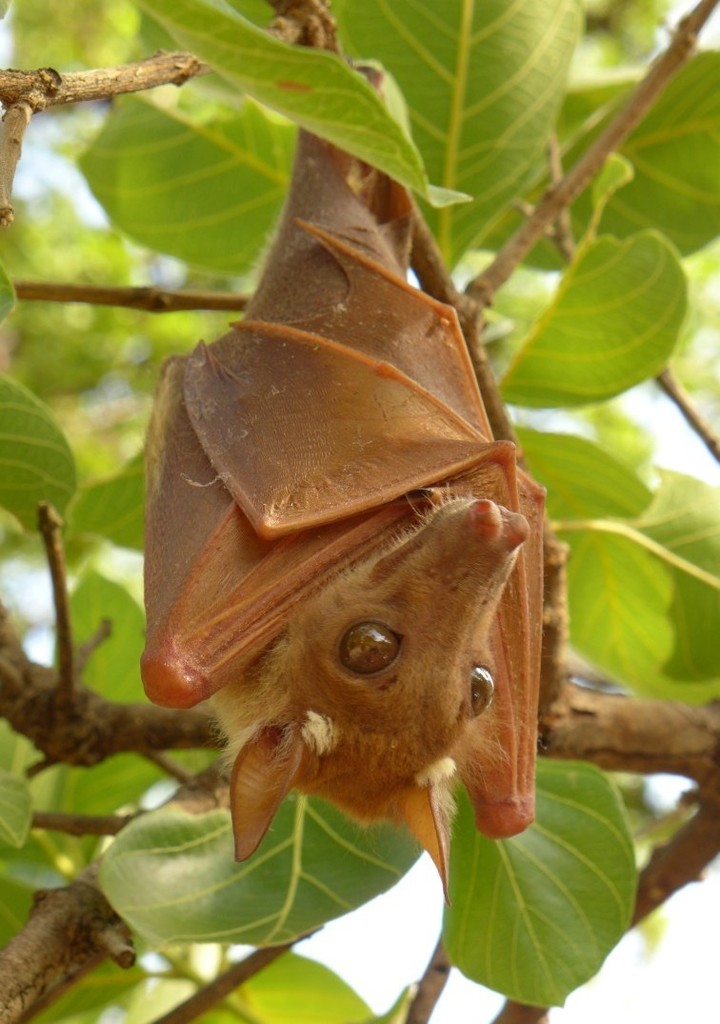
Megabats constitute the family Pteropodidae of the order Chiroptera. They are also called fruit bats, Old World fruit bats, or—especially the genera Acerodon and Pteropus—flying foxes. They are the only member of the superfamily Pteropodoidea, which is one of two superfamilies in the suborder Yinpterochiroptera. Internal divisions of Pteropodidae have varied since subfamilies were first proposed in 1917. From three subfamilies in the 1917 classification, six are now recognized, along with various tribes. As of 2018, 197 species of megabat had been described.
The leading theory of the evolution of megabats has been determined primarily by genetic data, as the fossil record for this family is the most fragmented of all bats. They likely evolved in Australasia, with the common ancestor of all living pteropodids existing approximately 31 million years ago. Many of their lineages probably originated in Melanesia, then dispersed over time to mainland Asia, the Mediterranean, and Africa. Today, they are found in tropical and subtropical areas of Eurasia, Africa, and Oceania.
1 branches of this superfamily, most-observed first · about 197 known species
See this branch on the Wheel of Life →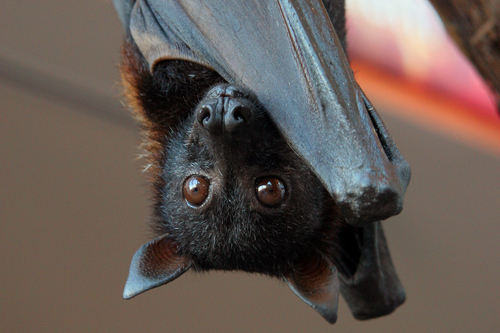
Where it lives
Recorded sightings
—
geo-referenced records in GBIF, from museums, herbaria and field observers.
Drag the globe to turn it. Dots are where records exist, not a range map; darker means more records.
In the stacks
Searching the stacks…
Every page naming Pteropodoidea in the Biodiversity Heritage Library →
This page is assembled live from iNaturalist, GBIF, Wikipedia, the Source Library and the Internet Archive. It is not yet part of the hand-edited codex. iNaturalist taxon 1317244.