- Animals
- ›Arthropods
- ›Hexapods
- ›Insects
- ›Winged and Once-winged Insects
- ›Butterflies and Moths
- ›Bagworms, Clothes Moths, and Allies
- ›Bagworm Moths
- ›Oiketicinae
- ›Acanthopsychini
- ›Orophora
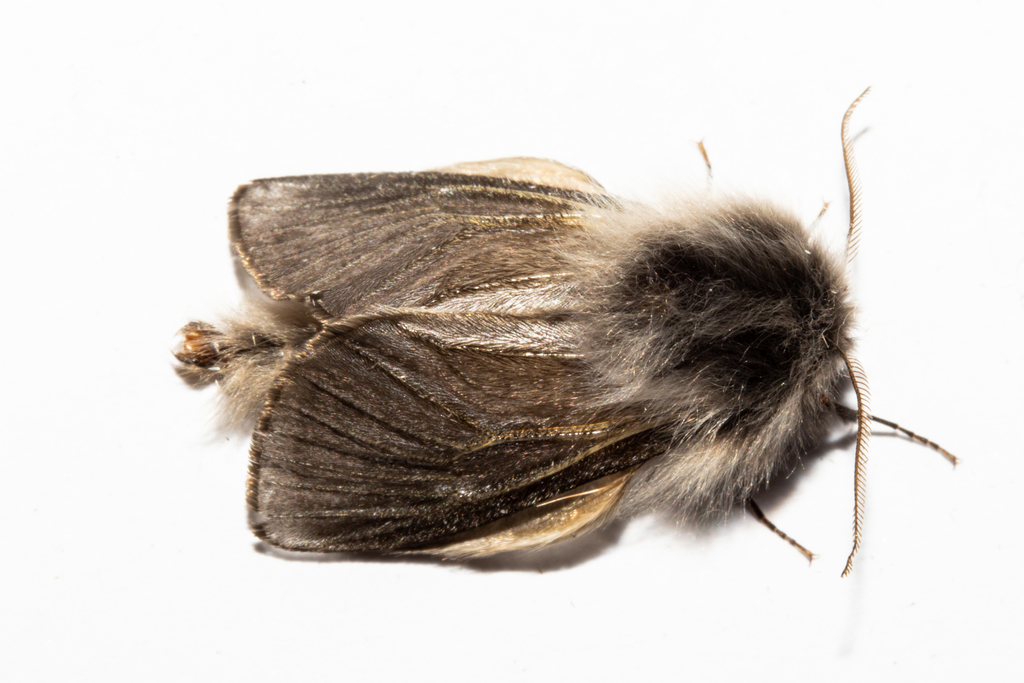
Alpine Casemoth
Orophora unicolor
Orophora unicolor, also known as the alpine casemoth, is a bagmoth of the family Psychidae. It is endemic to New Zealand. This species was first described by Arthur Gardiner Butler in 1877. It can be found in the South Island and the larvae feed on tussock grasses as well as species in the plant genus Ozothamnus. The larvae start making their casing as soon as they emerge from the egg with the insect pupating inside that casing when mature. The adult female remains inside the case while the adult males emerge as grown moths. The males are on the wing from September until December and are attracted to light.
From the article Orophora unicolor on Wikipedia (CC BY-SA), quoted section by section
Description
Butler described the casing of this moth as follows:
The case of P. unicolor is fusiform, truncated and open at the apex, through which (after the exclusion of the moth) the dark mahogany-brown pupa-skin projects; it is composed of short pieces of grass-stalks placed longitudinally, the largest being at the base, the smallest (mixed with small chips and silk) at the apex. Butler described this adult moth of this species as follows:
Uniformly grey, the primaries of a slightly more brownish tint than the secondaries, and with a blackish costal edge; the secondaries subhyaline: body clothed with long woolly hair. Expanse of wings 1 inch. Only the male metamorphoses into a recognisable moth. The adult female never leaves the bag and has no wings. Its case is covered with layers of short (up to 10 mm) lengths of tussock, laid longitudinally and overlapping, so that it looks like a bundle of twigs. The case averages 34 mm long and can reach 40 mm. The male is a hairy grey moth with translucent wings and a short abdomen and a 26.5 mm wingspan.
Range & habitat
This species is endemic to New Zealand and is restricted to dry areas of the South Island.
Wikipedia: “Distribution”
What it does
The larvae of this species commences making its bag as soon as it comes out of its egg. Like other bagmoths the larvae of O. unicolor pupates inside its bag with females remaining inside the bag as adults and males emerging as grown moths. The male adults are on the wing from September until December and are attracted to light.
== References ==
Wikipedia: “Behaviour”
Listen
Looking for field recordings…
Where it lives
Recorded sightings
—
geo-referenced records in GBIF, from museums, herbaria and field observers.
Drag the globe to turn it. Dots are where records exist, not a range map; darker means more records.
In the stacks
Searching the stacks…
Every page naming Orophora unicolor in the Biodiversity Heritage Library →
This page is assembled live from iNaturalist, GBIF, Wikipedia, the Source Library and the Internet Archive. It is not yet part of the hand-edited codex. iNaturalist taxon 407522.