On eBird ↗
Magenta Petrel
Live sightings near you, the range map, bar charts of when it is seen, and Macaulay Library photos and recordings.
Magenta Petrel
Pterodroma magentae
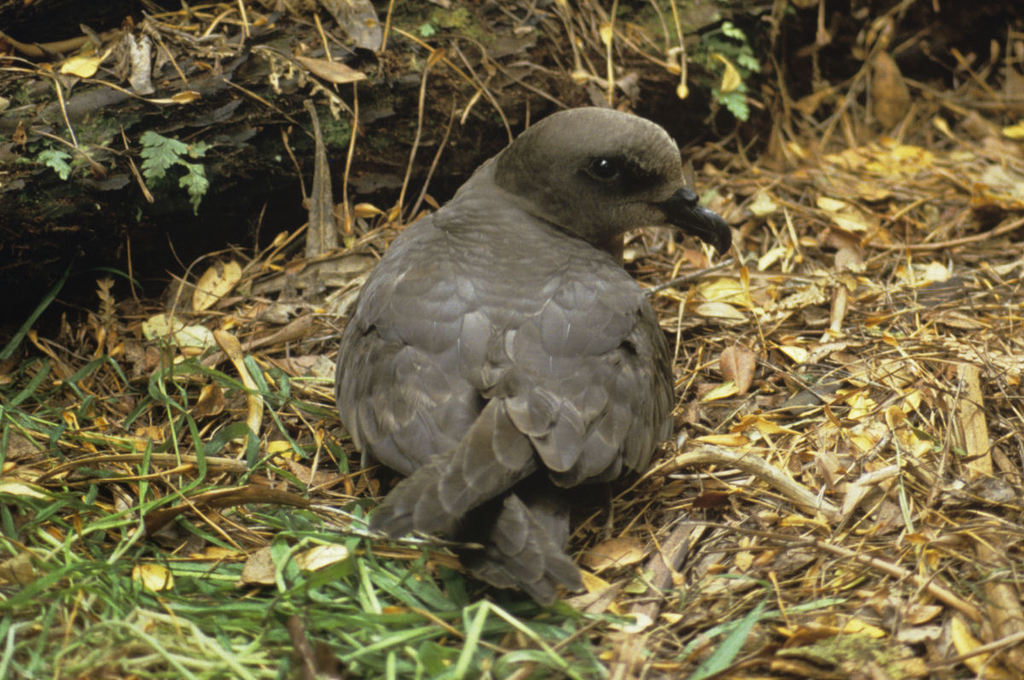
The magenta petrel (Pterodroma magentae), or Chatham Island tāiko, is a small seabird in the gadfly petrel genus, Pterodroma. Found exclusively on Chatham Island, New Zealand, it is one of the rarest birds in the world, believed to be extinct for over 100 years before its rediscovery in the 1970s.
From the article Magenta petrel on Wikipedia (CC BY-SA), quoted section by section
Description
This medium-sized petrel has a brownish-grey head, neck, and upper breast, with white underparts. The undersides of the wings are brown. It has a black bill and pink legs. Adults weigh 400–580 g. The bird nests in 1–3 m long burrows under dense forest. They form long-term monogamous pair bonds, raising one egg at a time, and both partners incubate the egg and feed the chick. The breeding season is between September and May, during which time the birds forage over the open ocean.
In human culture
Fossil records and historic records show that tāiko used to be the most abundant burrowing seabird on Chatham Island, though has not been found to have lived on other islands. Moriori, the indigenous people of the Chatham Islands, harvested tāiko among other birds for food, as evidenced by bones of tāiko found in midden deposits. The first specimen of the Magenta petrel was collected from His Italian Majesty's ship Magenta on July 22, 1867, in the South Pacific Ocean, midway between New Zealand and South America. The name 'Magenta petrel' and the scientific name P. magentae come from this ship. The tāiko was believed for be extinct for 111 years. Conservationist David Crockett and his team began to investigate sightings reported by locals in the 1970s, and Crockett caught a tāiko on 1 January 1978. It was another ten years before a tāiko burrow was discovered. This discovery confirmed the link between the specimen collected by the Magenta and the live birds.
Wikipedia: “History”
Listen
Looking for field recordings…
Where it lives
Recorded sightings
—
geo-referenced records in GBIF, from museums, herbaria and field observers.
Drag the globe to turn it. Dots are where records exist, not a range map; darker means more records.
In the stacks
Searching the stacks…
Every page naming Pterodroma magentae in the Biodiversity Heritage Library →
This page is assembled live from iNaturalist, GBIF, Wikipedia, the Source Library and the Internet Archive. It is not yet part of the hand-edited codex. iNaturalist taxon 4053.