- Animals
- ›Arthropods
- ›Hexapods
- ›Insects
- ›Winged and Once-winged Insects
- ›Butterflies and Moths
- ›Ghost Moths and Swift Moths
- ›Swift Moths
- ›Wiseana
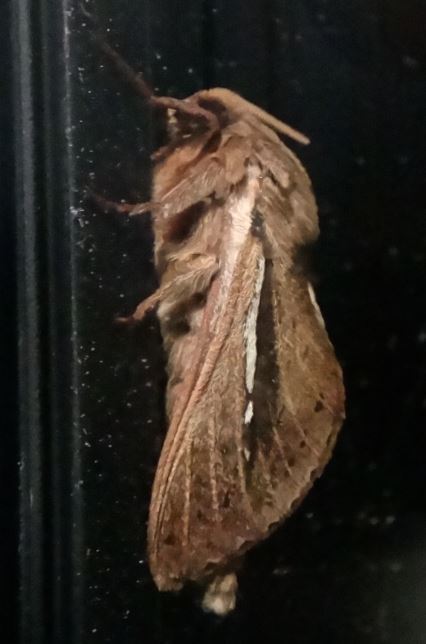
Bog Porina
Wiseana umbraculata
Wiseana umbraculatus, also known as the bog porina, is a species of moth belonging to the family Hepialidae. It was described by Achille Guenée in 1868 from specimens collected by Richard William Fereday. This species is endemic to New Zealand. It was regarded as being common in Whanganui in the early twentieth century.
From the article Wiseana umbraculata on Wikipedia (CC BY-SA), quoted section by section
Description
The wingspan is 38–50 mm for males and 49–66 mm for females. Adults are on wing from September to April. Adult male and female bog porina can be told apart as the males are much darker in colour and have noticeable dark spots on their forewings. The females are lighter in colour with brown dots on their forewings. Caterpillars of W. umbraculata have a brown head with a dirty white and grey body. Without DNA technology, it is not possible to tell the different species of porina apart at the larval/caterpillar stage.
Range & habitat
Bog porina occur throughout New Zealand; however, they are uncommon in the northern half of the North Island. W. umbraculata occupy habitats ranging from alpine regions to lowland plains. They are distributed from the central North Island to the bottom of the South Island. The larvae live in pasture, and can be very damaging. The preferred habitat for eggs and caterpillars is long dense pasture. They thrive in warm, moist conditions. Very hot, dry weather can decimate young porina populations, especially in short open pastures.
Wikipedia: “Distribution”
What it does
Adult porina moths mate as soon as they emerge from the soil after completing the larval stage. The moths fly in spring, summer, and early autumn depending on location. The moths do not feed and only live a few days. During these few days, the female moth flies over pastures and releases around 3000 eggs. Her eggs will hatch within a few weeks. At first the newly hatched caterpillars will live above ground. They spend about 5 weeks on top of the soil feeding on plant matter and microflora. As the caterpillars grow larger, they burrow beneath the soil and construct permanent silk burrows which can reach a depth of around 30 cm. They will emerge from these burrows at night to feed. They sever grass and clover leaves at the base of the plant and drag them back to their burrow to consume. Porina caterpillars will moult seven or eight times over their lifetime. Development from egg to adult takes 12 months.
Wikipedia: “Life cycle”
Listen
Looking for field recordings…
Where it lives
Recorded sightings
—
geo-referenced records in GBIF, from museums, herbaria and field observers.
Drag the globe to turn it. Dots are where records exist, not a range map; darker means more records.
In the stacks
Searching the stacks…
Every page naming Wiseana umbraculata in the Biodiversity Heritage Library →
This page is assembled live from iNaturalist, GBIF, Wikipedia, the Source Library and the Internet Archive. It is not yet part of the hand-edited codex. iNaturalist taxon 398735.