- Animals
- ›Arthropods
- ›Hexapods
- ›Insects
- ›Winged and Once-winged Insects
- ›Butterflies and Moths
- ›Bagworms, Clothes Moths, and Allies
- ›Bagworm Moths
- ›Reductoderces
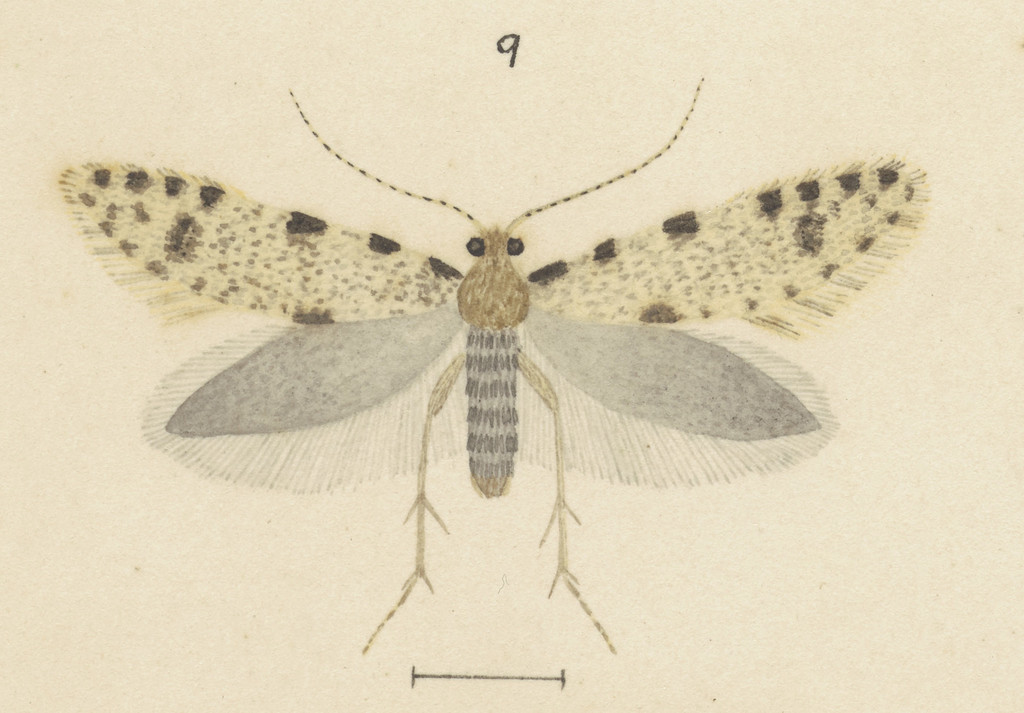
Reductoderces cawthronella
Reductoderces cawthronella is a moth of the Psychidae family. It was described by Alfred Philpott in 1921 and named in honour of the Cawthron Institute. It is endemic to New Zealand and has been collected in Nelson on the Maitai Valley side of the Botanical Hill. The larvae inhabits a fragile, pear shaped case and it has been hypothesised that they are lichen or alga browsers. Larvae pupate at the end of June and adults emerge at the beginning of August until the middle of October.
From the article Reductoderces cawthronella on Wikipedia (CC BY-SA), quoted section by section
Description
Philpott described the adults of this species as follows:
♂. 9 mm. Head and thorax ochreous-grey Palpi whitish. Antennae grey annulated with black, ciliations 3. Abdomen grey-fuscous. Legs grey-whitish. Forewings, costa slightly arched, faintly sinuate, apex rounded, termen strongly oblique; whitish-grey, slightly ochreous and irrorated with fuscous especially on basal ¾; base of costa irregularly brownish-black to ¼; a rather large brownish-black spot on costa at ½; three smaller brownish-black spots on costa on apical ⅓; an irregular transverse brownish-black discal spot; a series of small blackish-brown spots round termen: cilia grey-whitish. Hindwings and cilia fuscous-grey. The larva inhabits a fragile case which is pear shaped and is approximately 6mm long and 3.5 mm wide. Hudson described the larvae of this species as follows:
The head of the pupa is well separated from the thorax, and the legs reach quite to the extremity of the abdomen. On the dorsal surface of the last abdominal segment there is a transverse row of stout recurved spines; these probably serve to keep the pupa from slipping from the case when the emergence of the imago is taking place.
What it does
The larvae inhabit a case made from fragments of a white lichen. It travels in the case by extending its head and thorax and then lifting the case clear and forward. The larvae pupate at the end of June by attaching its case to a stone, twig or leaf. The attachment enables the case to swing in multiple directions. The adults emerge from the beginning of August until the middle of October.
== References ==
Wikipedia: “Behaviour and life cycle”
Listen
Looking for field recordings…
Where it lives
Recorded sightings
—
geo-referenced records in GBIF, from museums, herbaria and field observers.
Drag the globe to turn it. Dots are where records exist, not a range map; darker means more records.
In the stacks
Searching the stacks…
Every page naming Reductoderces cawthronella in the Biodiversity Heritage Library →
This page is assembled live from iNaturalist, GBIF, Wikipedia, the Source Library and the Internet Archive. It is not yet part of the hand-edited codex. iNaturalist taxon 396307.