- Animals
- ›Arthropods
- ›Hexapods
- ›Insects
- ›Winged and Once-winged Insects
- ›Butterflies and Moths
- ›Plume Moths and Allies
- ›Plume Moths
- ›Pterophorinae
- ›Pterophorini
- ›Pterophorus
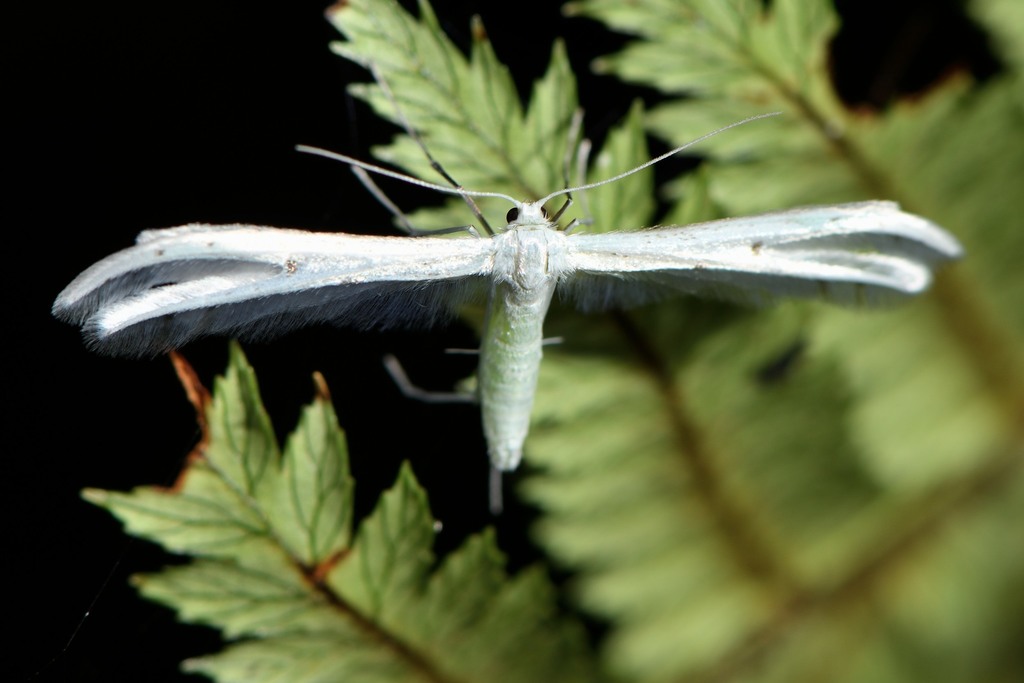
Araliad plume
Pterophorus monospilalis
Pterophorus monospilalis, the white plume moth, is a moth of the family Pterophoridae. It is endemic to New Zealand and occurs throughout the country. It inhabits native forest, parks and domestic gardens. Larvae are active during the day, are slow moving, and feed exposed. They feed on Araliaceae species as well as on Hedera helix, Meryta sinclairii, and Schefflera digitata. There are several broods in a year. Adult moths are on the wing from November until May and are attracted to light.
From the article Pterophorus monospilalis on Wikipedia (CC BY-SA), quoted section by section
Range & habitat
This species is endemic to New Zealand and can be found throughout the country. However it tends to be scarce in the northern parts of the North Island as well as in the southern parts of the South Island.
Wikipedia: “Distribution”
What it does
The larvae of this species are diurnal, slow moving, and feed exposed without external protection. When they pupate the cocoon-less pupa is attached to the host plant leaf via a thread of silk. There are several broods in year. Adults are on the wing from November to May. It has been hypothesised that some adults from the autumn brood hibernate through winter. However it is more likely that the species exists in pupa through winter. They are nocturnal and are attracted to light.
== References ==
Wikipedia: “Life history and behaviour”
Listen
Looking for field recordings…
Where it lives
Recorded sightings
—
geo-referenced records in GBIF, from museums, herbaria and field observers.
Drag the globe to turn it. Dots are where records exist, not a range map; darker means more records.
In the stacks
Searching the stacks…
Every page naming Pterophorus monospilalis in the Biodiversity Heritage Library →
This page is assembled live from iNaturalist, GBIF, Wikipedia, the Source Library and the Internet Archive. It is not yet part of the hand-edited codex. iNaturalist taxon 395973.