- Animals
- ›Arthropods
- ›Hexapods
- ›Insects
- ›Winged and Once-winged Insects
- ›Butterflies and Moths
- ›Ermine Moths and Allies
- ›Plutellidae
- ›Plutella
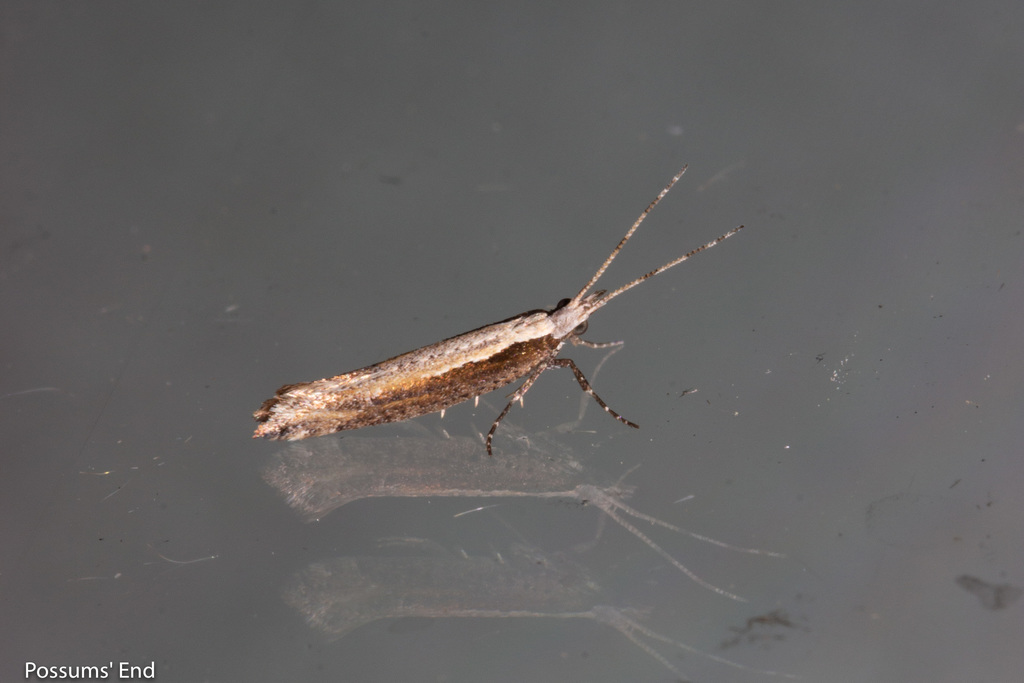
Plutella antiphona
Plutella antiphona, also known as the diamondback moth, is a moth of the family Plutellidae first described by Edward Meyrick in 1901. It is endemic to New Zealand.
From the article Plutella antiphona on Wikipedia (CC BY-SA), quoted section by section
Description
This species is very similar in appearance to Plutella xylostella and can only be distinguished from that species either by examining the larvae, the pupae or the adult genitalia. The diamond pattern on the forewings of this species is variable and can be blurred or faded.
Range & habitat
P. antiphona inhabit open areas including cultivated places like gardens. Larvae of this species feed on plants in the Brassicaceae family.
Wikipedia: “Habitat and hosts”
What it does
The larvae make a web of silk on the lower side of the leaves and produce see through windows in the leaf structure as they feed. They pupate in a cocoon made of silk either on the ground or alternatively on their host plant. Adults are on the wing throughout the year and are both day and night flying. They are attracted to light.
Wikipedia: “Behaviour”
Listen
Looking for field recordings…
Where it lives
Recorded sightings
—
geo-referenced records in GBIF, from museums, herbaria and field observers.
Drag the globe to turn it. Dots are where records exist, not a range map; darker means more records.
In the stacks
Searching the stacks…
Every page naming Plutella antiphona in the Biodiversity Heritage Library →
This page is assembled live from iNaturalist, GBIF, Wikipedia, the Source Library and the Internet Archive. It is not yet part of the hand-edited codex. iNaturalist taxon 395380.