- Animals
- ›Chordates
- ›Vertebrates
- ›Reptiles
- ›Snakes and Lizards
- ›Lizards
- ›Iguanas and Allies
- ›Iguanas, Anoles, and Allies
- ›South American Lesser Iguanas
- ›Ctenoblepharys
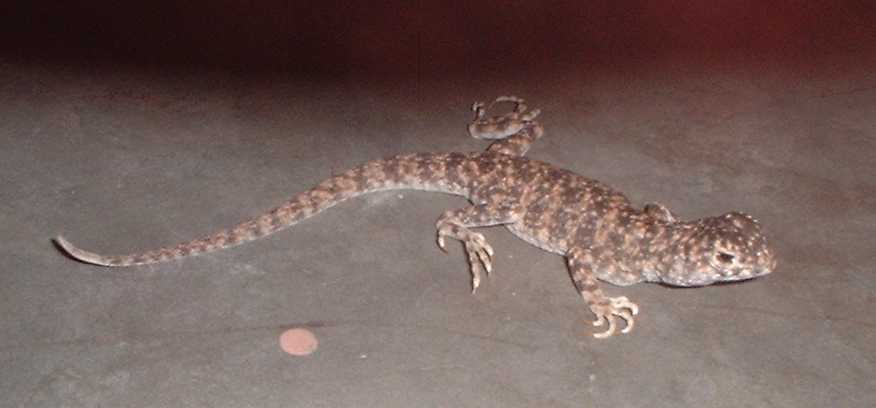
Peruvian Eyelash Iguana
Ctenoblepharys adspersa
Ctenoblepharys adspersa is a liolaemid lizard within the monotypic genus Ctenoblepharys. It is endemic to the arid western coast of Peru. It is locally known as cabezona.
The species is secretive and arenicolous, meaning that it inhabits sandy areas. It is primarily found along coastal sand dunes and beaches, but also hyper-arid habitats, ephemeral streambeds, and Tillandsia groves further inland, as far as the Andean foothills. Much of its biology and ecology is unknown, though it is known to be oviparous (egg-laying) and excavates burrows up to a meter in length. It feeds on a wide variety of insects, the most common being hymenopterans (wasps, ants, etc.), followed by coleopterans (beetles) and insect larvae. Activity levels are greatest in the morning (9–11 AM) and in the afternoon (3–4 PM).
Where it lives
Recorded sightings
—
geo-referenced records in GBIF, from museums, herbaria and field observers.
Drag the globe to turn it. Dots are where records exist, not a range map; darker means more records.
In the stacks
Searching the stacks…
Every page naming Ctenoblepharys adspersa in the Biodiversity Heritage Library →
This page is assembled live from iNaturalist, GBIF, Wikipedia, the Source Library and the Internet Archive. It is not yet part of the hand-edited codex. iNaturalist taxon 38952.