- Animals
- ›Arthropods
- ›Hexapods
- ›Insects
- ›Winged and Once-winged Insects
- ›Butterflies and Moths
- ›Ghost Moths and Swift Moths
- ›Swift Moths
- ›Dumbletonius
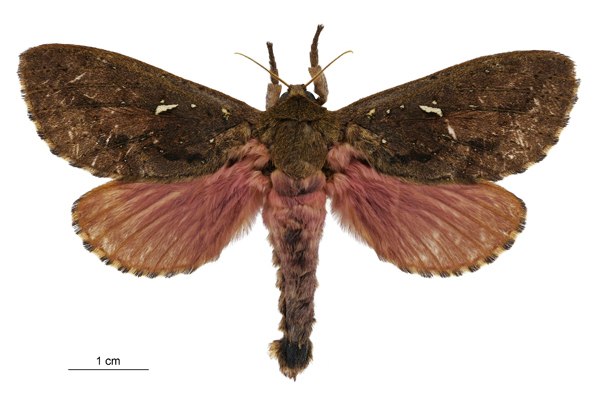
Dumbletonius unimaculatus
Dumbletonius unimaculatus, also known as the forest ghost moth, is a species of moth of the family Hepialidae. It is endemic to New Zealand. This species is host to the vegetable caterpillar fungus Ophiocordyceps robertsii.
From the article Dumbletonius unimaculatus on Wikipedia (CC BY-SA), quoted section by section
Description
The wingspan is 51–67 mm for males and 74–90 mm for females. The colour pattern of the forewings is complex in males and usually reduced or obsolete in female. The hindwings are unicolorous yellow, orange-yellow or pink. The bright colouration of the hindwing of the male of the species fades rapidly after death.
Range & habitat
Dumbletonius unimaculatus is endemic to New Zealand and can be found only in the North Island where it is regarded as being common.
Wikipedia: “Distribution”
What it does
The female of the species can lay up to 10000 eggs amongst leaf litter in native forest. Larvae live two to three years in tunnels amongst the leaf litter and can grow to a length of 10 cm. The larva pupates in the tunnel it inhabits. The adult moth is on the wing from December to April.
Wikipedia: “Life cycle”
Listen
Looking for field recordings…
Where it lives
Recorded sightings
—
geo-referenced records in GBIF, from museums, herbaria and field observers.
Drag the globe to turn it. Dots are where records exist, not a range map; darker means more records.
In the stacks
Searching the stacks…
Every page naming Dumbletonius unimaculatus in the Biodiversity Heritage Library →
This page is assembled live from iNaturalist, GBIF, Wikipedia, the Source Library and the Internet Archive. It is not yet part of the hand-edited codex. iNaturalist taxon 388769.