- Animals
- ›Chordates
- ›Vertebrates
- ›Reptiles
- ›Snakes and Lizards
- ›Lizards
- ›Wall lizards, amphisbaenians, and allies
- ›Whiptails and Tegus
- ›Whiptails and Ameivas
- ›Cnemidophorus
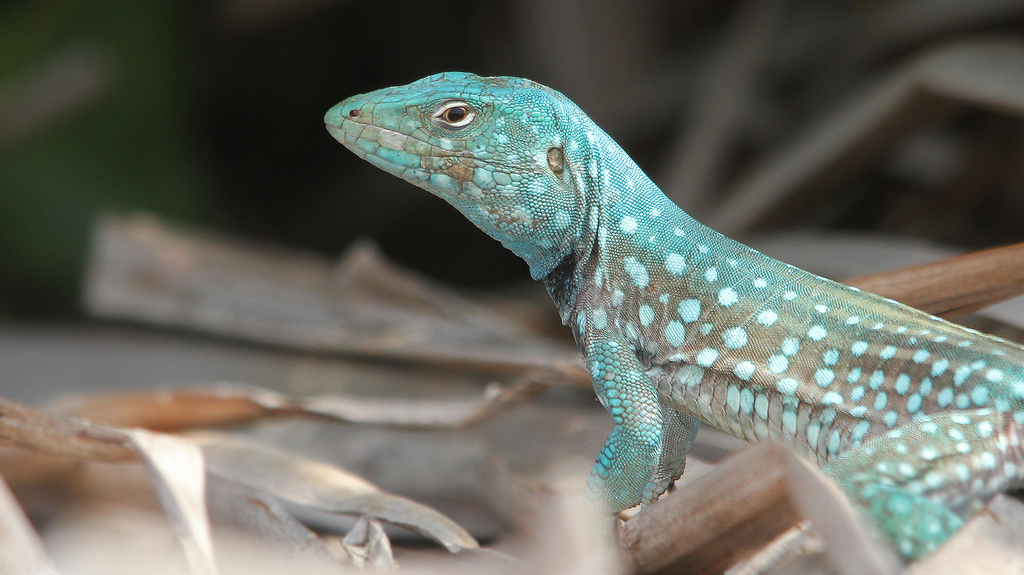
Aruba Whiptail
Cnemidophorus arubensis
Cnemidophorus arubensis, commonly known as the Aruba whiptail or cododo, is a species of whiptail lizard in the genus Cnemidophorus. The female and young lizards are known as Lagadishi (English: Lizard), while the mature males are called Blòblò or Cododo (English: Blue-blue). This lizard species is endemic to the island of Aruba and is recognized as the most common and abundant species of lizard on the island.
From the article Cnemidophorus arubensis on Wikipedia (CC BY-SA), quoted section by section
What it does
One of the notable adaptations observed within the Teiidae family of lizards is the transition to herbivorous diets in various endemic island species. This shift is particularly evident in the C. arubensis and C. murinus. The diet of Aruba whiptails encompasses both insects and predominantly plant material such as flowers, nectar, leaves and fruits. However, they exhibit selectivity in their plant consumption due to the presence of toxins in many available plant species, particularly those containing relatively high quantities phenols, saponin, and alkaloids (such as quinine). Consequently, these lizards actively avoid such plants. It has been observed that coprophagy, the consumption of feces, occurs in C. arubensis. The colon is larger than in other species of whiptails and is clearly adapted to a herbivorous diet. In a natural, undisturbed habitat, approximately 80% of the stomach contents consists of plant materials, while around 15% consists of insects and other anthropods. The remaining 5% consists materials such as feces, small stones and twigs. They play a significant role in the dispersal of seeds for certain plant species. This is achieved by their consumption of fruits, followed by the excretion of the seeds in diverse locations, aiding in seed dispersal and contributing to the plant's reproductive cycle.
Wikipedia: “Diet”
Where it lives
Recorded sightings
—
geo-referenced records in GBIF, from museums, herbaria and field observers.
Drag the globe to turn it. Dots are where records exist, not a range map; darker means more records.
In the stacks
Searching the stacks…
Every page naming Cnemidophorus arubensis in the Biodiversity Heritage Library →
This page is assembled live from iNaturalist, GBIF, Wikipedia, the Source Library and the Internet Archive. It is not yet part of the hand-edited codex. iNaturalist taxon 38751.