Hamerkops
Scopus
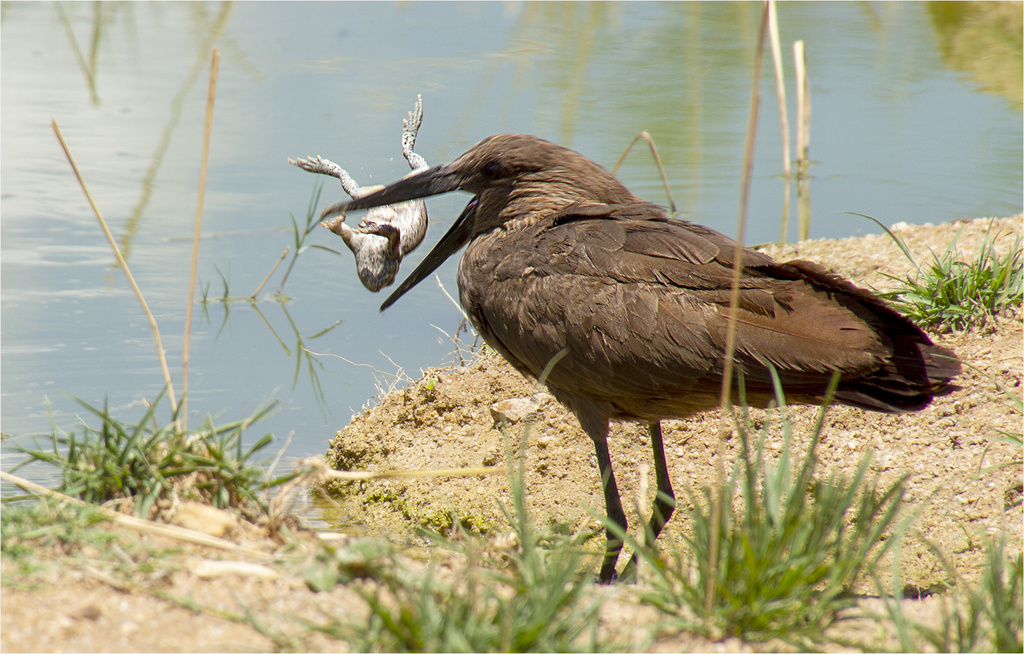
The hamerkop (Scopus umbretta), also called the umbrette, is a medium-sized water bird with brown plumage. It is found in mainland Africa, Madagascar and Arabia, living in a wide variety of wetlands, including estuaries, lakesides, fish ponds, riverbanks, and rocky coasts. The shape of its head, with its long bill and crest at the back, gives this species its name, hamerkop being the Afrikaans word for hammerhead. Long considered to sit with the Ciconiiformes, the species and its family is now placed with the Pelecaniformes, its closest relatives thought to be the pelicans and the shoebill. It is the only living species in the genus Scopus and the family Scopidae.
The hamerkop is a sedentary bird that often shows local movements. Usually hunting in shallow water, either by sight or touch, it feeds mostly on fish and amphibians; however, the species is adaptable and will take any prey it can. The species is renowned for its enormous nests, several of which it builds during the breeding season. Unusually for a wading bird, the species constructs its nest with an internal nesting chamber where the eggs are laid. Both parents incubate the eggs and raise the chicks.
1 branches of this genus, most-observed first · about 1 known species
See this branch on the Wheel of Life →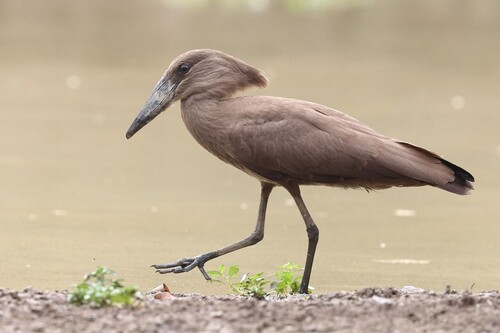
Where it lives
Recorded sightings
—
geo-referenced records in GBIF, from museums, herbaria and field observers.
Drag the globe to turn it. Dots are where records exist, not a range map; darker means more records.
In the stacks
Searching the stacks…
Every page naming Scopus in the Biodiversity Heritage Library →
This page is assembled live from iNaturalist, GBIF, Wikipedia, the Source Library and the Internet Archive. It is not yet part of the hand-edited codex. iNaturalist taxon 3833.