Chatham Island Coot
Fulica chathamensis
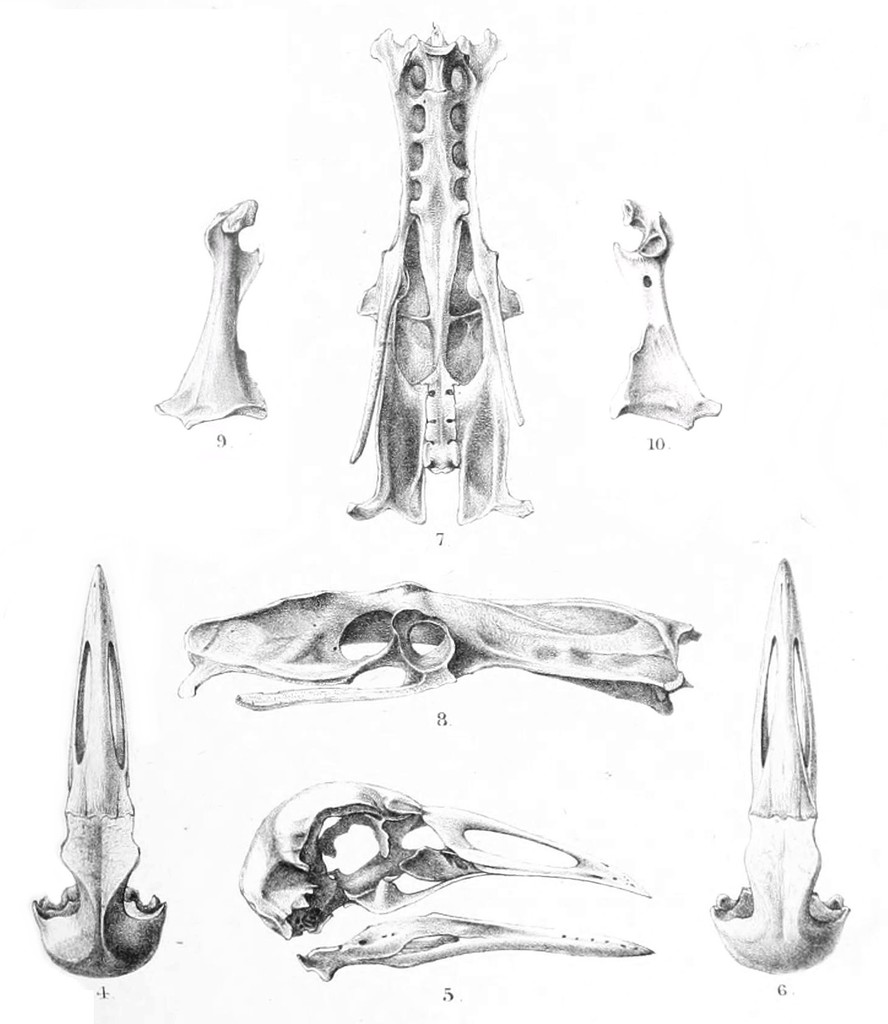
The Chatham coot (Fulica chathamensis), also known as the Chatham Island coot, is an extinct bird in the rail family, Rallidae, that was endemic to the Chatham Islands of New Zealand. It was described from subfossil bones in 1892 by Scottish explorer, ornithologist and botanist Henry Forbes, who was director of the Canterbury Museum in Christchurch at the time.
From the article Chatham coot on Wikipedia (CC BY-SA), quoted section by section
Description
Remains of the coot were first found by Forbes in dune deposits on Chatham Island in 1892, since when much further material has been recovered from dunes and from Moriori middens on the island. It was a large coot, slightly larger than the New Zealand coot, some 40 cm in length and 1.9 kg in weight. Apart from a disproportionately long neck, and long legs and toes, it was similar in shape to other coots and was probably able to fly. Its large salt glands indicate that it inhabited the brackish waters of Te Whanga Lagoon. The common occurrence of its bones in middens show that it was a frequent food item, with over-hunting the main cause of its extinction.
== References ==
Listen
Looking for field recordings…
Where it lives
Recorded sightings
—
geo-referenced records in GBIF, from museums, herbaria and field observers.
Drag the globe to turn it. Dots are where records exist, not a range map; darker means more records.
In the stacks
Searching the stacks…
Every page naming Fulica chathamensis in the Biodiversity Heritage Library →
This page is assembled live from iNaturalist, GBIF, Wikipedia, the Source Library and the Internet Archive. It is not yet part of the hand-edited codex. iNaturalist taxon 371737.