- Animals
- ›Arthropods
- ›Hexapods
- ›Insects
- ›Winged and Once-winged Insects
- ›Butterflies and Moths
- ›Owlet Moths and Allies
- ›Cutworm Moths and Allies
- ›Acontiinae
- ›Acontiini
- ›Acontia
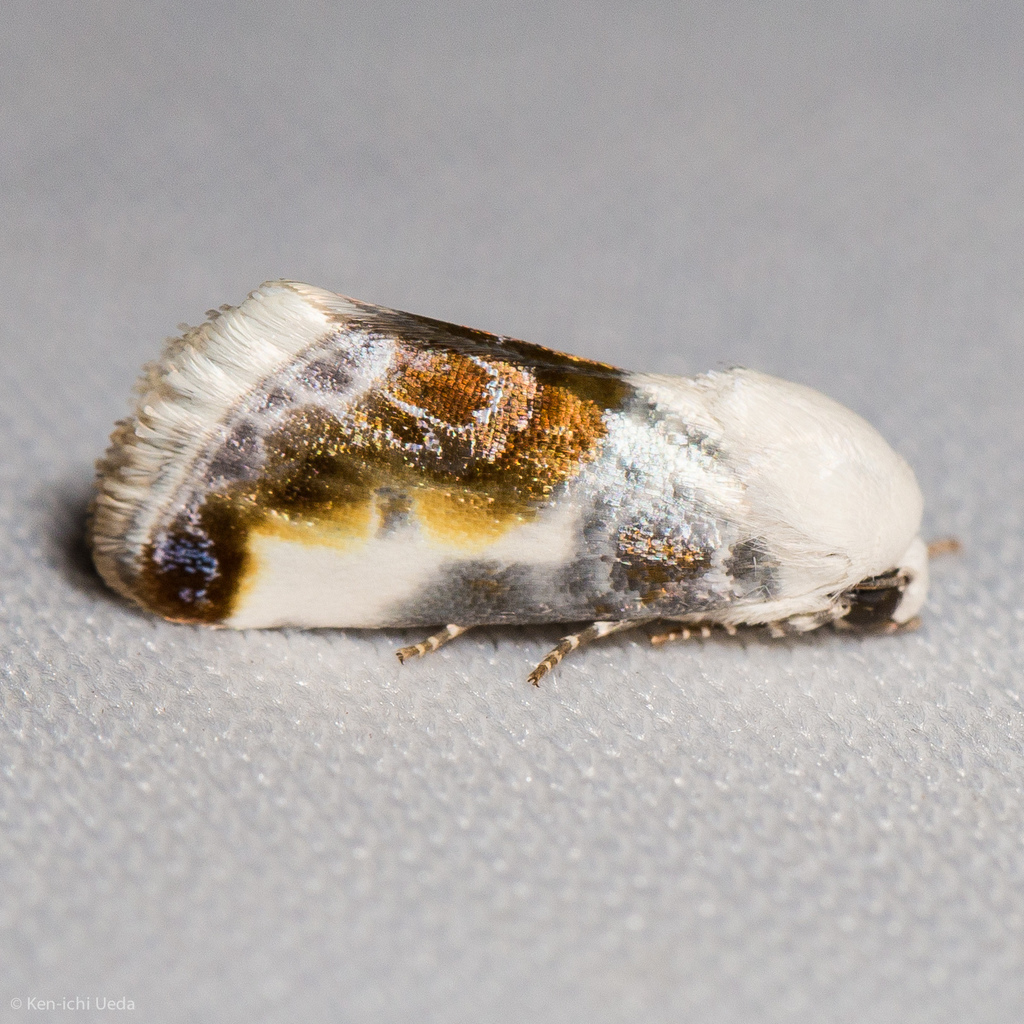
Chalky Bird Dropping Moth
Acontia cretata
Acontia cretata, the chalky bird dropping moth, is a moth of the family Noctuidae. The species was first described by Augustus Radcliffe Grote and Coleman Townsend Robinson in 1870. It is found from the US states of California to Texas and Oklahoma, north to Colorado and Utah.
The wingspan is 22–27 mm. Adults are on wing from April to September.
From the article Acontia cretata on Wikipedia (CC BY-SA), quoted section by section
Description
Acontia species are characterized by an elongated palpi having pointed frontal tuft, and a well developed third segment. Antennae are simple and filiform, having no complex modifications or branches. Both the thorax and abdomen are covered in smooth scales, lacking tufts or patches. The forewing is bordered with non-crenulate cilia, and plain unnotched fringe along the edges. In terms of venation, veins 7 to 10 are stalked. The larval stage is characterized by the presence of four pairs of abdominal prolegs.
Wikipedia: “Morphology”
Listen
Looking for field recordings…
Where it lives
Recorded sightings
—
geo-referenced records in GBIF, from museums, herbaria and field observers.
Drag the globe to turn it. Dots are where records exist, not a range map; darker means more records.
In the stacks
Searching the stacks…
Every page naming Acontia cretata in the Biodiversity Heritage Library →
This page is assembled live from iNaturalist, GBIF, Wikipedia, the Source Library and the Internet Archive. It is not yet part of the hand-edited codex. iNaturalist taxon 367876.