On eBird ↗
Forbes's Blackbird
Live sightings near you, the range map, bar charts of when it is seen, and Macaulay Library photos and recordings.
Forbes's Blackbird
Anumara forbesi
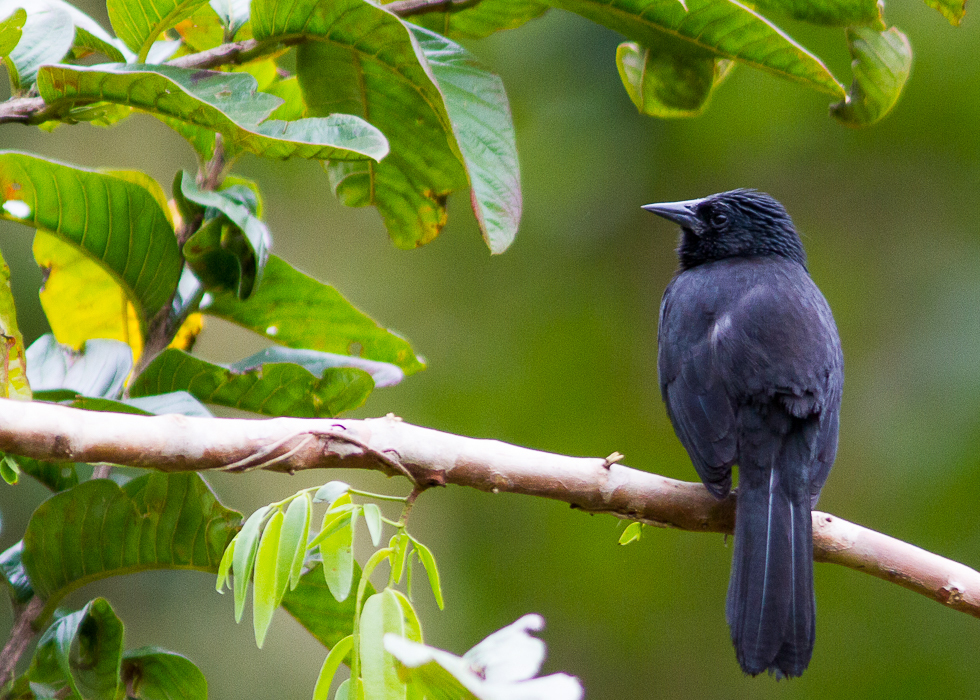
Forbes's blackbird (Anumara forbesi) is a vulnerable species of New World blackbird that is endemic to the Atlantic forest in South America. This species was named for the British zoologist William Alexander Forbes.
From the article Forbes's blackbird on Wikipedia (CC BY-SA), quoted section by section
Range & habitat
Forbes's blackbird is a non-migratory species found in east and north-east Brazil in small and very fragmented habitats. Its natural habitats are subtropical or tropical moist lowland forest, subtropical or tropical seasonally wet or flooded lowland grassland, and plantations. The largest grouping found 150 individuals at Pedra Talhada, Alagoas. There are anywhere between 2-100 subpopulations, all of which are experiencing a continued decline of mature individuals. It has been found in small numbers around sugar cane plantations and pastures adjacent to forest patches and marshy areas. In the wild it primarily inhabits forest edge areas.
Wikipedia: “Habitat and Range”
In human culture
Forbes's blackbird had an average lifespan of 4.6 years. It can eat insects, fruit and occasionally nectar from flowering plants or sugarcane. Its breeding season ranges from March to June, during the rainy season. Nests are most commonly found in mango trees (Mangifera indica). Egg clutch sizes can range between 1-4 eggs and it can have up to two clutches during the breeding season. After nest completion it can take anywhere between 4 and 10 days until egg laying starts. It is estimated that the population does not exceed 10,000 mature individuals.
Habitat and Range. Forbes's blackbird is a non-migratory species found in east and north-east Brazil in small and very fragmented habitats. Its natural habitats are subtropical or tropical moist lowland forest, subtropical or tropical seasonally wet or flooded lowland grassland, and plantations. The largest grouping found 150 individuals at Pedra Talhada, Alagoas. There are anywhere between 2-100 subpopulations, all of which are experiencing a continued decline of mature individuals. It has been found in small numbers around sugar cane plantations and pastures adjacent to forest patches and marshy areas. In the wild it primarily inhabits forest edge areas.
Wikipedia: “Life History”
Listen
Looking for field recordings…
Where it lives
Recorded sightings
—
geo-referenced records in GBIF, from museums, herbaria and field observers.
Drag the globe to turn it. Dots are where records exist, not a range map; darker means more records.
In the stacks
Searching the stacks…
Every page naming Anumara forbesi in the Biodiversity Heritage Library →
This page is assembled live from iNaturalist, GBIF, Wikipedia, the Source Library and the Internet Archive. It is not yet part of the hand-edited codex. iNaturalist taxon 367691.