- Animals
- ›Chordates
- ›Vertebrates
- ›Reptiles
- ›Snakes and Lizards
- ›Lizards
- ›Iguanas and Allies
- ›Iguanas, Anoles, and Allies
- ›Monkey Lizards
- ›Polychrus
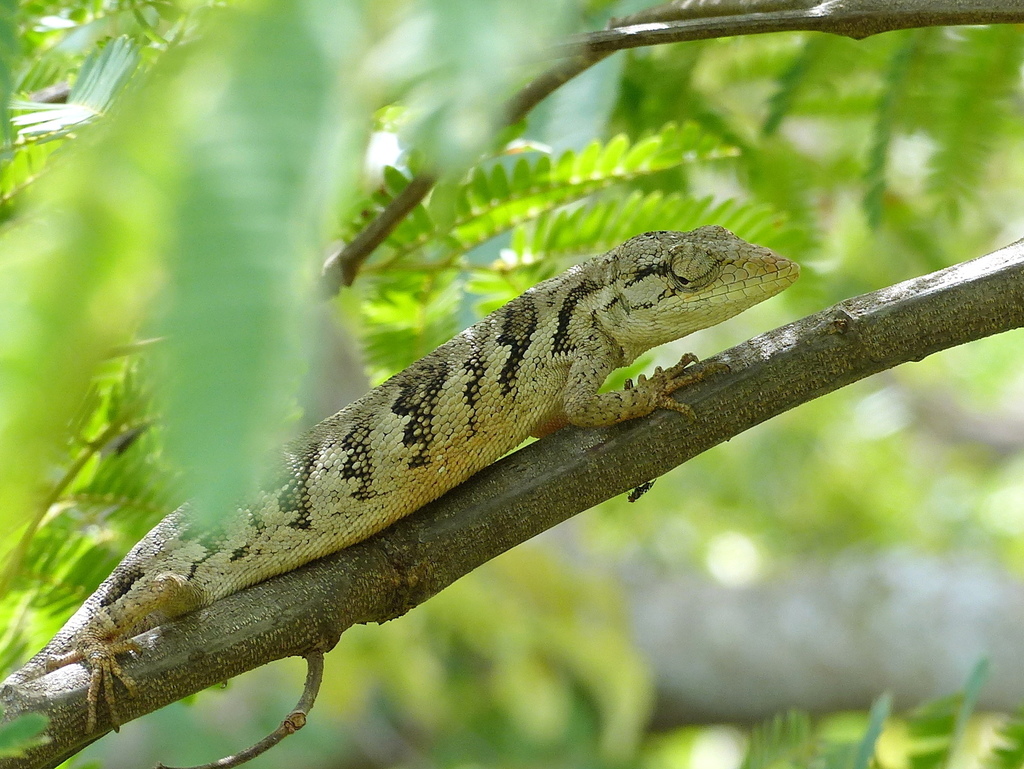
Brazilian Monkey Lizard
Polychrus acutirostris
Polychrus acutirostris, the Brazilian bush anole, is a species of lizard native to southern and eastern Brazil, Paraguay, Argentina, and eastern Bolivia. It is diurnal.
From the article Polychrus acutirostris on Wikipedia (CC BY-SA), quoted section by section
Description
It is an oviparous animal with an arboreal habit, which inhabits a large part of South America. Its color becomes stronger during mating season, but it can also change to obtain better camouflage. Despite presenting several characteristics similar to those of "true chameleons", such as eyes that move independently and the ability to change color, the species does not belong to the same family as the Chameleon, but still has a level of kinship with the same, belonging to the same suborder: Sauria. Their diet basically consists of insects. The species is being threatened by habitat loss. With a calm temperament, it does not pose a danger to humans. Another peculiar characteristic of the animal is the one that characterizes it by its popular name of "sloth lizard", its movements are slow, especially when compared to other reptiles that normally have agility in their locomotion. It tends to remain motionless most of the time to camouflage itself, which, along with its subtle ability to change color, is its greatest defenses. Its slow mobility, in addition to affecting its diet, makes it easy prey, possibly placing it in a group at risk of extinction. A diurnal species, it usually lives in trees. The males of the species defend their territories. It is difficult to find, because of its ability to camouflage itself, being confused with the environment. …
Where it lives
Recorded sightings
—
geo-referenced records in GBIF, from museums, herbaria and field observers.
Drag the globe to turn it. Dots are where records exist, not a range map; darker means more records.
In the stacks
Searching the stacks…
Every page naming Polychrus acutirostris in the Biodiversity Heritage Library →
This page is assembled live from iNaturalist, GBIF, Wikipedia, the Source Library and the Internet Archive. It is not yet part of the hand-edited codex. iNaturalist taxon 36755.